Toll Free: 866.905.6744 | Local: 845.652.5250
A control cable is a flexible mechanical link that transfers movement from an operator or actuator to a remote mechanism. It may connect a dashboard lever to a throttle, a machine handle to a valve, or a marine control to an engine. Inside its protective sheath, a wire core moves, pulls, or pushes with controlled force. The design looks simple. The working conditions are not.
This introduction examines common control cable types, including push-pull cables, pull-only cables, Bowden cables, throttle cables, clutch cables, and custom industrial assemblies. Each type serves a different motion pattern, load range, and installation environment. A push-pull cable can transmit force in both directions. A pull-only design needs a return spring or separate mechanism. Small details matter, such as bend radius, core travel, end fittings, sheath friction, and temperature resistance.
In practical installations, routing often decides performance. A cable pressed against a sharp bracket may develop drag before visible damage appears. A poorly sealed end can admit water, dust, or oil. That failure may look like a bad actuator, not a cable problem. Specifications, testing records, and supplier experience therefore deserve careful review. Standards provide useful guidance, but they do not replace application-specific testing. No single control cable fits every machine. That assumption is easy to make, and often wrong. Selecting the right type requires a clear understanding of movement, force, distance, environment, and maintenance access.
What Is a Control Cable?
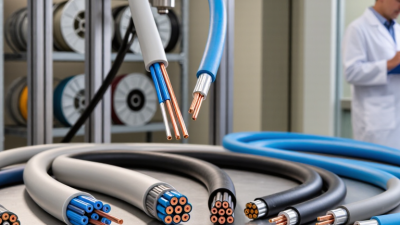
A control cable carries low-voltage signals between sensors, switches, controllers, and actuators. It does not usually power large motors. Instead, it tells equipment when to start, stop, open, close, or adjust. Inside, copper conductors sit within insulation, often with an overall jacket. Multicore designs reduce wiring congestion inside control cabinets. Shielded cables help limit electromagnetic interference near variable-speed drives or heavy machinery.
Common types include unshielded, shielded, flexible, instrumentation, and thermocouple cables. The right choice depends on voltage, signal type, temperature, bending, moisture, and installation distance. IEC 60228 classifies conductor constructions by flexibility, which matters during repeated movement. A cable for a fixed cabinet may use solid or stranded conductors. A robotic arm needs a more flexible construction. Small details matter.
The IEA’s Electricity 2024 report forecasts global electricity demand to grow by about 4% annually through 2026. More electrical infrastructure also increases the need for dependable monitoring and control wiring. Yet selection is rarely perfect. A cable may pass a continuity test and still suffer noise in operation. In field commissioning, technicians should check routing, grounding, bend radius, and terminal tightness. The neatest drawing does not always produce the quietest signal. That part deserves more attention.
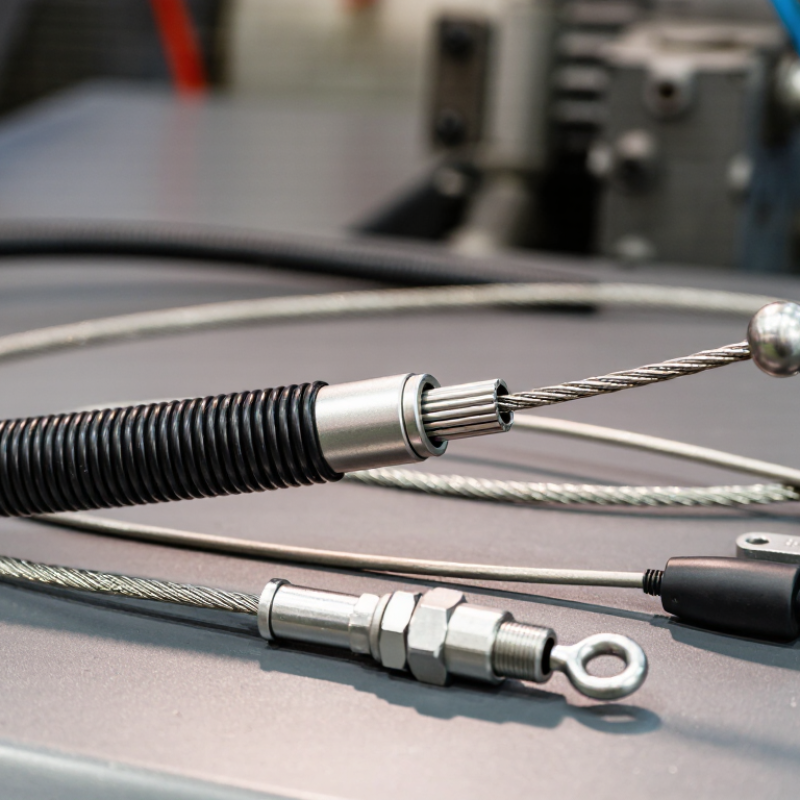
A control cable transfers hand or lever movement to a distant mechanism. It usually contains an inner wire, an outer sheath, and end fittings. When the operator pulls the control, the inner wire moves inside the sheath. That movement opens, closes, shifts, or releases another component.
Some cables pull in one direction only. Others use a push-pull design, allowing movement both ways. Throttle, clutch, brake, valve, and door controls commonly use these systems. A smooth cable needs the correct length, bend radius, and attachment points. Excessive bends increase friction. Too much slack creates delayed response. A cable may look fine but still fail under load. That detail is easy to miss.
Tips: Check the cable before installation. Move it through its full travel and feel for stiffness, scraping, or uneven resistance. Keep the sheath away from sharp edges and intense heat. Secure loose sections without crushing them. Measure the old cable carefully, including its housing and fitting styles. Lubrication may help some designs, but it can damage sealed or specially lined cables. Follow the equipment maker’s service data when available. A small routing mistake can reduce control accuracy. Be willing to recheck it.
A control cable is a flexible mechanical link between an operator and a moving mechanism.
Its main types differ by how they transmit force. Push-pull cables transfer force in both directions, using a sliding inner wire inside a protective sheath. They suit throttles, valves, dampers, and levers requiring positive movement. Responsive, not magical.
Pull-only cables move a mechanism when pulled. A return spring or external lever brings it back after release. These cables often serve latches, release handles, and simple adjustment controls.
Rotary control cables transmit turning motion through a flexible inner shaft. They operate gauges, selectors, and compact mechanisms where straight-line travel is unsuitable.
Bowden-style cables, with an inner wire and outer casing, can follow curved routes around equipment.
Choosing the correct type requires more than matching cable length.
Check the required stroke, pulling force, bend radius, temperature range, and end fittings. Low-friction designs help when the route is long or sharply curved. Reinforced sheaths are better for heavy loads and exposed installations. Sealed ends can reduce moisture and dust entry.
A cable may appear suitable yet bind during operation. I have seen poor routing imitate a failed actuator. Inspect for broken strands, stiff movement, crushed housing, and loose fittings. Routing matters.
Control cables transfer mechanical movement from a lever, pedal, or actuator to a remote mechanism. Their construction usually combines a stranded metal core with an outer sheath. The core may use galvanized steel for general applications or stainless steel where moisture and corrosion are serious concerns. Stainless steel costs more, but it can remain reliable near saltwater or frequent washdown areas.
The sheath controls friction, protection, and flexibility. PVC is economical and suitable for moderate temperatures. Nylon offers smooth movement and good abrasion resistance. PTFE reduces friction in demanding environments, although it can be less forgiving during installation. Some cables use a metal conduit beneath a polymer jacket. This design resists crushing while preserving controlled movement. Push-pull cables use a guided inner member that can transmit force in both directions. Bowden-style designs separate the control cable from the surrounding structure, which helps routing around bends.
Details matter. A tight bend can make a smooth cable feel unexpectedly stiff. A poorly sealed end may allow water to reach the core. That failure is easy to miss.
Experienced installers check the required stroke, load, temperature range, and minimum bend radius before choosing materials. They also inspect fittings, clamps, and routing points during maintenance. Cable length should allow full movement without stretching the core. It is tempting to select the strongest cable available, but excessive stiffness can reduce control sensitivity. The most reliable design balances strength, flexibility, sealing, and service access. In practice, that balance may need revision after real-world testing.
| Control Cable Type | Basic Design | Common Conductor or Core Materials | Typical Jacket or Housing Materials | Main Motion or Force Transmitted | Typical Applications | Key Performance Characteristics |
|---|---|---|---|---|---|---|
| Push-Pull Control Cable | A flexible inner wire moves inside a low-friction outer conduit to transmit force in both directions. | Galvanized carbon-steel wire, stainless-steel wire, or stranded steel cable. | Polyethylene, polypropylene, nylon, PVC, or metal conduit with a polymer liner. | Both pushing and pulling. | Throttle controls, marine steering systems, industrial actuators, and vehicle mechanisms. | Can operate without a straight line of sight; performance depends on bend radius, friction, and cable compression resistance. |
| Pull-Only Control Cable | An inner cable runs through a sheath and transfers tensile force when pulled. | Galvanized steel or stainless-steel stranded wire. | PVC, polyethylene, nylon, or rubber-based protective jacket. | Pulling only; a return spring or separate mechanism provides the return motion. | Release latches, parking-brake systems, door controls, and remote mechanical releases. | Simple and lightweight design with good routing flexibility; requires a reliable return mechanism. |
| Bowden Cable | A flexible inner cable is guided through a stationary outer sheath, allowing remote actuation around bends. | Stranded high-carbon steel or stainless steel. | Coiled steel housing, polymer liner, and an outer PVC or nylon cover. | Usually pulling; some configurations support limited push-pull action. | Bicycle brakes and derailleurs, automotive controls, seat releases, and light machinery. | Compact and adaptable, but friction and lost motion increase with excessive length or sharp bends. |
| Mechanical Throttle Cable | A flexible cable connects a hand, foot, or lever control to a throttle or speed-regulating mechanism. | Multi-strand galvanized steel or stainless steel. | Low-friction polymer liner with PVC, polyethylene, or nylon outer covering. | Usually pull force, with spring-assisted return. | Small engines, generators, industrial equipment, and older mechanical vehicle controls. | Requires smooth travel, controlled free play, adequate return force, and protection against contamination. |
| Mechanical Brake Cable | A stranded inner cable transfers lever force through an outer housing to a brake mechanism. | Galvanized steel or corrosion-resistant stainless steel. | Coiled steel housing with a polymer liner and weather-resistant outer jacket. | Pulling force. | Bicycle brakes, small vehicles, light utility equipment, and manually actuated brake systems. | Must maintain low friction and high tensile strength; correct adjustment is essential for safe operation. |
| Aircraft-Style Flexible Control Cable | Stranded wire rope is routed through pulleys, fairleads, or tensioning devices to operate control surfaces or mechanisms. | Preformed stainless-steel or galvanized aircraft cable. | Usually exposed or protected with conduit, fairleads, or flexible tubing rather than a full sheath. | Primarily tension and pulling force. | Flight-control mechanisms, industrial control linkages, and precision mechanical systems. | High strength-to-weight ratio; requires correct swaging, routing, tension, and inspection. |
| Coaxial Push-Pull Cable | A central rigid or semi-rigid core moves inside concentric support layers to provide controlled linear movement. | Steel, stainless steel, or fiber-reinforced composite core. | Low-friction polymer liner, wound steel reinforcement, and PVC, polyurethane, or nylon jacket. | Push and pull. | Robotic mechanisms, medical equipment, aerospace controls, and precision instrumentation. | Good positional control and routing flexibility; suitable for applications requiring low backlash and repeatable motion. |
| Electrical Control Cable | One or more insulated electrical conductors are grouped inside a protective outer sheath. | Stranded copper or aluminum conductors; copper is common where flexibility and conductivity are important. | PVC, polyethylene, cross-linked polyethylene, polyurethane, or thermoplastic elastomer. | Electrical signals or power rather than mechanical force. | Industrial automation, sensors, control panels, machinery, and building systems. | Specified by voltage rating, conductor size, insulation temperature rating, shielding, flexibility, and environmental resistance. |
| Shielded Control Cable | Insulated conductors are surrounded by a conductive shield that reduces electromagnetic interference. | Stranded copper conductors with tinned or bare copper drain wire. | PVC, polyurethane, polyethylene, or other rated insulation and jacket systems. | Electrical signals, data, or low-voltage control commands. | Variable-speed drives, sensors, instrumentation, automation equipment, and signal-control systems. | Improves signal integrity; shield grounding, bend radius, and separation from power cables affect performance. |
| Armored Control Cable | Conductors are protected by a metallic armor layer beneath the outer jacket. | Copper conductors, sometimes with a steel-wire or aluminum armor layer. | PVC, polyethylene, polyurethane, or other flame- and oil-resistant jacket materials. | Electrical control signals or power. | Industrial plants, outdoor installations, process equipment, and areas exposed to impact or crushing. | Provides enhanced mechanical protection; generally heavier and less flexible than unarmored cable. |
| High-Temperature Control Cable | Conductors and insulation are selected to retain electrical properties at elevated temperatures. | Nickel-plated copper, nickel conductors, stainless-steel conductors, or standard copper for moderate temperatures. | Silicone rubber, fluoropolymer, fiberglass braid, mica, or other high-temperature insulation systems. | Electrical signals or power in hot environments. | Ovens, furnaces, engines, heating equipment, and high-temperature processing machinery. | Temperature capability varies by construction; flexibility, abrasion resistance, and chemical resistance must also be checked. |
| Drag-Chain Control Cable | Highly flexible conductors are constructed for repeated bending in a controlled travel path. | Fine-stranded copper conductors with flexible insulation. | Polyurethane, PVC, or thermoplastic elastomer with reinforced cable construction. | Electrical control, feedback, or data transmission during continuous motion. | CNC machines, robots, automated production lines, and moving machine axes. | Designed for high flex-cycle life; correct bend radius, travel speed, and cable-chain fill are important. |
| Fiber-Optic Control Cable | Optical fibers transmit control or communication signals as light through a protected cable structure. | Glass or polymer optical fibers. | Acrylate coating, aramid strength members, PVC, polyethylene, or polyurethane outer jacket. | Data and control signals, not mechanical force or conventional electrical current. | Industrial networks, process control, robotics, telecommunications, and electrically noisy environments. | Immune to electromagnetic interference and electrically isolated; requires attention to bend radius and connector cleanliness. |
Choosing the right control cable starts with the machine’s actual movement, not its appearance. A control cable transfers force through an inner wire and outer housing. Common types include push-pull cables, pull-only cables, Bowden cables, and flexible throttle cables. Each type handles different loads, travel distances, and installation conditions.
Check the required stroke, operating force, and total cable length. The inner wire must travel far enough to move the connected lever fully. Measure the route carefully, including bends around frames or panels. A cable may work on a test bench but bind inside a tight installation. Keep bends smooth and respect the manufacturer’s minimum bend radius. Examine the environment too. Heat, moisture, vibration, dust, and salt can quickly expose weak materials. Stainless components may improve corrosion resistance, but they do not solve every sealing problem.
Tips: Compare the cable’s rated load with the real operating load, then add a sensible safety margin. Confirm terminal shapes before ordering. Check whether the housing compresses under force. It should not. During installation, move the control through its full range and watch for delayed movement, stiffness, or unwanted return. I have seen installers focus on length and overlook end fittings. That small mistake can stop an otherwise suitable cable from fitting. Recheck your measurements, especially when the first design seems too easy.
Control cables transmit mechanical movement or electrical signals between a control device and the equipment it operates. The insulation material is an important selection factor because it determines the cable’s typical continuous conductor-temperature limit.
Use PVC for general-purpose indoor or light-industrial applications, XLPE when higher temperature resistance is required, TPE when flexibility and environmental resistance are important, and PTFE for high-temperature or chemically demanding environments. Actual ratings depend on cable construction, voltage, installation method, ambient temperature, and the applicable standard.