How to Choose the Best Cable for Home Use
Choosing a cable for home use seems simple until a wall outlet, router, or television demands something different. Power cords, Ethernet cables, coaxial lines, and speaker wire are not interchangeable. The right choice depends on the device, distance, installation location, and expected load or signal. Small details count.
Safety deserves more attention than packaging claims. NFPA’s Home Electrical Fires report estimated an average of 32,620 U.S. home structure fires involving electrical distribution or lighting equipment each year from 2015 through 2019. These figures do not mean cables alone caused those fires, but they show why correct ratings and condition matter. For fixed network wiring, the Telecommunications Industry Association’s ANSI/TIA-568 standards provide guidance on structured cabling performance. Check the cable category, jacket rating, connectors, and manufacturer specifications rather than relying on appearance or price. A cable that works across a desk may not suit a long in-wall run. That distinction is easy to miss.
This guide compares common household cable types and explains what to check before buying. You will see why wire gauge, cable length, shielding, and installation environment can affect performance and safety. Look for recognized certification where applicable, and match the cable to the device’s requirements. Product labels can be confusing. Even careful buyers may focus too much on speed claims and overlook fit, durability, or fire rating. A little checking helps, though no single cable is best for every home.
Identify the Need First: Power, Ethernet, Coaxial, or Audio
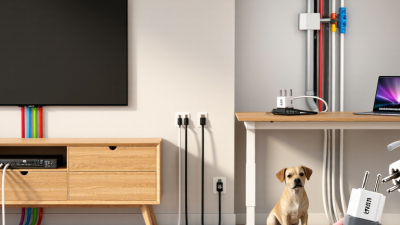
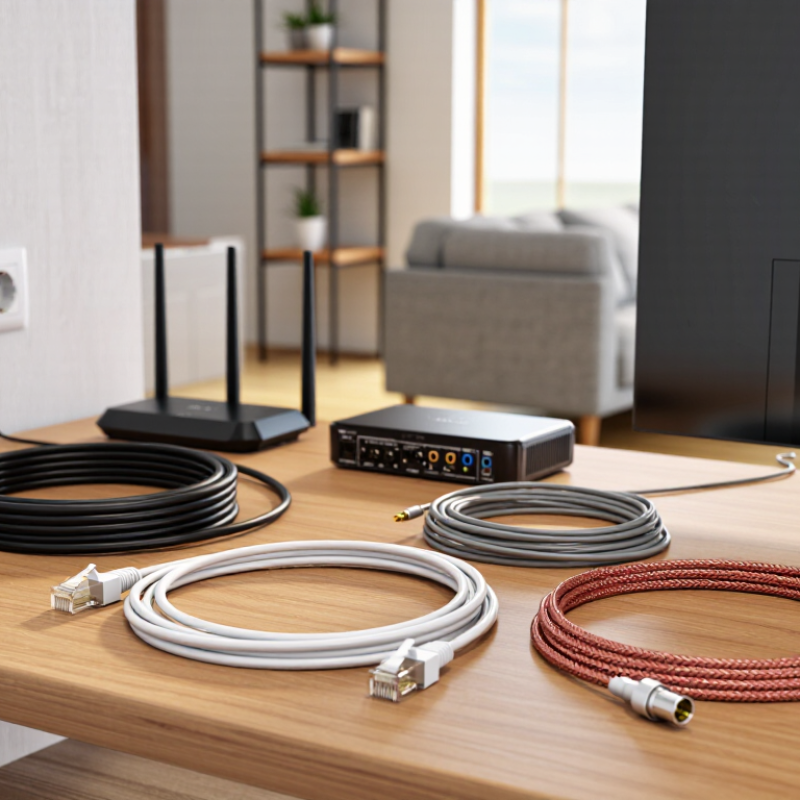
Before buying a cable, identify what it must carry. Power cables need the correct plug, voltage, and current rating for the appliance. Check the label on the device, and never use a cord with cracked insulation or a loose connection. For a long run, cable thickness matters too; an undersized extension can become warm under heavy load. Match the rating, not just the shape.
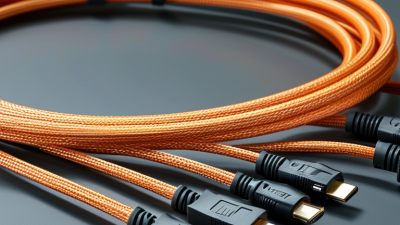
For internet or a wired home network, choose Ethernet cable based on speed, distance, and where it will run. A short patch cord behind a desk has different demands from a cable routed through walls. Check the cable’s printed category and use in-wall-rated cable where building spaces require it. Coaxial cable serves television or broadband equipment; its connector must fit snugly, without bending the center pin. Small details matter.
Audio cables depend on the equipment’s inputs and outputs. A headphone connection, speaker wire, and a digital audio link are not interchangeable, even if they look similar. Measure the route before shopping, then leave a little slack for moving furniture. I may be overcautious, but I would rather measure twice than stretch a cable around a sharp corner. Connections should feel secure, not forced.
Size Copper Branch Circuits: 14 AWG/15 A; 12 AWG/20 A (NEC)
How to Choose the Best Cable for Home Use
For many standard copper branch circuits, the NEC pairs 14 AWG conductors with 15-amp overcurrent protection and 12 AWG conductors with 20-amp protection. These are common sizing limits, not a complete cable-selection rule. Circuit length, insulation temperature rating, installation conditions, and local code requirements can affect what is acceptable. A thicker wire does not make an incorrectly protected circuit safe.
The risk is real. NFPA’s Home Electrical Fires report, covering 2012–2016, estimated about 24,000 U.S. home fires involving electrical distribution or lighting equipment each year. Correct conductor sizing and matching breaker protection help reduce overheating risks. Still, gauge alone cannot prevent every failure; loose connections and damaged insulation matter too. Check the cable markings and the circuit’s actual breaker rating before choosing replacement cable.
Tips: Match 14 AWG with 15 A, or 12 AWG with 20 A, for typical copper circuits. Never upsize a breaker to suit thinner wire. Unsure about an existing circuit? Have a qualified electrician verify its wiring method, load, and local-code requirements.
How to Choose the Best Cable for Home Use — Copper Branch-Circuit Sizes: 14 AWG / 15 A; 12 AWG / 20 A (NEC)
| Copper Wire Size |
Typical Breaker Rating |
Common Residential Cable |
Typical Applications |
Continuous-Load Planning* |
Key Selection Check |
| 14 AWG |
15 A |
14/2 with equipment grounding conductor |
Commonly used for 15 A lighting and general-purpose branch circuits, where permitted by local code. |
12 A on a standard breaker when the load is continuous. |
Do not protect 14 AWG copper branch-circuit conductors with a 20 A breaker. |
| 12 AWG |
20 A |
12/2 with equipment grounding conductor |
Commonly used for 20 A receptacle circuits and other circuits requiring 20 A capacity, subject to circuit-specific rules. |
16 A on a standard breaker when the load is continuous. |
Use a 20 A breaker only when the conductor, devices, circuit design, and applicable code requirements are suitable. |
Important: These are common copper branch-circuit pairings, not a complete wiring design. The required cable type depends on the location and installation method; for example, NM-B cable is for permitted dry locations and is not suitable for wet locations. Long runs, ambient temperature, bundled conductors, load calculations, equipment instructions, and local code requirements can affect conductor selection. Check the locally adopted NEC and consult a qualified electrician before installation. *The continuous-load figures assume a standard breaker and the usual 80% continuous-load sizing rule; applicable requirements and equipment ratings may differ.
Match Cable to Location: NM-B Is 600 V-Rated for Dry Interiors
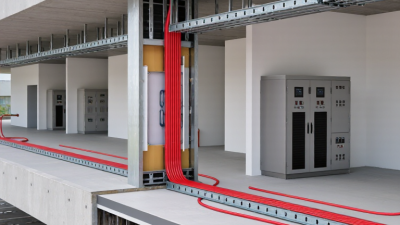
Choosing cable starts with its route, not just the appliance it will serve. NM-B cable is rated for 600 volts and is intended for dry interior locations, such as protected spaces inside walls and ceilings. That voltage rating describes an electrical limit; it does not make the cable suitable for every environment. Location matters.
A dry room can still contain unsuitable cable routes. Avoid using NM-B where wiring may be exposed to moisture, such as outdoors or in persistently damp areas. For a basement, check whether the particular installation area is considered dry under local requirements; a concrete wall or cool pipe can create conditions that are easy to misjudge. The cable jacket markings help identify the cable, but they cannot tell you whether a specific route is permitted. Small detail, big consequence.
Match the conductor size to the circuit and its protective device, and keep the cable protected from nails, screws, and sharp edges. Do not choose a smaller cable because it fits more easily through a tight opening. That shortcut can create heat and fire risks. If the route, load, or local rules are unclear, have a qualified electrician assess the installation before work begins. Even careful homeowners can miss a detail behind a finished wall, and that is worth admitting.
Compare Data Cable Bandwidth: Cat 5e at 100 MHz vs. Cat 6 at 250 MHz
For a home network, Cat 5e’s 100 MHz rating and Cat 6’s 250 MHz rating are useful comparisons, but MHz does not mean megabits per second. It describes the cable’s frequency range, not your internet speed. TIA-568.2-D defines performance requirements for twisted-pair cabling, including these category ratings. Cat 6 offers more bandwidth and tighter limits on crosstalk. In practical terms, that extra headroom can matter when several devices share a busy network. It will not make a slow broadband plan faster.
For ordinary gigabit connections, Cat 5e can be entirely adequate. IEEE 802.3ab specifies 1000BASE-T operation over four pairs of Category 5 cabling for up to 100 meters. Plenty for many homes. Cat 6 is a sensible choice for a new run from a router cabinet to an upstairs office, especially if future equipment may demand more capacity. Keep bends gentle, avoid crushing the cable under furniture, and use compatible connectors; a poor installation can waste Cat 6’s advantage. The rating on the jacket is not a guarantee of real-world performance, and I would not assume every household needs the higher category. TIA-568.2-D and IEEE 802.3ab provide the standards behind these figures.
Verify Cable Listings, Circuit Protection, and Local Code Before Installation
How to Choose the Best Cable for Home Use
Before buying cable, match its listing to the installation, not just the room. Check the jacket markings for conductor material, size, temperature rating, and approved use. Cable suited to dry indoor walls may not be suitable for a damp basement, outdoor run, or direct burial. Listings can be confusing. If markings are worn or unclear, do not guess; ask an electrician to identify the cable.
Confirm that the circuit’s breaker or fuse is appropriate for the cable’s ampacity and connected load. A thicker cable does not make an overloaded circuit safe, and installing a larger breaker can create a fire risk. Check local electrical code requirements before installation, including wiring methods, support spacing, box fill, and wall protection. Rules vary by location. For new circuits, concealed wiring, or uncertainty, consult a qualified electrician and arrange any required inspection.
Tips: Photograph cable markings and the panel label before shopping. Keep product documents with your project notes. Check local requirements with the building department instead of relying on a quick online guess. Damp areas are easy to overlook. Measure twice. If any detail does not match, pause and verify it before installation.