2026 Best Access Control Wire Types for Global Buyers?
Choosing the right access control wire in 2026 requires more than comparing prices or conductor counts. Global buyers must match each cable to the reader, controller, lock, exit device, and site environment. A typical installation may use 22/6 stranded cable for readers, 18/2 conductors for locks, and shielded pairs for sensitive communication lines. The correct choice depends on distance, voltage drop, interference, temperature, and local installation requirements.
Small details matter.
Field experience shows that a 305-meter spool can create unexpected losses when cable resistance is ignored. A long outdoor run may also need sunlight-resistant insulation, water protection, or conduit-rated construction. Buyers should review conductor material, jacket ratings, shielding, flexibility, and test documentation before approving a supplier. Copper conductors often provide dependable performance, but product quality still varies between manufacturers. A clean datasheet does not guarantee consistent production. That deserves verification.
This guide compares practical wire types for commercial, residential, industrial, and multi-site projects. It also considers packaging, traceability, sample testing, and communication with overseas vendors. Certified installers and engineers should confirm regional fire, electrical, and building requirements before purchase. There is no universal best cable. An economical option may fail on a long run, while an over-specified product can waste budget. Careful buyers will question assumptions, request current documentation, and test samples when the project is critical. Reliability begins before installation.
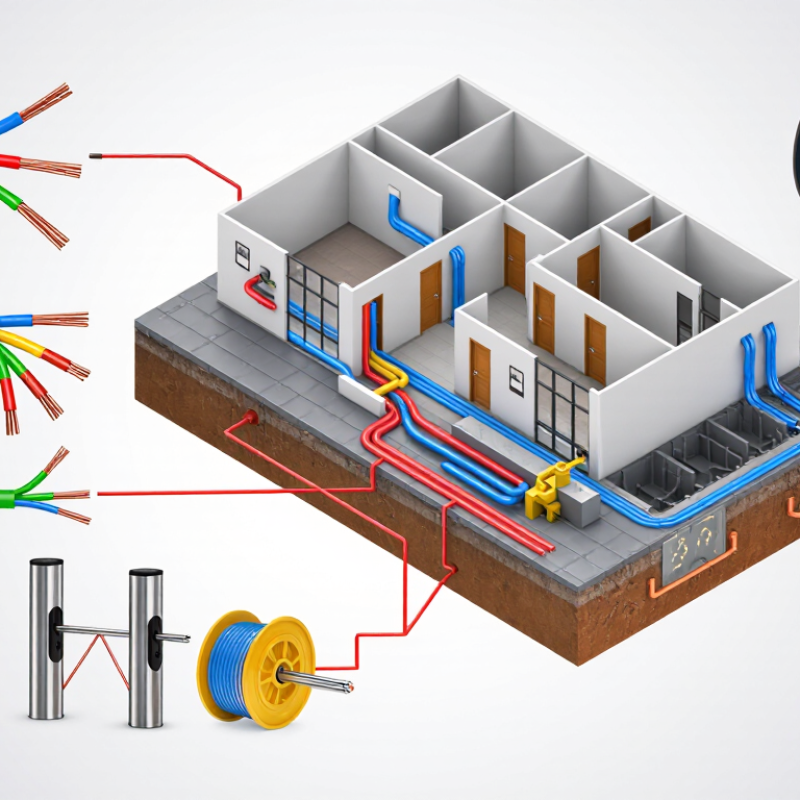
What Access Control Wire Types Are and Why They Matter in 2026
Access control wire types matter because every reader, lock, and controller depends on stable signal transmission. In 2026, buyers commonly compare twisted-pair, shielded, unshielded, solid-core, and stranded conductors. Each type solves a different installation problem. Twisted-pair cable reduces interference across long reader runs. Shielding helps near motors, elevators, and heavy power lines. However, shielding needs proper grounding, or it may create new noise.
Solid-core wire suits fixed routes inside walls and conduits. It offers steady electrical performance and usually terminates cleanly. Stranded wire bends more easily around doors, hinges, and movable gates. That flexibility matters during repeated movement. For communication buses, installers should check conductor size, impedance, and polarity carefully. A small wiring mistake can cause intermittent access events, not an obvious system failure.
Power delivery also changes the decision. Electric locks may need thicker conductors to limit voltage drop, especially on long runs. Data and power should not automatically share the same cable. Buyers should request temperature ratings, jacket materials, fire classifications, and test reports from suppliers. Regional installation rules still differ. Do not rely on a catalog picture.
A useful procurement check includes sample testing, label verification, and a measured voltage-drop calculation.
No cable choice is perfect. Cost savings can become expensive after rewiring. I would also question whether “universal” cable claims fit the actual door distance, environment, and connector design. The best type is the one supported by documented specifications and verified site conditions.
How to Compare Copper, Shielded, Plenum, and Outdoor-Rated Access Cables
2026 Best Access Control Wire Types for Global Buyers?
Choosing access cable starts with the building, not the product label. Solid copper offers stable conductivity and predictable resistance over long runs. Check the conductor material carefully. Copper-clad aluminum can cost less, yet it may create higher resistance and weaker termination performance.
Shielded Cable
Shielded cable suits locations near motors, elevators, radio equipment, or dense power wiring. Its foil or braid can reduce electromagnetic interference, but only with correct bonding and grounding. Poor shield installation can create disappointing results. I have seen clean-looking systems suffer from noisy reader signals because installers ignored the drain wire.
Plenum-rated cable belongs in air-handling spaces, where smoke and flame requirements are stricter. It usually costs more, but the building environment may require it. Outdoor-rated cable needs UV resistance, moisture protection, and a suitable jacket for temperature changes. Burial routes may also need conduit and drainage; an outdoor jacket alone is not always enough. No cable fits every site. Measure distance, voltage drop, bend radius, and local fire rules before ordering. Leave spare capacity where possible, because access systems often gain locks, readers, or exit devices later. A practical comparison should include conductor size, shielding method, jacket rating, certifications, and installation conditions. Lower purchase cost can become higher labor cost when the cable is difficult to terminate or replace.
Which Wire Types Fit Readers, Keypads, Locks, and Security Sensors
2026 Best Access Control Wire Types for Global Buyers
Choosing wire for access control starts with the device, not the catalog label. Readers and keypads commonly use low-voltage multi-conductor cable for power, data, and request-to-exit signals. A 22/4 or 22/6 cable may suit short runs, but terminals and communication standards must match. For modern readers, a shielded twisted pair can reduce interference, especially near motors, elevator equipment, or fluorescent lighting.
Locks usually need a separate power pair because their current demand can exceed the reader circuit. A 18/2 cable often supports longer power runs better than thinner conductors, but voltage drop still requires calculation. Fail-safe and fail-secure locks also behave differently during power loss. That detail is easy to miss. Door sensors and exit buttons typically need smaller two- or four-conductor cables. However, shared pathways can create troubleshooting confusion. Separate cables are often cleaner, even when a combined cable appears cheaper.
Tips: Check the device manual, cable distance, conductor size, shielding, and local fire-rating rules before ordering. Label every cable at both ends. In field commissioning, installers often find that the “right” cable fails because the power supply is undersized or the route is noisy. I would not treat 2026 product charts as universal; regional wiring codes and connector layouts still vary. Leave spare conductors where practical. Future changes rarely follow the original plan.
How Global Buyers Should Check Standards, Voltage, Distance, and Compatibility
Global buyers should choose access-control wire by system function, not by a convenient label. Power circuits often use 18/2 or 16/2 stranded cable, while readers commonly use 22/6 or 22/4 conductors. Confirm the controller’s required voltage first. A 12-volt circuit can lose noticeable power over a long hallway. At the reader, measure voltage under load, not only at the power supply.
Standards matter. TIA-485-A recommends balanced twisted-pair communication for RS-485 networks, with proper termination and controlled grounding. Under suitable conditions, RS-485 can reach about 1,200 meters at lower data rates. Real buildings are less forgiving. Electrical noise, poor shielding, and shared conduits reduce that distance. ISO/IEC 11801 uses a 100-meter channel model for structured cabling, which is a useful planning reference, but it does not automatically approve every access-control installation. The 2024 MarketsandMarkets access-control report also highlights growing demand for connected and integrated systems, making compatibility checks more important.
Ask for the wiring diagram, interface type, conductor resistance, temperature rating, and fire-performance documentation. Check whether the reader uses RS-485, Wiegand, Ethernet, or a proprietary interface. Never assume similar connectors mean similar signals. I have seen installations pass a bench test and fail after 80 meters. That result is frustrating, but instructive. Test the complete cable route with the actual reader, controller, lock, and power load. Regional electrical codes still decide the final acceptance.
How to Select, Install, Test, and Maintain Access Control Wiring Safely
Selecting access control wire types starts with the door, distance, and environment. Use twisted, shielded cable near motors or radio equipment. Choose outdoor-rated insulation for exposed routes. Size conductors for voltage drop, not just device current. A long lock circuit can appear normal, then fail during peak demand.
During installation, separate low-voltage wiring from mains conductors. Label both ends before closing the ceiling. Leave a small service loop inside each enclosure. Connect shields according to the equipment instructions, usually at one controlled point. NIST SP 800-82 Rev. 3 stresses documented configuration and controlled industrial systems. This matters because Verizon’s 2024 Data Breach Investigations Report linked 68% of breaches to the human element. Wiring mistakes can become security mistakes.
Tips: Test continuity, polarity, insulation, voltage, and lock release under load. Record readings at the panel and the farthest door. Check emergency release behavior with authorized personnel. Reinspect terminals after thermal cycling or renovation work. I still find loose ferrules in supposedly finished panels. That is uncomfortable, but useful. Maintenance teams should review logs, corrosion, cable strain, and damaged jackets every quarter. Replace doubtful sections instead of hiding them behind fresh tape. A perfect drawing cannot repair a poor connection.