Toll Free: 866.905.6744 | Local: 845.652.5250
Choosing a control cable supplier is not a simple price comparison. Global buyers must examine engineering depth, production consistency, and documented quality systems. The right supplier should understand automation panels, robotic equipment, factory machinery, and harsh industrial environments.
Thomas Worzyk, a respected cable-systems engineer and author, has stated, “A cable is not only a product; it is part of a system.” That view matters when evaluating the Top 10 Control Cable Suppliers for Global Buyers. A cable may look excellent on a sample table. It can still fail after repeated bending, oil exposure, heat, or electromagnetic interference.
This guide compares suppliers through practical purchasing criteria. These include conductor materials, insulation performance, shielding design, bending radius, temperature range, certifications, customization, delivery capacity, and technical support. Factory audits and traceable test reports also deserve attention. They reveal more than attractive brochures.
Experience matters here.
Some suppliers offer competitive prices but weak after-sales communication. Others provide impressive catalogs yet limited production flexibility. That difference can become costly during a delayed installation. Buyers should request samples, review datasheets carefully, and confirm whether stated standards apply to the finished cable.
The ranking is not perfect. Supplier performance may vary by region, project size, and cable specification. A factory strong in fixed industrial wiring may not suit continuous-flex applications. This guide therefore aims to support careful judgment, not replace engineering verification. Reliable sourcing begins with questions, evidence, and a willingness to reconsider convenient assumptions.
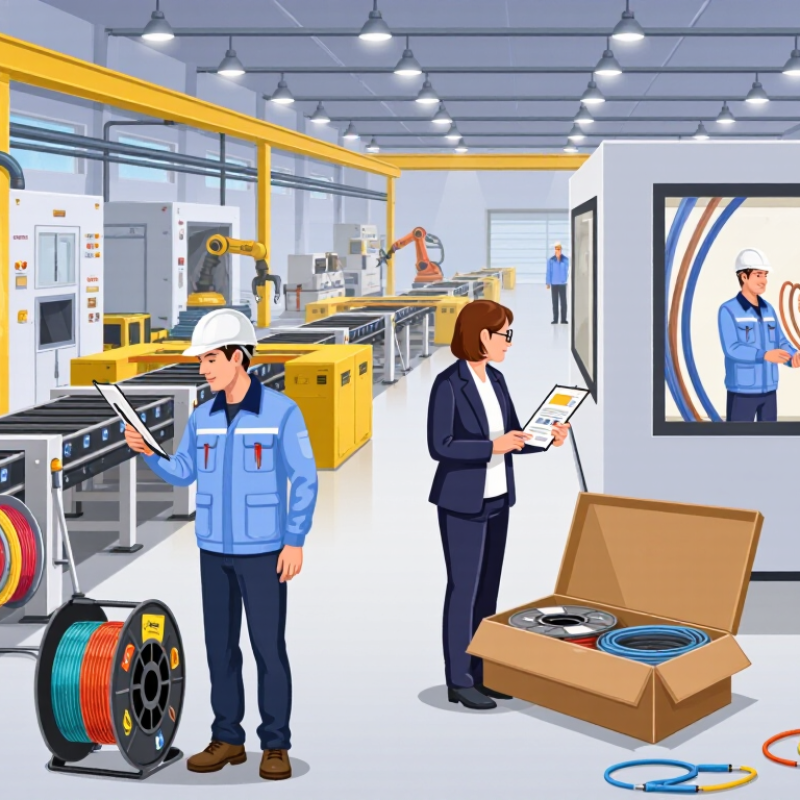
Control cables are the nervous system of automated equipment. They carry low-voltage signals between sensors, controllers, switches, and actuators. In a packaging line, a sensor detects a bottle, a controller processes the signal, and an actuator moves a guide. Control cables connect each step. Unlike power cables, they prioritize signal stability, flexibility, shielding, and identification. Signals are unforgiving.
Demand is rising with factory automation and electrification. The International Federation of Robotics reported 541,302 industrial robots installed worldwide in 2023. Each installation can require extensive feedback and control wiring.
The International Energy Agency’s Electricity 2024 report expects global electricity demand to grow by about 4% annually through 2026. New substations, production lines, and building systems will need dependable control connections. More equipment means more cable decisions.
Global buyers should check conductor size, voltage rating, temperature range, bend radius, oil resistance, and electromagnetic compatibility. Shielding matters near motors and variable-frequency drives.
IEC requirements and independent test reports provide stronger evidence than a supplier’s general claim. Traceable batch records also help investigate failures.
Yet specifications are often copied without reviewing the actual installation. That is a costly blind spot. Field conditions change. Do not guess. A cable suitable for a fixed cabinet may fail inside a moving chain. Careful suppliers should provide drawings, test documentation, and clear installation limits before purchase.

When global buyers compare control cable suppliers, a polished website proves very little. The real test begins with the cable’s intended environment. Ask for conductor construction, insulation material, voltage rating, temperature range, bending radius, shielding, and fire performance. Match each claim with a current test report or certification from a competent laboratory. Do not accept a generic datasheet.
Create one evaluation sheet for all ten candidates. Record factory location, production capacity, batch traceability, quality-control stages, minimum order quantity, lead time, packaging, and export experience. Request samples from the same specification. Measure diameter, resistance, flexibility, and insulation consistency before placing a large order. If the cable enters a moving machine, run repeated bend tests. A static sample can hide fatigue problems. Small details matter.
International purchasing also requires practical communication. Confirm drawing revisions, labeling, language, shipping terms, spare lengths, complaint handling, and response times. A supplier that answers quickly but avoids technical evidence deserves caution. So does one offering an unusually low price. Reliable partners explain limitations clearly and document corrective actions. No supplier is perfect. A missed inspection step can matter more than a confident sales presentation. Recheck critical data before approval, especially when standards, climate, and installation practices differ between markets.
Choosing among the Top 10 Control Cable Suppliers for Global Buyers requires more than comparing prices. Grand View Research estimates the global wire and cable market reached approximately USD 216 billion in 2023. Demand is rising across automation, transportation, energy, and factory equipment. This growth makes supplier verification essential.
A practical top-ten evaluation should examine conductor size, voltage rating, shielding, bending performance, and jacket resistance. For moving equipment, request tested flex-cycle data. For control cabinets, check flame ratings, insulation temperature, and documented batch traceability. Suppliers should provide IEC 60227, IEC 60502-1, or equivalent compliance evidence, depending on the application. Independent inspection reports are useful, especially for large export orders. They reduce unpleasant surprises.
Delivery capability also matters. Ask whether the supplier can maintain identical construction across repeated batches. A small difference in conductor stranding may affect signal stability or installation time. According to MarketsandMarkets, industrial cable demand is supported by factory automation and infrastructure modernization, but published forecasts vary by region and definition. That is worth remembering. A ranking can still mislead. My preferred suppliers offer clear drawings, sample approvals, test certificates, and responsive technical support before payment. They also explain limitations honestly. That detail often separates dependable partners from attractive catalogues.
A practical ten-supplier review should compare products before prices. Leading manufacturers typically offer PVC, PUR, LSZH, shielded, braided, and multi-core control cables. Flexible versions suit robotic arms, while armored designs protect outdoor routes and factory floors. According to Grand View Research, the global industrial cables market was valued at over USD 20 billion in 2023, reflecting strong demand from automation and infrastructure projects.
Certification separates serious suppliers from catalog resellers. Buyers should check IEC 60227, IEC 60228, UL, CSA, CE, and RoHS documentation. ISO 9001 supports process control, while ISO 14001 indicates structured environmental management. Some suppliers also provide CPR testing for European construction projects. Do not trust a logo alone. Request current certificates, test reports, conductor resistance values, and batch traceability.
Their served industries often include factory automation, elevators, renewable energy, rail systems, marine equipment, and process plants. A 2024 MarketsandMarkets report identified automation and industrial networking as major drivers for connected manufacturing investment. That trend increases demand for low-noise, flex-rated cables with stable signal performance. Look for drag-chain testing, oil resistance, bending-cycle data, and custom jacket colors. A supplier may claim millions of flex cycles, yet testing conditions can differ. That detail deserves scrutiny. Procurement teams should also verify minimum order quantities, regional stock, lead times, and technical support. Cheap cable becomes expensive when one failed line stops production.
Choosing the right control cable supplier requires more than comparing prices. The cable must match your equipment, operating environment, and installation method. Check conductor material, insulation type, shielding, flexibility, and temperature ratings. Small differences can affect signal stability and service life.
Ask suppliers for technical drawings, test reports, and traceability records. Reliable manufacturers can explain how each cable is produced and inspected. Look for documented testing of insulation resistance, tensile strength, bending performance, and electrical continuity. Samples are useful, but production consistency matters more. A sample can look perfect.
Consider practical experience. A supplier serving industrial automation, medical equipment, or transport systems should understand different performance demands. Request references from similar projects, not only general customer lists. Confirm minimum order quantities, lead times, packaging, and replacement procedures. Clear communication often prevents costly delays. Ask precise questions.
During evaluation, compare total risk rather than unit cost. A cheaper cable may use weaker insulation or inconsistent conductors. That saving can disappear after repeated failures. I have learned that even experienced buyers sometimes overlook connector compatibility and routing space. Suppliers should review your drawings and identify possible installation problems. They should also explain limitations honestly, instead of promising every specification without evidence. Finally, keep written records of approved materials, test requirements, and delivery terms.
| Rank | Anonymous Supplier Profile | Primary Production Region | Main Cable Categories | Conductor Options | Typical Voltage Rating | Typical Temperature Range | Common Compliance References | Customization Capability | Typical MOQ | Typical Production Lead Time | Best Fit for Buyers |
|---|---|---|---|---|---|---|---|---|---|---|---|
| 1 | Profile A — High-volume industrial cable manufacturer | East Asia | Machine control, flexible control, instrumentation | Bare copper, tinned copper, fine-stranded copper | 300–1,000 V | −40°C to +90°C | IEC 60228, IEC 60332, RoHS, REACH | Conductor size, jacket color, shielding, printing, packaging | 500–1,000 m per specification | 3–6 weeks | OEMs requiring competitive pricing and repeat production |
| 2 | Profile B — European automation cable specialist | Central Europe | Drag-chain, servo, robot and control cables | Class 5 and Class 6 flexible copper conductors | 300–1,000 V | −40°C to +105°C | IEC 60228, IEC 60332-1, CE, RoHS | High-flex designs, torsion resistance, shielding and jacket compounds | 100–500 m per specification | 4–8 weeks | Robotics, CNC equipment and continuous-motion applications |
| 3 | Profile C — North American industrial wire supplier | North America | Tray cable, industrial control and instrumentation cable | Annealed copper, tinned copper, shielded pairs | 300–600 V; selected products up to 1,000 V | −40°C to +90°C or +105°C | UL 1277, UL 758, NFPA 79, RoHS | AWG sizing, insulation materials, armor, shielding and jacket marking | Standard reels from 305–1,000 ft | 2–6 weeks | Industrial panels, process plants and machine builders |
| 4 | Profile D — Custom low-voltage cable producer | South Asia | Multi-core control, signal and data cables | Copper and tinned copper; solid or stranded | 300–750 V | −20°C to +80°C | IEC 60227, IEC 60228, IEC 60332, RoHS | Core count, conductor area, insulation, braid, foil and drain wire | 300–1,000 m per design | 4–7 weeks | Cost-sensitive projects with clearly defined specifications |
| 5 | Profile E — Specialty instrumentation cable supplier | Western Europe | Instrumentation, thermocouple and low-noise signal cable | Copper, nickel alloy and thermocouple alloys | 30–300 V | −60°C to +200°C, application dependent | IEC 60584, IEC 60228, IEC 60332, REACH | Pair geometry, individual shields, overall shields and special insulation | 100–500 m per specification | 5–10 weeks | Refineries, laboratories and measurement systems |
| 6 | Profile F — Heavy-duty cable manufacturer | East Asia | Heavy-duty control, mining and outdoor industrial cable | Stranded copper, tinned copper and aluminum options | 600–1,000 V | −40°C to +90°C | IEC 60228, IEC 60332, IEC 60502, RoHS | Armor, oil-resistant jackets, UV resistance and reinforced constructions | 500–2,000 m per design | 5–9 weeks | Construction, material handling and harsh industrial environments |
| 7 | Profile G — Flexible cable and harness specialist | Southeast Asia | Flexible control cable, cable assemblies and harnesses | Fine-stranded and ultra-fine-stranded copper | 30–600 V | −30°C to +80°C | IEC 60228, IEC 60332, RoHS, REACH | Cut-to-length, stripping, terminals, connectors and continuity testing | 100–500 assemblies or 300 m bulk cable | 3–8 weeks | Equipment manufacturers seeking cable assemblies |
| 8 | Profile H — Fire-performance cable supplier | Northern Europe | Low-smoke, halogen-free control and power-control cables | Class 5 copper conductors | 300–1,000 V | −40°C to +90°C | IEC 60754, IEC 61034, IEC 60332, CPR where applicable | LSZH compounds, fire-performance grades, shielding and identification | 500–1,000 m per specification | 4–8 weeks | Public buildings, transport facilities and enclosed spaces |
| 9 | Profile I — Small-batch engineering cable producer | Eastern Europe | Prototype, custom multi-core and replacement cables | Solid, stranded and fine-stranded copper | 30–750 V | −25°C to +90°C | IEC 60228, IEC 60332, RoHS and REACH | Low-volume designs, unusual core counts, special colors and short lengths | 50–300 m or 25–100 assemblies | 2–6 weeks | Prototyping, maintenance and spare-parts programs |
| 10 | Profile J — Global distribution and stocking specialist | Multi-region distribution network | Standard control, tray, instrumentation and flexible cables | Copper and tinned copper in standard constructions | 300–1,000 V | −40°C to +90°C | IEC 60228, IEC 60332, UL standards, RoHS | Cut-to-length, private labeling, kitting and scheduled deliveries | 1 reel or 1 standard carton | In-stock: 1–10 business days; custom: 4–8 weeks | Urgent orders, maintenance teams and multi-country procurement |