Toll Free: 866.905.6744 | Local: 845.652.5250
Why Choose Cat 5e Cables for Global Networking?
Global networking demands connectivity that is affordable, familiar, and dependable. Cat 5e cables remain widely used for offices, schools, hotels, warehouses, and residential networks. Their practical value comes from supporting Gigabit Ethernet across channels up to 100 meters, when installation follows recognized standards. The IEEE 802.3ab specification established 1000BASE-T operation over balanced copper cabling, while ANSI/TIA-568.2-D defines performance requirements for Category 5e systems. These references provide a stronger foundation than marketing claims alone.
The Cisco Annual Internet Report, covering 2018–2023, projected 5.3 billion internet users and 29.3 billion connected devices by 2023. That scale highlights the need for cabling that technicians can source, terminate, test, and replace across different regions. Cat 5e cables use familiar RJ45 connections and support common Ethernet equipment. They can also support selected Power over Ethernet applications under IEEE 802.3 standards, although power levels, cable bundles, temperature, and installation quality require careful review. A blue cable routed through a crowded ceiling still needs proper labeling and testing.
That is not the whole story. Cat 5e is not automatically the best choice for every new project. Higher bandwidth requirements, long-term upgrades, or dense data-center environments may justify Cat 6A or fiber. The Telecommunications Industry Association stresses channel design, component compatibility, and field performance, not cable category alone. Therefore, this article examines where cat 5e cables remain technically sensible, where their limits become visible, and why local regulations and qualified installers still matter. One practical weakness deserves attention: real-world results can decline when bend radius, termination, or electromagnetic conditions are ignored.
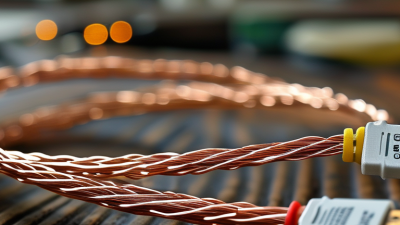
Cat 5e, short for Category 5 enhanced, is a balanced copper network cable. It usually contains four twisted pairs of copper wires. The twisting limits interference between neighboring pairs. Most installations use an eight-contact modular connector at each end. Under suitable conditions, Cat 5e supports Gigabit Ethernet over distances up to 100 meters. That distance includes patch cables and connection points. Small details matter.
In a small office, these cables connect computers, wireless access points, printers, and network switches. Each pair carries carefully timed electrical signals. A switch reads those signals and forwards data to the correct device. Cat 5e is commonly rated for frequencies up to 100 MHz. Its real performance depends on cable quality, connector assembly, and nearby electrical noise. Poorly terminated plugs can create slow links or repeated disconnections. Field technicians often find the fault at the wall outlet, not the switch.
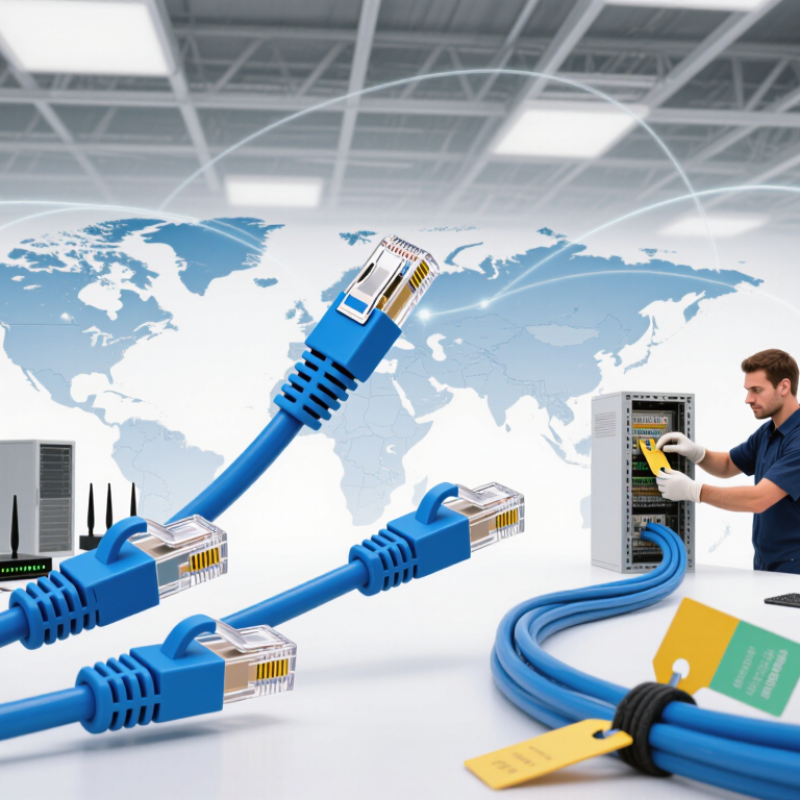
For global networking, Cat 5e usually serves the final indoor connection. Fiber cables may carry traffic between buildings, cities, and countries. Cat 5e then links local equipment inside homes, offices, hotels, and schools. It is affordable, widely understood, and easy to replace. However, it is not the fastest option for every upgrade. Older cable may pass basic tests but struggle in crowded cable trays. I would check distance, shielding needs, and future bandwidth before reusing it. That decision deserves careful testing.
| Data Dimension | Cat 5e Specification or Capability | Networking Relevance |
|---|---|---|
| Cable category | Category 5e, an enhanced version of Category 5 twisted-pair cabling | Provides a widely adopted, standards-based option for structured copper Ethernet networks. |
| Rated bandwidth | Up to 100 MHz | Supports the signal frequencies required by common Fast Ethernet and Gigabit Ethernet applications. |
| Typical Ethernet data rates | 10 Mbps, 100 Mbps, and up to 1 Gbps under compliant conditions | Covers many office, residential, educational, commercial, and access-network requirements. |
| Common Ethernet applications | 10BASE-T, 100BASE-TX, and 1000BASE-T | Allows one cabling infrastructure to support legacy equipment and Gigabit Ethernet upgrades. |
| Maximum channel length | Up to 100 m, normally consisting of a 90 m permanent link and up to 10 m of patch cords | Makes Cat 5e practical for room-to-room, floor-to-floor, and building distribution links when installed correctly. |
| Internal construction | Four balanced twisted pairs, or eight copper conductors | Twisting helps reduce electromagnetic interference and crosstalk between pairs. |
| Conductor size | Commonly 22–24 AWG, depending on cable construction | Conductor selection affects flexibility, insertion loss, power delivery, and installation handling. |
| Nominal impedance | 100 ohms | Matches the impedance used by balanced twisted-pair Ethernet interfaces to help maintain signal integrity. |
| Connector interface | 8P8C modular connectors, commonly referred to as RJ45 connectors | Supports widespread compatibility with Ethernet switches, routers, patch panels, network adapters, and access points. |
| Power over Ethernet | Can support IEEE 802.3af, 802.3at, and 802.3bt applications when the complete channel is compliant | Enables compatible devices such as wireless access points, IP cameras, and telephones to receive data and power through the same cable. |
| Shielding options | Unshielded and shielded constructions are available | Unshielded cable is common in general installations, while shielded cable may be selected for areas with higher electromagnetic interference. |
| Standards alignment | Associated with structured-cabling requirements in ANSI/TIA-568.2-D and ISO/IEC 11801 | Standards-based design supports consistent testing, installation practices, and interoperability across regions. |
| Global deployment value | Commonly available in multiple cable constructions, jacket ratings, and regional electrical configurations | Simplifies sourcing, maintenance, replacement, and network expansion across geographically distributed sites. |
| Installation considerations | Performance depends on compliant components, correct termination, separation from interference sources, and channel testing | Proper installation helps preserve Gigabit performance and reduces faults caused by excessive untwist, poor connectors, or cable damage. |
| Upgrade suitability | Well suited to 1 Gbps networks; higher-speed applications require verification of the cabling channel and equipment requirements | Offers a balanced choice for cost-conscious deployments while leaving a clear upgrade path within its rated performance range. |
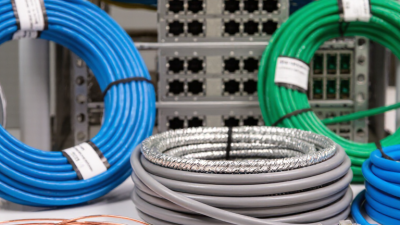
Cat 5e cables remain practical for global networking because they balance speed, distance, and installation cost.
Their rated bandwidth reaches 100 MHz, supporting Gigabit Ethernet under suitable conditions.
A properly installed link can carry data up to 100 meters, including patch cables and permanent cabling. That distance fits many offices, classrooms, warehouses, and small data rooms.
The four twisted pairs help reduce electromagnetic interference and crosstalk between signals. Pair twisting is not decorative. It directly supports signal stability. Cat 5e also works with common modular connectors and network equipment, which simplifies replacement and maintenance across different regions.
Technicians should follow recognized structured-cabling practices, test each completed link, and record results.
A cable may look perfect while hiding a weak termination.
Installation quality often matters more than the cable label. Sharp bends, excessive pulling force, or untwisted pairs near the connector can reduce performance. Keep power cables separated when the environment is electrically noisy. Grounding and pathway planning also deserve attention.
It is not a perfect solution for every backbone. Higher-speed links or longer routes may need newer cabling and active equipment. Still, for many everyday connections, Cat 5e offers dependable performance when its limits are respected. One overlooked detail can change everything.
Why Choose Cat 5e Cables for Global Networking?
Global Standards and Compatibility Considerations
Cat 5e remains useful because its international profile is familiar, measurable, and widely supported. Most compliant cable is rated to 100 MHz and supports Gigabit Ethernet across a 100-meter channel. That distance includes patch leads, outlets, and the permanent link, not only the cable in the wall. A small detail matters. Installers should check ANSI/TIA-568.2-D, ISO/IEC 11801, or the applicable regional standard. These documents define performance, testing, and channel structure.
Compatibility is broader than plugging in an eight-position modular connector. A global project may use different labeling, color conventions, grounding practices, and fire classifications. The connector may fit, yet the installation can still fail inspection. In Europe, CPR classification can affect product selection and building approval. Elsewhere, local codes may demand low-smoke materials or specific separation from power cables. Passive cable does not remove regulatory duties.
During planning, I would request test reports for insertion loss, return loss, and crosstalk. I would also confirm conductor material, shield design, temperature range, and termination tools. Mixing solid and stranded cable carelessly can create unreliable connections. It happens. Cat 5e is economical, but future access points and higher-power devices may justify Cat 6A. Choosing the cheaper category today can narrow tomorrow’s options. That trade-off deserves honest review, especially when labor costs exceed cable costs.
Cat 5e supports widely deployed Ethernet applications from 10 Mbps through 5 Gbps over a nominal 100-meter channel when installation quality, connectors, and environmental conditions meet the applicable requirements. This broad compatibility helps organizations reuse existing structured cabling while moving from Fast Ethernet and Gigabit Ethernet to 2.5GBASE-T and 5GBASE-T. For 10GBASE-T across a full 100-meter channel, higher-category cabling such as Cat 6A is generally recommended.
Reference framework: IEEE 802.3 Ethernet specifications, ANSI/TIA-568.2-D, and ISO/IEC 11801 structured cabling guidance. Actual performance depends on channel length, installation quality, crosstalk, connectors, and network equipment.
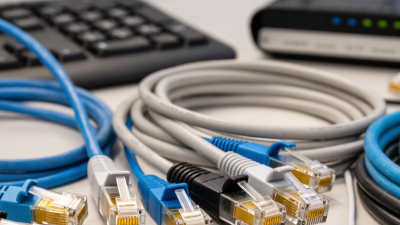
Cat 5e cables remain practical for many home networks. They support Gigabit Ethernet over typical distances of up to 100 meters under suitable conditions. A short cable can connect a router to a desktop, television, or wireless access point. In a small apartment, their flexible jackets fit neatly along baseboards. The cost is usually modest. Installation is simple.
Offices use Cat 5e for workstations, printers, phones, and security devices. A properly terminated cable reduces connection problems near busy desks. Patch panels also make future changes easier. In my experience, labeling both ends saves considerable time during repairs. Poor crimping can still cause intermittent faults. That detail is often overlooked. Cable testers should verify each run before the ceiling is closed.
Data networks may use Cat 5e for edge devices, sensors, and temporary connections. It can serve older equipment reliably, but it is not ideal for every modern workload. Large file transfers, dense server rooms, and higher-speed links may require newer cabling. Signal performance also depends on distance, bend radius, electrical noise, and connector quality. I have seen a short cable fail because it was sharply bent behind a cabinet. That experience is a useful reminder: the cable category alone does not guarantee a stable network. Temperature, installation practice, and local wiring standards deserve equal attention.
Cat 5e remains practical for many offices, homes, and distributed facilities.
Its affordability helps when hundreds of outlets require installation.
During field work, I measure each cable path before pulling wire. Keep permanent links within 90 meters, leaving room for patch cords.
Avoid sharp bends, tight cable ties, and parallel runs beside power lines. Separation reduces unwanted interference. Use proper termination patterns at both ends.
A simple cable tester can reveal reversed pairs, split pairs, and weak connections before walls close. Label every outlet clearly.
Cat 5e commonly supports Gigabit Ethernet across a complete 100-meter channel.
Actual performance depends on cable quality, connectors, grounding, and installation discipline. It offers less headroom for newer multi-gigabit applications.
High-density Power over Ethernet can also increase heat inside crowded bundles. Do not assume old cabling is healthy.
I have found clean-looking cables with damaged pairs and poor terminations.
For new construction, Cat6 or Cat6A may provide a more sensible upgrade path.
Their larger conductors and improved separation can support higher speeds over suitable distances. Check conduit capacity before choosing thicker cable. Existing pathways may not accept an easy replacement.
Upgrade patch panels, outlets, and testing equipment together, rather than changing one section casually. Mixed components can create disappointing results.
Future-proofing is imperfect. Even careful plans can miss changing equipment demands.
Use documented test results, not installation confidence alone.