Toll Free: 866.905.6744 | Local: 845.652.5250
A dependable network often begins with a cable that quietly does its job. In this guide, we examine 10 of the best Cat 5e cable options for homes, offices, gaming rooms, and small business networks. Cat 5e cable remains practical because it can support Gigabit Ethernet across runs up to 100 meters under suitable installation conditions. However, real performance depends on connector quality, cable construction, interference, and installation discipline.
We compare shielding, conductor material, jacket design, length choices, flexibility, and verified bandwidth claims. We also consider whether each cable follows recognized cabling practices, including ANSI/TIA-568.2-D guidance. During evaluation, details matter. A loose plug can interrupt a video call. A sharply bent cable may create future faults. A thin patch lead may fit neatly behind a desk, but it may not suit every permanent installation.
No cable wins every situation. Some models offer excellent value, while others justify their price through stronger jackets or improved strain relief. Our shortlist is useful, but not flawless. Product specifications can change, and marketplace listings sometimes contain confusing information. That is worth remembering. We focus on measurable features, practical use, and dependable evidence rather than flashy packaging. Whether you need a short cable for a router or a longer connection across a room, this comparison aims to make the choice clearer, more realistic, and easier to verify.
What Is Cat 5e and Why Does It Matter for Reliable Networking?
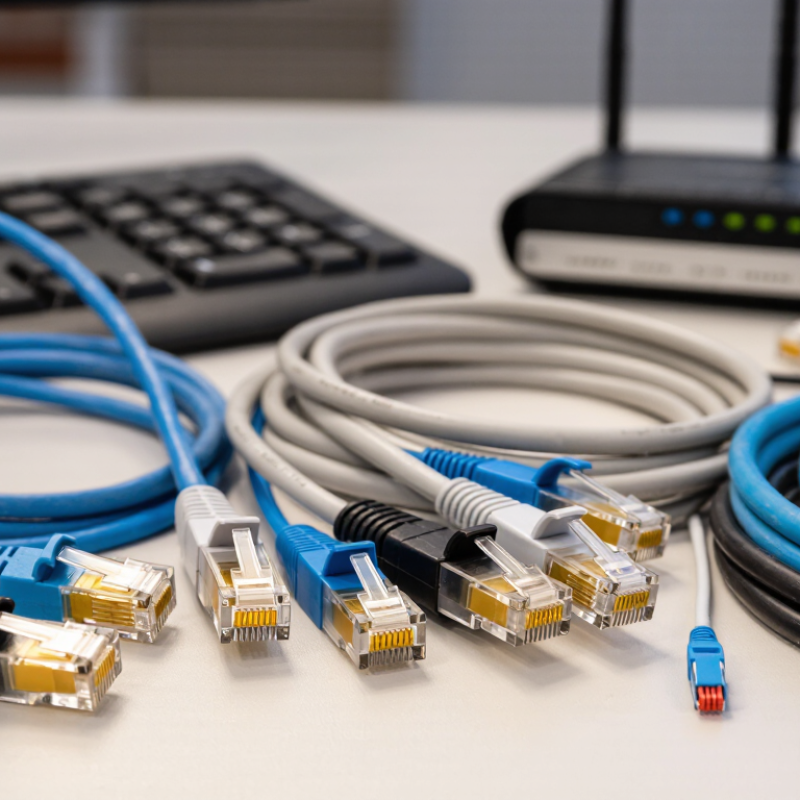
Cat 5e is a twisted-pair Ethernet cable rated for frequencies up to 100 MHz. Under IEEE 802.3ab, it can support 1000BASE-T connections over channels reaching 100 meters. That distance includes patch cables, wall outlets, and permanent cabling. The specification matters because reliable networking depends on tested performance, not appearance.
The label is not proof. A cable may look clean but contain poor conductors, weak shielding, or badly fitted connectors. Field installers often find that sharp bends and loose terminations create intermittent faults. Small details matter. Keep cable paths separated from power wiring, respect the bend radius, and test every installed link. TIA-568.2-D recommends structured cabling practices that help control insertion loss and crosstalk.
Demand for dependable connections keeps growing. The International Telecommunication Union’s Facts and Figures 2023 reported 5.4 billion people online, representing about 67% of the global population. More connected devices increase pressure on home, office, and education networks. Cat 5e remains practical for gigabit access, especially in short, properly terminated runs. It is copper. However, I would not assume every inexpensive cable meets the standard without verification. A certification report, conductor inspection, and basic channel test provide stronger evidence than packaging claims. Short runs help, but installation quality still decides reliability.
10 Best Cat 5e Cables for Reliable Networking?
When comparing Cat 5e cables, start with verified performance, not colorful packaging. IEEE 802.3 defines 1000BASE-T operation across up to 100 meters of balanced twisted-pair cabling. That distance includes permanent links, patch cords, connectors, and patch panels. ANSI/TIA-568.2-D also separates the 90-meter permanent link from the complete 100-meter channel. A cable that works across a short desk setup may fail near that limit.
Look for solid copper conductors, consistent conductor size, and clear category marking. Copper-clad aluminum can create higher resistance and weaker Power over Ethernet performance. It may also become noticeably warm inside crowded cable bundles. Choose the correct jacket rating for the installation area, such as plenum-rated cable where building codes require it. Check the bend radius too. A sharply folded cable can disturb pair geometry and increase crosstalk. Small details matter.
Testing deserves equal attention. Professional certification reports commonly measure insertion loss, return loss, and near-end crosstalk against TIA channel limits. Request test documentation when buying bulk cable. I once focused too heavily on advertised speed and ignored connector quality. That was a mistake. A reliable cable needs compatible plugs, firm strain relief, and clean terminations. Shielding is not automatically better; it requires proper grounding and compatible hardware. Cat 5e remains practical for many gigabit links, but future upgrades may justify higher-rated cabling. That judgment depends on distance, interference, and installation access.
Reliable networking starts with matching the Cat 5e cable to its environment.
The IEEE 802.3 standard supports 1000BASE-T over up to 100 meters.
TIA-568.2-D also defines performance requirements for balanced twisted-pair cabling.
These figures matter in real installations.
For home routers, choose solid-core unshielded cable for permanent wall runs.
Use stranded patch cable for short device connections.
Select shielded Cat 5e near motors or fluorescent lighting.
Choose plenum-rated cable for air-handling spaces.
Riser-rated cable suits vertical building pathways.
Outdoor UV-resistant cable handles exposed walls.
Direct-burial cable fits underground routes.
Water-blocking cable adds protection in damp conduits.
Slim cable works behind desks, though it may offer less physical durability.
A crossover cable remains useful for older equipment, despite modern auto-sensing ports.
Keep runs under 90 meters, leaving up to 10 meters for patch connections, as TIA channel guidance recommends.
Test every installed link with a certified field tester, not only a basic continuity checker.
The Telecommunications Industry Association identifies insertion loss, return loss, and crosstalk as important transmission measures.
That detail is easy to overlook.
A cable can look perfect and still fail under gigabit traffic.
In my experience, cheap thin cable often creates unnecessary troubleshooting.
I would also question flat designs for permanent runs, because their geometry may reduce consistency.
Installation quality matters as much as the label.
10 Best Cat 5e Cables for Reliable Networking?
How to Match Cable Design With Home, Office, and Industrial Environments
The best Cat 5e cable depends on the space, not only its speed rating. For homes, flexible stranded cable works well around routers, desks, and entertainment units. A slim jacket can pass behind furniture with less strain. Choose solid-core cable for permanent wall runs. Keep power cables separated where possible. Small details matter.
Offices need stronger organization. Select cables with clear length labels and durable connectors. Short patch cables reduce clutter inside network cabinets. For longer runs, solid conductors provide stable connections when properly terminated. Test every installed line with a certified cable tester. Visual inspection alone is not enough. A tidy installation may still hide reversed pairs or weak contacts.
Industrial areas demand more caution. Oil-resistant, low-smoke, or UV-resistant jackets may protect cables near machinery, outdoor pathways, and bright sunlight. Shielded designs can reduce interference from motors, but shielding only works when the entire system is correctly grounded. Otherwise, it may create new problems. Cat 5e can support many ordinary networks, yet harsh environments may expose its limits. A common mistake is choosing the cheapest cable and replacing it later. The better approach is matching jacket material, conductor type, bend radius, and connector quality to the actual site. Perfect selection is difficult; thoughtful testing is essential.
| No. | Cable Design | Best Environment | Conductor Construction | Shielding | Jacket Material | Typical Diameter | Temperature Range | Recommended Deployment | Key Reliability Advantage |
|---|---|---|---|---|---|---|---|---|---|
| 1 | Solid UTP, 24 AWG | Home Ethernet runs and small offices | Solid bare copper, 4 twisted pairs | Unshielded | PVC | Approximately 5.0–6.0 mm | Approximately −20°C to +60°C | Permanent in-wall links, patch panels, and network outlets | Low attenuation and stable termination over fixed cable routes |
| 2 | Stranded UTP Patch Cable, 26 AWG | Home devices, desks, racks, and short office connections | Stranded bare copper, 4 twisted pairs | Unshielded | PVC | Approximately 4.5–5.5 mm | Approximately −20°C to +60°C | Flexible equipment-to-wall or patch-panel connections | Small bend radius and easier cable management than solid conductors |
| 3 | Slim UTP, 28 AWG | High-density office racks and compact home installations | Small-gauge stranded or solid copper, 4 twisted pairs | Unshielded | PVC | Approximately 3.5–4.5 mm | Approximately −20°C to +60°C | Short patch leads and low-congestion cable trays | Uses less space and can improve airflow around dense equipment |
| 4 | Solid F/UTP, 24 AWG | Offices with moderate electromagnetic interference | Solid bare copper, 4 twisted pairs | Overall foil shield; pairs individually unshielded | PVC | Approximately 6.0–7.0 mm | Approximately −20°C to +60°C | Fixed horizontal cabling near fluorescent lighting or electrical pathways | Foil reduces external noise when correctly bonded and grounded |
| 5 | Solid U/FTP, 24 AWG | Data rooms and offices with higher noise exposure | Solid bare copper, 4 twisted pairs | Individual foil shields around each pair | PVC | Approximately 6.0–7.5 mm | Approximately −20°C to +60°C | Fixed routes close to motors, power equipment, or dense cabling | Pair-level shielding helps limit crosstalk and electromagnetic coupling |
| 6 | Solid S/FTP, 24 AWG | Industrial rooms and electrically noisy commercial sites | Solid bare copper, 4 twisted pairs | Individual pair foils plus an overall braid | PVC or LSZH, depending on installation requirements | Approximately 7.0–8.5 mm | Approximately −20°C to +60°C | Fixed indoor routes near variable-frequency drives or machinery | Strongest noise protection among common Cat 5e constructions |
| 7 | LSZH UTP, 24 AWG | Public buildings, offices, transport areas, and enclosed spaces | Solid bare copper, 4 twisted pairs | Unshielded | Low-smoke, zero-halogen compound | Approximately 5.5–6.5 mm | Typically approximately −20°C to +60°C | Indoor installations where smoke and corrosive halogen emissions must be limited | Produces less smoke and fewer halogen-based corrosive gases during fire exposure |
| 8 | Outdoor PE UTP, 24 AWG | Residential exterior runs and building-to-building pathways | Solid bare copper, 4 twisted pairs | Unshielded | UV-resistant polyethylene | Approximately 6.0–7.0 mm | Commonly approximately −40°C to +60°C, subject to the cable specification | Outdoor conduit or protected aerial pathways; not direct burial unless rated | Better resistance to sunlight and moisture than ordinary indoor PVC jackets |
| 9 | Outdoor Gel-Filled UTP, 24 AWG | Wet outdoor pathways and underground duct routes | Solid bare copper, 4 twisted pairs | Unshielded | Water-blocking construction with PE outer jacket | Approximately 7.0–9.0 mm | Often approximately −40°C to +60°C, subject to the cable specification | Use only when the product is specifically marked for direct burial or wet locations | Water-blocking materials help reduce moisture migration along the cable |
| 10 | Industrial PUR S/FTP, 24 AWG | Factory floors, machine areas, and demanding automation zones | Stranded or flex-rated copper, 4 twisted pairs | Individual pair foils plus an overall braid | Polyurethane, often oil- and abrasion-resistant | Approximately 7.0–9.0 mm | Commonly approximately −40°C to +80°C, subject to the cable specification | Exposed industrial routing, repeated movement, and areas with oil or abrasion risks | Improved mechanical durability and flexibility compared with standard indoor PVC cable |
Reliable Cat 5e performance begins with careful installation, not the cable box. Keep permanent links below 90 meters, leaving room for patch cords. Use one wiring standard at both ends, such as T568A or T568B. Never mix them accidentally. Maintain gentle bends, and avoid crushing the cable under staples or furniture. Keep data cables away from motors, fluorescent fixtures, and power lines when possible. I have seen a neat-looking cable fail because its jacket was sharply folded behind a wall plate.
Testing should happen before walls are closed. A wire-map tester can identify opens, shorts, reversed pairs, and split pairs. However, a basic tester does not prove full network performance. For demanding installations, use a certified cable analyzer to check length, insertion loss, return loss, and crosstalk. Run the test with the final patch panels and outlets installed. Replace questionable connectors instead of repeatedly forcing them into place. That approach costs more time, but it prevents intermittent gigabit problems that are difficult to trace. My own early installations were not perfect; I underestimated patch-cord quality and had to retest an entire small office. Reliable results come from documenting test readings, cable routes, and any changes made during installation.