Toll Free: 866.905.6744 | Local: 845.652.5250

What Are the Types of High End Speaker Wire?

Choosing high end speaker wire starts with a practical question: what must the cable do in your room? A short run to bookshelf speakers has different demands from a long run beside a power amplifier. Conductor material, gauge, insulation, shielding, and termination all affect suitability. The names can sound grand. The measurable details matter more.

Industry references help separate evidence from sales language. IEC 60228:2023 specifies conductor classes and resistance requirements for cables; it does not certify a cable as “high end” or promise audible gains. Audio Engineering Society technical literature likewise treats resistance, inductance, and capacitance as measurable electrical properties. CTA’s U.S. Consumer Technology Sales and Forecasts report offers wider market context, but it is not a test of speaker-wire performance. That distinction is useful.

This guide compares common types, including copper and copper-clad aluminum conductors, solid-core and stranded designs, and shielded or specialty constructions. It will also explain how gauge and run length affect resistance, and where connectors fit into the decision. Picture a cable routed behind a cabinet, bent around a tight corner, then connected to a binding post: flexibility and a secure termination may matter more than a polished jacket. Expensive does not automatically mean better. And specifications need context. A careful choice begins with the speaker’s impedance, amplifier guidance, cable length, and installation conditions—not a dramatic product claim.
What Are the Types of High End Speaker Wire?

High-End Speaker Wire Types by Conductor Material

High-End Speaker Wire Types by Conductor Material

Conductor material affects resistance, flexibility, cost, and corrosion behavior. Oxygen-free copper is a common high-end choice, but its main advantage is reliable, high-purity copper—not a guaranteed audible upgrade. Copper Development Association conductivity tables use annealed copper as the 100% IACS reference. Silver measures about 106% IACS, while aluminum is about 61%, at the standard reference temperature. That difference is real. In a typical home system, wire length and conductor thickness often matter more than the small conductivity gap between copper and silver.

Pure silver wire offers slightly lower resistance, but its high cost rarely makes it practical for ordinary runs. Silver-plated copper combines a copper core with a thin silver layer; the coating does not turn the whole conductor into silver. Copper-clad aluminum is lighter and less costly, yet its lower conductivity calls for a thicker conductor to achieve comparable resistance. ASTM B193-20 describes methods for measuring electrical resistivity and conductivity, useful when checking material claims. Still, a lab value alone cannot predict how a cable will sound in every setup.

Tips: Match wire thickness to run length and speaker load, and check the manufacturer’s resistance specifications. For long runs, compare measured resistance rather than relying on labels such as “premium.” Keep connections clean and secure. I would not call material choice magic; even careful comparisons can be hard to judge by ear.
Wire Designs Based on Conductor Geometry

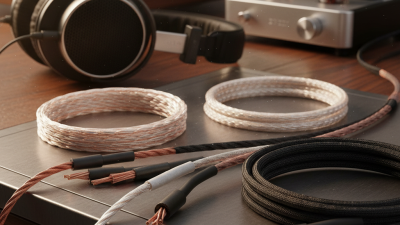
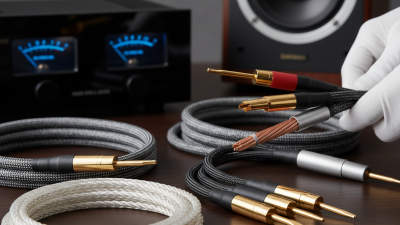
Conductor geometry shapes flexibility, resistance, and how a speaker cable fits behind a cabinet. Solid-core wire uses one conductor per polarity; it is simple, but thick versions can be awkward around tight corners. Stranded wire bundles many smaller conductors, making installation easier. IEC 60228 classifies conductor constructions and resistance requirements, but it does not rank cables by sound quality. That distinction matters. A standard describes measurable properties, not a listening verdict.

Other designs include Litz wire, with individually insulated strands, and ribbon or hollow geometries that spread conductors across a wider profile. NIST reference data puts copper resistivity near 1.68 × 10⁻⁸ ohm-metres at 20°C. Using that value, standard skin-depth calculations give about 0.46 millimetres at 20 kHz. For ordinary speaker-wire dimensions, this suggests skin effect alone is unlikely to justify dramatic claims. Geometry still affects total resistance, handling, and termination quality. In practice, I would check conductor area and connection fit before paying extra for an unusual shape. I may be missing subtle listening differences, but cable shape by itself is not proof of better performance.

What Are the Types of High End Speaker Wire? - Wire Designs Based on Conductor Geometry
Wire Design Conductor Geometry Electrical and Practical Characteristics Typical Considerations
Solid-core One continuous conductor per polarity, usually round or flat. A simple geometry with resistance determined mainly by conductor material, length, and cross-sectional area. Can be relatively stiff and less tolerant of repeated bending; select a suitable gauge and follow the equipment’s connection requirements.
Concentric stranded Multiple round strands arranged in one or more concentric layers around a central strand or core. The strands act electrically as a conductor; the overall cross-sectional area and material largely determine its DC resistance. More flexible than a similar solid conductor. Strand count and lay affect construction and handling, but do not by themselves guarantee better sound.
Rope-lay stranded Bundles of strands are twisted together in successive layers, forming a flexible, rope-like conductor. Provides a flexible way to build a large conductor cross-section; resistance depends primarily on material, length, and total conductive area. Useful where thick cable needs to bend around equipment or through an installation. Check termination compatibility and bend radius.
Litz construction Many fine strands are individually insulated and typically twisted or woven in a controlled pattern. Individual insulation can help manage skin and proximity effects at higher frequencies; the practical benefit depends on frequency and conductor dimensions. More complex to manufacture and terminate. At ordinary audio frequencies, its benefit over appropriately sized conventional wire may be limited.
Braided conductors Strands or small conductor groups are interwoven, sometimes with the positive and negative paths braided relative to one another. The arrangement can influence cable inductance and flexibility. The electrical result depends on the complete layout, including spacing and return-path geometry. Braiding describes how conductors are arranged, not a particular metal or guaranteed performance level. Secure, well-insulated terminations are important.
Flat or ribbon cable Conductors are arranged side by side in a flat profile; positive and negative conductors may be closely spaced. Close spacing can reduce loop area and inductance, while also affecting capacitance. Exact values depend on conductor dimensions, spacing, and insulation. Easy to route along flat surfaces, but may be less convenient around tight corners. Check amplifier compatibility if cable capacitance is unusually high.
Coaxial-style speaker cable A central conductor is surrounded by a dielectric and a concentric outer conductor, which serves as the return path. The geometry can provide consistent spacing and shielding. Its capacitance and other cable parameters depend on the design and materials. Less common for speaker connections than paired cable designs. Confirm that the cable’s electrical characteristics suit the amplifier and installation.

Note: “High-end” is not a standardized wire category. For speaker cable, conductor material, cross-sectional area, cable length, connection quality, and amplifier compatibility are practical selection factors; geometry alone does not establish sound quality.

Stranded, Solid-Core, and Litz Wire Constructions

Stranded, solid-core, and Litz describe how a speaker wire’s conductors are built. Each construction affects flexibility, handling, and electrical behavior, but none guarantees better sound by itself. Wire length, conductor size, and the speaker system also matter.

Stranded wire bundles many small copper strands beneath one insulation jacket. It bends easily around equipment racks and is less likely to fatigue when moved repeatedly. Check that the ends are properly terminated; loose strands can cause connection trouble. Convenient, but not foolproof.

Solid-core wire uses one conductor per polarity. It holds a route neatly along a wall, though tight bends and repeated movement can stress it. Litz wire twists together individually insulated strands, a design intended to limit skin-effect losses. At ordinary audio frequencies, those losses are often modest, depending on wire dimensions. The extra construction may also make Litz harder to strip and terminate. Not magic.

These categories are not always perfectly distinct in finished cables, and marketing language can blur the details. Compare conductor gauge, resistance, capacitance, and installation needs. A short, correctly sized run with secure connections is a more dependable starting point than choosing by construction name alone. The detail people sometimes miss: stiff wire can look tidy, yet put strain on a terminal.

What Are the Types of High End Speaker Wire? — Stranded, Solid-Core, and Litz Wire Constructions

Copper conductor resistance by AWG size at 20°C (per 100 m, one-way). These standard values illustrate how conductor size affects resistance; wire construction alone does not determine it.

Solid-core wire uses one conductor, stranded wire bundles multiple conductors, and Litz wire uses individually insulated strands arranged to reduce certain AC losses. For a given copper cross-sectional area and length, solid and stranded wire have broadly similar DC resistance; Litz performance depends on its strand design and is most relevant where skin and proximity effects matter.

Insulation and Shielding Options in Premium Speaker Wire

What Are the Types of High End Speaker Wire?

Premium speaker wire uses different insulation and shielding choices to suit its route and surroundings. PVC is flexible and durable for ordinary indoor runs. Polyethylene can offer favorable electrical properties, while PTFE withstands heat and resists many chemicals. It can also feel stiff when routed around tight corners. Small details matter. The jacket should protect the conductor without making installation awkward.

Shielding may help when speaker wire runs near power cables, wireless equipment, or other sources of electrical interference. Foil shields provide broad coverage, while braided shields are often more flexible and mechanically robust. Yet shielding is not automatically an upgrade. Speaker signals are relatively resistant to interference, especially over short, well-installed runs. Some shielded designs also have higher capacitance, so check the cable’s specifications and your amplifier’s requirements. I’ve seen people focus on shielding and overlook a loose connection; that’s an easy mistake.

Tips: Keep speaker wire separated from power cables where practical, and avoid sharp bends that can damage insulation. Match the wire length and gauge to the speaker load and run distance. For a typical short home setup, a sound, properly sized unshielded cable may be entirely adequate. Don’t pay extra for a feature your installation does not need.

Speaker Wire Types by Connector and Termination Style

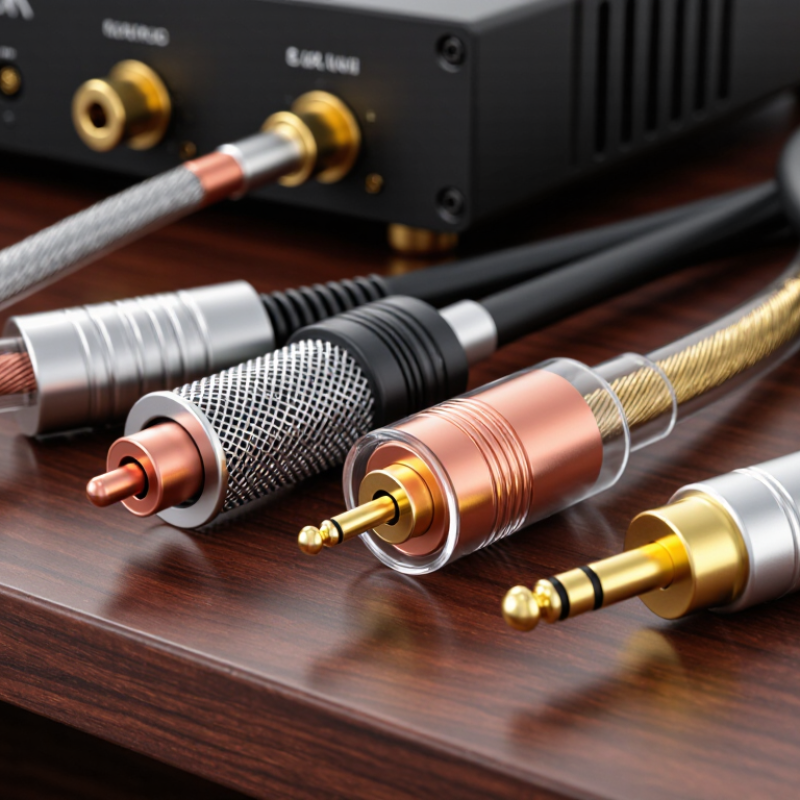
High-end speaker wire is often judged by its connector, but the termination must suit the speaker terminal and amplifier output. Bare wire is inexpensive and fits binding posts, though loose strands can touch adjacent terminals. Banana plugs insert neatly into compatible posts and make repeated setup easier. Spade lugs clamp under binding-post collars, offering a broad contact area when tightened properly. Pin connectors can fit narrow spring clips.

Fit matters.

Termination quality depends on secure, clean contact—not appearance alone. A crimped or soldered connector can work well when correctly matched to the conductor; a poor joint can loosen or add resistance. The National Electrical Code, Chapter 9, Table 8, lists copper conductor resistance at about 2.525 ohms per 1,000 feet for 14 AWG and 1.588 for 12 AWG at 20°C. These are DC reference values, not a complete speaker-cable performance test. Short runs often make connector choice less consequential than correct gauge and solid assembly.

That distinction is easy to overlook.

One detail worth checking twice: whether the connector is rated for the wire’s actual strand count and gauge.