Toll Free: 866.905.6744 | Local: 845.652.5250
China Top 10 Wire Cable Manufacturers for Global Buyers examines a fast-changing industrial market. Wire cable supports power grids, renewable energy projects, buildings, factories, vehicles, and telecommunications systems. Its importance is visible in current investment forecasts. The International Energy Agency reported in Electricity Grids and Secure Energy Transitions that annual grid investment must rise above USD 600 billion by 2030. More grids require more conductors, insulation systems, accessories, and dependable testing.
Market estimates also show strong long-term demand. Grand View Research valued the global wires and cables market at approximately USD 205.62 billion in 2022. Its report projected continued growth through 2030, supported by urbanisation, data infrastructure, and renewable power. Fortune Business Insights published different figures, estimating the market at USD 216.51 billion in 2023. These differences matter. Definitions, regions, and product categories are not always identical.
This guide evaluates leading Chinese manufacturers from a global buyer’s perspective. It considers product range, manufacturing experience, quality systems, international certifications, export capability, and project references. Factory scale alone is not enough. A bright showroom cannot replace stable conductor resistance, accurate insulation thickness, or reliable batch documentation. Buyers should also review standards such as IEC, ASTM, UL, and local approval requirements. Certifications require verification.
The ranking is practical, not absolute. Public information can become outdated. Some companies report capacity more clearly than export performance. That is a limitation worth acknowledging. Still, the selected manufacturers offer a useful starting point for comparing low-voltage, medium-voltage, high-voltage, control, coaxial, and specialty wire cable solutions. Careful buyers should request samples, test reports, production schedules, and after-sales terms before signing a contract.
China’s wire and cable manufacturing industry is no longer driven only by construction. Grid expansion, solar farms, electric vehicles, data centers, and automation are reshaping demand. The International Energy Agency reported that China accounted for about 60% of global electric car sales in 2023. This shift increases demand for charging, battery, control, and high-voltage cables. The National Energy Administration recorded nearly 1,890 GW of renewable power capacity by the end of 2024. These projects require long cable routes, stable insulation, and reliable outdoor performance.
China also offers a dense supply chain for copper, aluminum, polymer compounds, extrusion, testing, and logistics. The National Bureau of Statistics reported 6.1% growth in manufacturing value added during 2024. Scale can hide uneven quality. Some factories still treat documentation as paperwork, not engineering evidence. Global buyers should inspect conductor resistance, insulation thickness, aging performance, flame behavior, and batch traceability. Independent testing remains valuable when specifications appear unusually optimistic.
Material volatility creates another practical concern. Copper and aluminum prices can change between quotation and shipment, affecting cable weight and final cost. Experienced purchasing teams should compare conductor cross-section, not only the quoted price. IEC-based testing can support technical consistency, but certificates need verification against the actual production batch. A factory visit may reveal simple details: clean extrusion lines, sealed compounds, labeled reels, and controlled storage. These details matter. Not every low-cost offer is a real saving.
China Top 10 Wire Cable Manufacturers for Global Buyers
Selecting among China’s leading wire and cable manufacturers requires more than comparing prices. A reliable supplier should show clear factory ownership, production capacity, and export experience. Ask for the exact manufacturing address, not only a sales office. Request recent quality certificates and verify whether they cover the requested cable type. Important details include conductor material, insulation compound, voltage rating, temperature range, and applicable standards.
Check how the factory controls each production stage. Copper or aluminum should have traceable batch records. Extrusion lines need stable temperature control. Finished cables should receive insulation resistance, tensile, dimensional, and flame-related tests where relevant. Request test reports linked to your sample. A cable sample should match the final purchase specification, including color, printing, outer diameter, and bending performance. Small differences matter.
Production schedules deserve equal attention. Confirm minimum order quantities, lead times, packaging methods, and replacement procedures before signing. Clear communication is useful, but documented answers are stronger. A factory may pass a formal audit and still struggle with urgent changes. This is an easy risk to overlook. Review inspection records, loading photos, and carton labels before shipment. Independent pre-shipment inspection can add confidence, especially for large orders. The lowest quotation may hide thinner insulation, weaker traceability, or unstable delivery. Ask difficult questions early.
This procurement scorecard highlights the main criteria global buyers should use when evaluating Chinese wire and cable manufacturers. The weighting reflects practical purchasing priorities, including international compliance, product quality, delivery capability, customization, and export support. Buyers should verify certificates, test reports, factory capacity, and shipment records independently.
The top 10 wire and cable manufacturers in China reflect a broad industrial ecosystem. It serves power grids, construction, renewable energy, rail transport, and factory automation. Grand View Research valued the global wire and cable market at about USD 216 billion in 2023. Its forecast indicates continued growth through 2030. China remains important because of its large production base, engineering capacity, and export infrastructure.
A reliable top 10 selection should examine more than annual output. Buyers should verify ISO 9001 systems, IEC 60228 conductor classes, and IEC 60502-1 compliance where applicable. Factory audits should review copper purity, insulation thickness, spark testing, and batch traceability. These details matter when cables run beneath highways or inside crowded control cabinets. The International Energy Agency reported that annual grid investment must rise above USD 600 billion by 2030 to support energy transitions. This demand increases pressure for dependable medium- and high-voltage products.
No ranking is flawless. Product quality can vary between factories, even within the same manufacturing group. Export experience also differs by destination and certification requirement. Global buyers should request recent test reports, sample approvals, production photos, and references from comparable projects. Price alone can mislead. A cheaper cable may create higher installation and replacement costs later. That uncomfortable point deserves more attention.
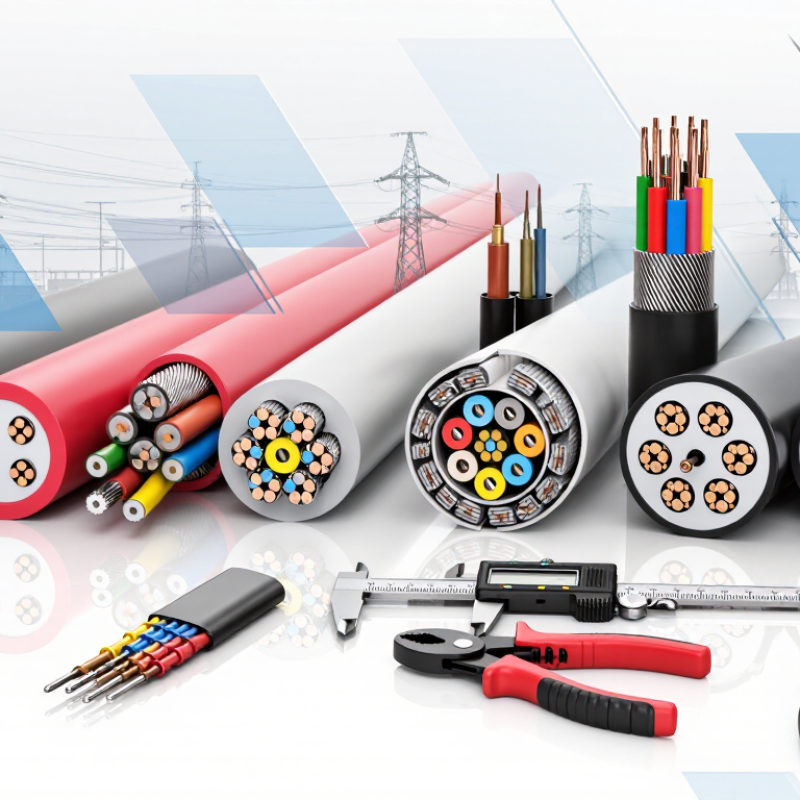
China’s top wire and cable manufacturers serve global buyers with broad product ranges. Typical portfolios include low-voltage power cables, medium-voltage cables, control cables, instrumentation cables, data cables, and solar cables. Some factories also produce fire-resistant, halogen-free, armoured, and marine-grade designs. This variety matters when one project combines rooftop panels, underground feeders, and factory automation.
Quality should begin with documented standards, not attractive brochures. IEC 60228 defines conductor classes and resistance requirements, while IEC 60502 covers many power cables up to 30 kV. IEC 60332 testing evaluates flame propagation. Buyers should request routine test reports, conductor resistance results, insulation measurements, and batch traceability. ISO’s annual survey records more than one million ISO 9001 certificates worldwide, showing its broad adoption. Yet certification alone is not proof of a good shipment. Audits, independent sampling, and inspection before loading remain useful.
The International Energy Agency reported that annual grid investment must rise above 600 billion US dollars by 2030 to support secure electricity transitions. That pressure increases demand for reliable cable supply and consistent testing. In practice, experienced sourcing teams compare factory certificates with destination-market requirements, such as CPR, RoHS, or national approval schemes. Small details matter: jacket markings should remain readable, reels need moisture protection, and copper weight should match the approved design. No supplier is perfect. A careful buyer should record deviations instead of assuming every certificate tells the full story.
| No. | Anonymous Supplier Profile | Main Product Ranges | Typical Conductor and Insulation Materials | Commonly Applicable Product Standards | Relevant Certifications or Approvals to Verify | Typical Quality-Control Practices | Typical Global Applications | Documents Global Buyers Should Request |
|---|---|---|---|---|---|---|---|---|
| 1 | Large Integrated Cable Producer | Low-voltage power cables Medium-voltage cables Control cables Bare conductors | Annealed copper, aluminium, XLPE, PVC, PE, and LSZH compounds. | IEC 60502-1; IEC 60502-2; IEC 60228; IEC 60332-1-2; IEC 60754-1; IEC 61034-2; ASTM B3 or ASTM B8 where specified. | ISO 9001 quality management; ISO 14001 environmental management; ISO 45001 occupational health and safety; product-specific approvals such as CE, UL, or CPR where applicable. | Conductor resistance testing, dimensional checks, insulation spark testing, voltage testing, elongation testing, aging tests, and finished-cable routine testing. | Utility distribution, industrial plants, commercial buildings, renewable-energy projects, and infrastructure construction. | Factory audit report, type-test certificates, routine-test reports, material certificates, RoHS/REACH declarations, and cable construction drawings. |
| 2 | Power Transmission Specialist | Medium-voltage power cables High-voltage accessories Substation cables Screened cables | Copper or aluminium conductors, semiconductive screens, XLPE insulation, metallic screens, and PE or PVC sheaths. | IEC 60502-2; IEC 60840 for selected high-voltage systems; IEC 60228; IEC 60811 test methods. | ISO 9001; independent laboratory type testing; CE or other market-access documentation when required by the destination country. | Partial-discharge testing, insulation-resistance testing, conductor-screen concentricity checks, sheath tests, dimensional control, and thermal-aging verification. | Distribution networks, substations, industrial power systems, rail infrastructure, and large solar or wind installations. | Partial-discharge test results, type-test reports, conductor-resistance data, installation guidelines, bending-radius data, and drum inspection records. |
| 3 | Building Wire and Flexible Cable Producer | House wiring Flexible cords Appliance wires Speaker and signal cables | Stranded or solid annealed copper with PVC, LSZH, rubber, or thermoplastic elastomer insulation. | IEC 60227 series; IEC 60245 series; IEC 60332-1-2; UL 62 or UL 83 for applicable North American constructions. | ISO 9001; CE where applicable; national electrical safety marks; UL or CSA certification only for constructions covered by the relevant listing. | Conductor resistance, insulation thickness, flexing, flame propagation, tensile and elongation, high-voltage, and finished-cord continuity tests. | Residential wiring, appliances, lighting, office equipment, control panels, and portable electrical equipment. | Applicable product certificate, listing number if relevant, conductor class, voltage rating, temperature rating, packaging specification, and sample test report. |
| 4 | Industrial Control and Instrumentation Cable Producer | Control cables Instrumentation cables Data cables Shielded cables | Tinned or bare copper conductors, PVC, PE, XLPE, LSZH, aluminium-polyester tape, copper braid, and drain wires. | IEC 60228; IEC 60332 series; IEC 60754; IEC 61034; EN 50288 for selected instrumentation-cable constructions. | ISO 9001; ISO 14001; EMC test documentation; CE or CPR documentation where the cable is permanently installed in construction works. | Shield-coverage verification, impedance and capacitance measurement, conductor continuity, insulation resistance, crosstalk testing, and flame-performance testing. | Process automation, factories, building-management systems, instrumentation loops, data centers, and security systems. | Shielding construction, impedance data, attenuation or capacitance values, EMC test evidence, CPR classification if required, and cross-sectional drawings. |
| 5 | Renewable-Energy Cable Specialist | Photovoltaic cables Wind-turbine cables Battery cables Energy-storage wiring | Flexible tinned copper, cross-linked polyolefin, XLPO, low-smoke compounds, and UV- and ozone-resistant sheathing. | EN 50618; IEC 62930; IEC 60228; IEC 60332-1-2; relevant IEC 60811 environmental and mechanical test methods. | ISO 9001; TÜV or equivalent third-party test evidence for applicable PV constructions; CE and RoHS documentation where required. | UV and ozone resistance, thermal cycling, wet insulation resistance, abrasion, cold-bend, water-resistance, flame, and conductor-flexibility tests. | Rooftop PV, utility-scale solar farms, wind turbines, battery storage, electric-vehicle charging, and microgrids. | EN 50618 or IEC 62930 test report, operating-temperature range, UV-resistance evidence, connector compatibility, drum-length tolerance, and RoHS declaration. |
| 6 | Fire-Resistant and Low-Smoke Cable Producer | Fire-resistant cables LSZH cables Fire-alarm cables Emergency-circuit cables | Copper conductors, mica or equivalent fire barrier, XLPE or silicone insulation, LSZH compounds, and low-smoke sheaths. | IEC 60331; IEC 60332 series; IEC 60754-1 and IEC 60754-2; IEC 61034-2; EN 50200 for certain emergency-circuit applications. | ISO 9001; product-specific fire-performance test reports; CPR classification or national fire approvals where required by the project. | Circuit-integrity testing under flame, smoke-density testing, halogen-acid-gas testing, flame-spread testing, insulation resistance, and construction verification. | Hospitals, airports, tunnels, high-rise buildings, public transportation, data centers, and emergency-power systems. | Fire-test method and duration, smoke and halogen results, CPR class if applicable, installation method, approved accessories, and batch traceability records. |
| 7 | Marine and Offshore Cable Producer | Marine power cables Shipboard control cables Offshore cables Marine communication cables | Tinned copper, XLPE, ethylene-propylene rubber, LSZH compounds, braided or taped screens, and oil-resistant sheaths. | IEC 60092 series; IEC 60332; IEC 60754; IEC 61034; project-specific rules from recognized marine classification societies. | ISO 9001; applicable marine type approval from a recognized classification society; ISO 14001 or ISO 45001 where maintained by the facility. | Oil-resistance, seawater-resistance, flame, smoke, halogen, mechanical-impact, flexibility, insulation, and dimensional tests. | Commercial vessels, offshore platforms, marine renewable-energy systems, shipyards, ports, and offshore substations. | Classification approval, IEC 60092 test report, oil and seawater resistance data, installation manual, approved cable gland compatibility, and traceability documents. |
| 8 | Rail Transit Cable Specialist | Rolling-stock cables Railway power cables Signal cables Communication cables | Fine-stranded copper, halogen-free insulation, low-smoke sheaths, elastomeric materials, and abrasion-resistant jackets. | EN 45545-2 for fire protection on railway vehicles; IEC 60332; IEC 60754; IEC 61034; EN 50264 or EN 50306 for applicable cable families. | ISO 9001; EN 45545-2 test classification; project-specific railway approval and independent laboratory reports. | Flame, smoke, toxicity, oil, fuel, ozone, vibration, abrasion, flexing, tensile, insulation-resistance, and dimensional testing. | Metro systems, high-speed trains, locomotives, rail signaling, railway stations, and trackside communication systems. | EN 45545-2 classification, application temperature, bending and flexing limits, vibration test evidence, flame-test report, and material declarations. |
| 9 | Automotive and EV Cable Producer | Automotive wires Battery cables Charging cables High-voltage EV cables | Fine-stranded copper or aluminium, cross-linked polyolefin, XLPE, silicone, thermoplastic elastomer, and electromagnetic shielding layers. | ISO 6722 for automotive road-vehicle cables; ISO 19642 for selected automotive cable assemblies; IEC 62893 for applicable EV charging cables. | IATF 16949 for qualified automotive supply chains; ISO 9001; customer-specific approval; CE or other market documentation where applicable. | Conductor resistance, high-voltage insulation, thermal cycling, flexing, abrasion, chemical resistance, shield effectiveness, and end-of-line continuity testing. | Passenger vehicles, commercial vehicles, electric buses, battery packs, charging stations, and automotive control systems. | IATF 16949 certificate, PPAP package, material and process-change controls, high-voltage test report, bending radius, temperature class, and OEM specifications. |
| 10 | Specialty Wire and Cable Export Manufacturer | Coaxial cables Communication cables Custom assemblies Special-purpose wires | Copper, copper-clad materials where specified, PE, PVC, FEP, PTFE, LSZH compounds, foil shields, and braided shields. | IEC 61156 for selected communication cables; IEC 60228; IEC 60332; ISO/IEC 11801 for structured-cabling applications; applicable UL standards for listed products. | ISO 9001; RoHS and REACH declarations; CE where applicable; UL, ETL, or other third-party listing only for approved constructions. | Attenuation, return loss, impedance, near-end crosstalk, conductor continuity, insulation resistance, flame, dimensional, and connector-crimp testing. | Data centers, telecommunications, security systems, industrial electronics, consumer equipment, and customized OEM assemblies. | Performance test report, cable category or impedance specification, connector drawings, RoHS/REACH documents, listing verification, sample approval, and change-control procedure. |

China Top 10 Wire Cable Manufacturers for Global Buyers
When comparing China’s top 10 wire cable manufacturers, global buyers should examine export readiness, not only factory size. Reliable suppliers usually provide product drawings, test reports, packing details, and clear lead times. Ask whether their cables meet the standards required in your destination market. Factory audits can reveal useful details, such as clean winding areas, labeled reels, and moisture-resistant packaging. Production capacity matters, but stable quality matters more.
Export experience also affects the final cost. Confirm the supplier’s preferred port, shipping terms, customs documents, and ability to handle mixed-container orders. Request samples before approving bulk production. Check conductor diameter, insulation thickness, drum dimensions, and voltage ratings. Communication may appear smooth during quotation, yet delays can occur after payment. That weakness deserves attention. No supplier is perfect, and even a strong manufacturer may lack experience with your region’s installation conditions.
Tips: Compare at least three quotations, but do not choose by price alone. Ask for recent inspection records and references from similar markets. Include packaging standards and replacement procedures in the contract. A small sample shipment can expose labeling, moisture, or delivery problems early. Allow extra time for peak-season production. Forecasts are never exact.