Toll Free: 866.905.6744 | Local: 845.652.5250
Choosing the best pv cable from China requires more than comparing price lists. The real question is simple: will the cable survive twenty-five years outdoors?
Dr. Dirk C. Jordan, a photovoltaic reliability researcher, offers a useful reminder: “Field evidence matters more than attractive specifications.” That principle deserves attention. A cable may look excellent in a catalogue, yet fail under heat, moisture, ultraviolet radiation, or repeated temperature changes.
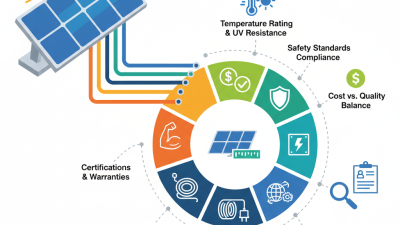
Reliable Chinese manufacturers usually provide cables certified to IEC 62930 or EN 50618. Look for 1,500-volt DC ratings, tinned copper conductors, and cross-linked insulation. Halogen-free compounds can also improve fire performance. The jacket should remain flexible after exposure to sunlight and cold nights.
Details matter.
Ask for production traceability, factory test reports, and independent certification records. A serious supplier should explain conductor class, insulation thickness, connector compatibility, and ageing-test results. Photographs of the production line help, but they are not proof. An on-site audit or third-party inspection gives stronger evidence.
Price still matters. However, an unusually cheap pv cable may signal thinner insulation, inconsistent copper quality, or weak quality control. That conclusion is not always correct. Some factories are efficient and genuinely competitive. My own caution may sound excessive, but cable replacement after installation is expensive and disruptive.
The best choice is usually not the cheapest product. It is the cable with verified materials, stable manufacturing, clear documentation, and proven field performance. China offers excellent pv cable options, but buyers must evaluate the manufacturer, not only the country of origin.
What Is the Best Type of PV Cable from China?
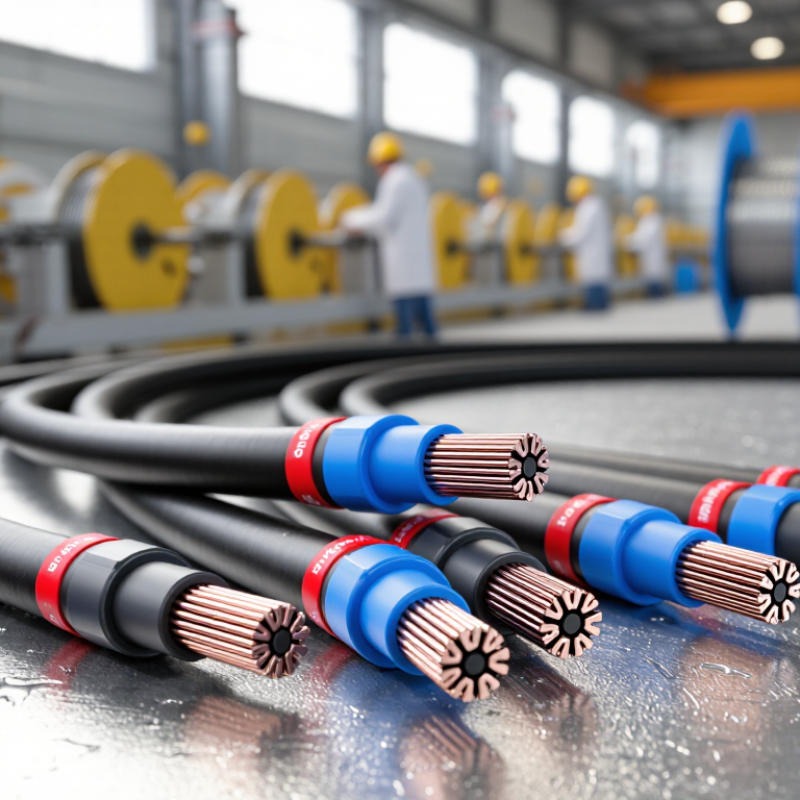
For 1,500 V DC photovoltaic systems, H1Z2Z2-K is often a strong cable choice. Its design suits demanding rooftop, ground-mounted, and floating solar installations. The cable normally uses flexible stranded copper conductors, cross-linked insulation, and a durable outer sheath. These features support repeated routing around modules and cable clips. It also resists sunlight, ozone, moisture, and temperature changes when manufactured to the correct standard.
Safety comes from more than a printed cable code. A reliable Chinese supplier should provide EN 50618 or equivalent test evidence, conductor resistance data, insulation measurements, and batch traceability. Independent laboratory reports add useful confidence. During inspections, I would check sheath markings, conductor flexibility, connector compatibility, and the production date. A cable may look excellent outside but still fail poor crimping or storage conditions.
H1Z2Z2-K is not magic.
Correct sizing still matters. Engineers should calculate current capacity, voltage drop, ambient temperature, grouping, and installation method. Longer DC runs may need a larger conductor to reduce energy losses. Some projects also require special mechanical protection or fire-performance testing. Quality can vary between factories, even when product names appear identical. That point deserves honest attention. Buyers should review samples, audit records, and test results before placing large orders.
What Is the Best Type of PV Cable from China?
For photovoltaic projects, the best cable is not selected by origin alone. IEC 62930 and EN 50618 define key performance requirements for cables used in DC photovoltaic systems. Both standards address cables designed for demanding outdoor conditions, including sunlight, ozone, moisture, heat, and mechanical stress.
The 90°C rating refers to the maximum continuous conductor operating temperature under specified conditions. It does not mean the cable surface will remain at 90°C. It also does not provide a universal ampacity value. Installation method, grouping, ambient temperature, and conduit design still affect current capacity. Small details matter.
EN 50618 commonly applies to H1Z2Z2-K photovoltaic cables, while IEC 62930 provides comparable international requirements for PV cable construction and testing. Buyers should check conductor flexibility, insulation quality, voltage rating, flame behavior, insulation resistance, and resistance to UV and water. Test reports should match the actual cable size and construction. A certificate alone is not enough.
For cables sourced from China, request batch traceability and independent test evidence. Confirm that the printed marking matches the technical documents. Some specifications look impressive but omit ageing results or bending performance. That should raise questions. Even experienced purchasers can overlook installation temperature when comparing suppliers. The cheapest cable may pass a document review and still create field problems.
| Performance Dimension | IEC 62930 Reference | EN 50618 Reference | What It Means When Selecting a PV Cable |
|---|---|---|---|
| Primary application | Electric cables for photovoltaic systems | Single-core photovoltaic cables, commonly designated H1Z2Z2-K | Choose a cable specifically designed for permanent outdoor PV installation rather than a general-purpose DC cable. |
| Rated system voltage | Up to 1.5 kV DC | 1.5 kV DC; 1.8 kV DC maximum voltage between conductors | For 1,500 V DC arrays, confirm that the complete cable marking and certification cover the intended system voltage. |
| Maximum continuous conductor temperature | 90°C | 90°C | The 90°C rating is a continuous conductor operating limit under the applicable installation and loading conditions; it is not the cable’s ambient temperature rating. |
| Short-circuit conductor temperature | Typically up to 250°C for a maximum of 5 seconds, subject to the applicable construction and test requirements | Up to 250°C for a maximum of 5 seconds | Protection devices and fault-clearing times must be coordinated with the cable’s short-circuit capability. |
| Conductor material | Annealed copper conductors, generally stranded for flexible PV applications | Tinned, flexible annealed copper conductor is commonly specified for H1Z2Z2-K cable | Tinned copper helps improve corrosion resistance and long-term termination reliability in humid or outdoor environments. |
| Insulation and sheath | Halogen-free, cross-linked insulation and sheath materials suitable for PV service | Halogen-free, cross-linked insulation and sheath materials for H1Z2Z2-K cable | Cross-linked compounds provide improved thermal stability and resistance to outdoor ageing compared with ordinary PVC cable. |
| Low-temperature flexibility | Performance is verified through the applicable low-temperature flexibility and environmental tests | Designed for operation and installation in cold outdoor conditions, commonly down to approximately −40°C when the declared cable designation and test requirements apply | Check the manufacturer’s declared minimum installation and operating temperatures separately; they may not be identical. |
| UV, ozone and weather resistance | Requires resistance appropriate for exposed photovoltaic installation, including relevant weathering tests | Requires resistance to UV radiation, ozone and weathering for outdoor PV service | For rooftop and ground-mounted arrays, select a cable with documented outdoor ageing performance, not only a voltage rating. |
| Flame performance | Includes applicable flame-propagation requirements for the cable construction | Includes vertical flame-propagation requirements for the finished cable | Verify the actual test report for the complete cable, because compound data alone does not prove finished-cable compliance. |
| Halogen-free and smoke behaviour | Uses halogen-free cable materials and includes relevant fire-performance considerations | Halogen-free construction with low corrosive and smoke emissions under the applicable tests | This is beneficial for enclosed areas, buildings and equipment where corrosive smoke could damage electronics or obstruct evacuation. |
| Common conductor sizes | Typically selected according to design current, voltage drop, installation method and applicable national rules | Common PV sizes include 4 mm², 6 mm² and 10 mm²; the standard does not replace cable-sizing calculations | A larger cross-sectional area can reduce voltage drop, but the final size must also consider grouping, ambient temperature and installation conditions. |
| Connector compatibility | Cable performance is assessed separately from the compatibility of field connectors | Cable is intended for PV connections, but connector compatibility must still be verified | Use connectors approved for the same cable diameter, conductor class, voltage and environmental conditions; do not mix unverified mating components. |
| Best practical choice for a 90°C PV installation | A compliant 1.5 kV DC photovoltaic cable with documented 90°C continuous conductor rating | A compliant H1Z2Z2-K cable with 90°C continuous conductor rating and verified outdoor ageing performance | The best specification is usually a 1.5 kV DC, halogen-free, cross-linked, tinned-copper PV cable with complete test documentation and traceable production control. |
For many rooftop systems, a 4–6 mm² copper PV cable matches common module currents of 15–20 A. Copper offers low electrical resistance and stable performance over long cable runs. A 4 mm² conductor often suits short connections between modules and inverters. A 6 mm² option can reduce voltage drop on longer routes. This difference matters when cables cross a hot roof.
Cable size alone does not prove quality. I would check conductor resistance, actual cross-sectional area, insulation thickness, and connector compatibility. Tinned copper can improve resistance to moisture and oxidation. Double-layer insulation should withstand sunlight, temperature changes, and mechanical movement. The cable should also carry suitable DC voltage ratings, such as 1,000 V or 1,500 V, when required by the system design.
Bigger is not always better. A 6 mm² cable costs more and can be harder to bend inside a connector. However, choosing 4 mm² without calculating distance, ambient temperature, and cable grouping can create avoidable losses. That assumption can fail. Reliable purchasing from China requires factory test records, sample inspection, and traceable production information. I would not rely on appearance alone. A flexible cable may look excellent but still contain less copper than specified. Local electrical rules and an engineer’s calculation should control the final selection.
The best PV cable from China is not defined by origin alone. Sheath chemistry matters more. For exposed rooftops, cross-linked polyolefin, or XLPO, usually offers stronger resistance to ultraviolet radiation, ozone, and thermal cycling than ordinary PVC. It also avoids chlorine release during combustion. Check the certificate, not only the product page.
A suitable cable should withstand −40°C to +90°C operating exposure, while retaining flexibility after repeated temperature changes. Standards such as EN 50618 and IEC 62930 include demanding electrical, mechanical, flame, and environmental tests for photovoltaic cables. Their requirements help buyers compare Chinese manufacturers objectively. The IEA PVPS Trends 2024 report recorded more than 2 terawatts of global solar capacity, increasing the importance of long-life cable design. Small sheath failures can affect large arrays.
No sheath is invulnerable. NREL’s PV Lifetime Project and related field studies commonly report module degradation near 0.5% annually, but cable damage can create sudden maintenance costs instead. I would request UV-aging, ozone, cold-bend, and heat-aging test records before ordering. Look for clear evidence of −40°C flexibility and long-term exposure testing. A claimed +90°C rating is not the same as proven outdoor durability. That distinction is easy to miss. JJSImport
What Is the Best Type of PV Cable from China?
How TÜV Certification and Factory Traceability Verify Chinese PV Cable Quality
The best Chinese PV cable is not chosen by price alone. Its quality depends on verified materials, controlled production, and consistent testing. TÜV certification provides an important reference, but buyers should check its exact scope. The certificate should match the cable type, voltage rating, conductor size, and intended photovoltaic application. Certification is not a substitute for inspection.
Factory traceability adds practical confidence. Ask how each cable batch is recorded, from copper rod and insulation compounds to extrusion and final testing. A reliable factory can provide lot numbers, production dates, test results, and sample retention records. Check the printing on the cable jacket, too. It should remain clear after bending, heat exposure, and outdoor handling. Small details matter.
Tips: Request recent certificates, factory audit records, and batch-level test reports. Compare the certificate holder with the actual manufacturing location. Ask for conductor resistance, tensile strength, insulation thickness, and aging test data. Do not accept scanned documents without verification. A tidy document file can still hide weak traceability. I have seen procurement teams focus heavily on certification and overlook storage conditions, which may affect cable performance before installation. That mistake deserves a second look.
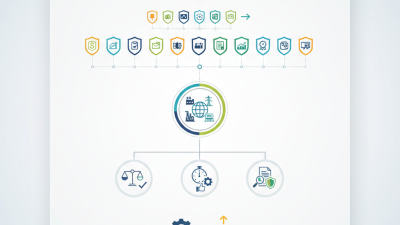
TÜV-certified PV cables should be checked against applicable IEC/EN requirements, while factory traceability links conductor size, material batches, production records, and test results to each shipment.
Reference values show the maximum conductor DC resistance at 20°C for flexible copper conductors under IEC 60228 Class 5. Lower resistance indicates lower electrical loss; certification and traceability records are still required to verify the actual cable supplied.