
Toll Free: 866.905.6744 | Local: 845.652.5250

Why Choose a Road Excavator for Your Project?

Why Choose a Road Excavator for Your Project?

A Road Excavator can support demanding construction work where access, stability, and mobility matter. Unlike a standard crawler excavator, it can travel between nearby work zones without constant trailer transport. This advantage may reduce downtime on projects involving roads, drainage systems, utility trenches, and urban repairs. However, the best choice depends on ground conditions, lifting needs, and local transport requirements.

On a typical road project, operators may excavate beside live traffic, remove damaged pavement, and load spoil into waiting trucks. A wheeled excavator can reposition quickly while keeping the work area organized. Its hydraulic attachments can handle buckets, breakers, compactors, and grapples. Experienced operators still need careful control. A small steering mistake near a curb or buried cable can create expensive delays.

Practical performance also depends on maintenance. Clean hydraulic oil, sound tires, reliable brakes, and regular inspections protect productivity and jobsite safety. Manufacturer specifications and advice from qualified dealers should guide the final decision. A Road Excavator is not perfect for every site. Soft ground, steep slopes, or continuous heavy digging may favor a tracked machine. That limitation deserves honest consideration. Still, when mobility and versatility are priorities, the right wheeled excavator can turn a crowded project into a smoother operation. Its value appears in saved movements, faster repositioning, and more flexible attachment use. Careful planning remains essential.
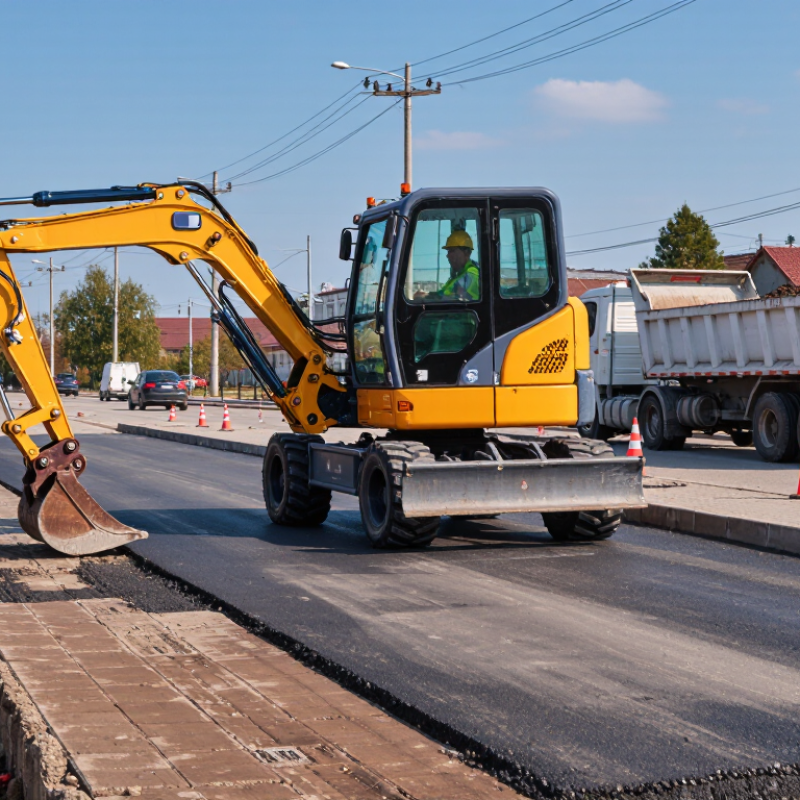
Why Choose a Road Excavator for Your Project?

What Is a Road Excavator?

Why Choose a Road Excavator for Your Project?

What Is a Road Excavator?

A road excavator is a tracked or wheeled machine designed for excavation near roads and transport routes. It removes soil, gravel, broken pavement, and other materials with controlled hydraulic power. Operators can fit buckets, breakers, compactors, or grading attachments for different site conditions.

Its compact design helps it work beside traffic lanes, drainage channels, and narrow construction zones. A wheeled model can travel between nearby work areas without damaging finished pavement as easily. A tracked model offers stronger stability on soft ground and uneven shoulders. The right choice depends on access, soil strength, lifting needs, and local site rules.

Good visibility matters.

During roadwork, the operator may need to follow painted lines, utility markings, and temporary barriers. Smooth hydraulic controls allow careful trenching around existing cables and pipes. From practical site experience, small movements often prevent expensive repairs. Still, an excavator cannot solve every problem. Tight corners may require manual finishing, and wet soil can reduce stability more than expected.

Choosing a road excavator also involves transport time, attachment changes, fuel use, and operator skill. A larger machine may dig faster, but it can restrict access and increase ground pressure. A smaller unit may fit better, although its reach and lifting capacity could disappoint. Reviewing the work area in person remains more reliable than trusting a specification sheet alone.

How Does a Road Excavator Support Construction Work?

Why Choose a Road Excavator for Your Project?

How Does a Road Excavator Support Construction Work?

A road excavator brings digging power directly between work zones. Its wheeled undercarriage travels efficiently across paved surfaces. This can reduce trailer movements, setup delays, and traffic disruption. On urban projects, it handles trenching, drainage work, curb removal, and material placement with suitable attachments. The FHWA’s 2023 National Bridge Inventory recorded 617,084 bridges in the United States. That figure reflects the continuing scale of infrastructure maintenance. Flexible equipment matters when crews move frequently between repair points.

A road excavator also supports safer, more organized workflows. Operators can position the machine precisely beside live work areas. Good visibility helps when digging near utilities, though it never replaces utility locating. The 2024 AGC Workforce Survey found that 94% of contractors struggled to fill salaried positions, while 92% faced craft-worker shortages. Easier machine movement and intuitive controls may reduce pressure on small crews. They do not eliminate training needs. A rushed operator can still damage utilities, pavement, or drainage lines.

Tips

Match the machine to ground conditions, lifting needs, and attachment weight. Check swing clearance before entering narrow streets. Use trench protection and follow the applicable excavation standard. Track fuel use and idle time during each shift. Record cycle times honestly; optimistic estimates often fail on congested roads. Select tires, outriggers, and attachments for the actual surface. A road excavator is useful, but poor planning can erase its mobility advantage.

Why Choose a Road Excavator for Your Project? - How Does a Road Excavator Support Construction Work?

Typical capabilities and construction applications of medium and large road excavators

Construction Dimension Typical Road Excavator Capability How It Supports Road Construction Practical Project Benefit
Operating weight Approximately 15–30 metric tons for common medium-to-large roadwork excavators Provides sufficient stability and hydraulic power for excavation, loading, trenching, and slope work Balances digging force, lifting capacity, transport requirements, and ground pressure for general road projects
Earth excavation Bucket capacities commonly range from about 0.6–1.5 m³, depending on machine size and material Removes soil, weathered rock, unsuitable material, and existing pavement subgrade Supports faster formation of roadbeds, cut sections, drainage areas, and embankment foundations
Trenching and drainage Working depths are often approximately 6–7 m, subject to boom, arm, bucket, and machine configuration Excavates trenches for culverts, stormwater pipes, utility lines, side drains, and inspection chambers Improves water management and helps protect the pavement structure from water-related damage
Loading and material handling Typical maximum digging reaches are about 8–11 m, depending on boom and arm length Loads excavated soil, aggregate, broken pavement, and spoil into transport vehicles or stockpiles Reduces double handling and supports a continuous excavation-and-hauling workflow
Slope trimming and grading Can use grading buckets, tilt buckets, or machine-control systems for more consistent profiles Shapes road embankments, cut slopes, drainage channels, shoulders, and foundation surfaces Helps achieve specified slope angles, surface levels, and drainage gradients with fewer finishing passes
Pavement and site demolition Hydraulic breakers, pulverizers, and shears can be installed as task-specific attachments Breaks concrete, removes asphalt layers, dismantles roadside structures, and processes construction debris Allows one base machine to perform several demolition and material-recovery tasks
Lifting and placement Lifting capacity varies significantly with radius, boom position, attachment, and ground conditions Places drainage sections, pipes, manhole components, barriers, and other approved loads within the work zone Reduces the need for separate handling equipment on suitable lifting operations
Mobility and repositioning Tracked undercarriages provide strong traction on uneven ground; travel speed is commonly around 3–6 km/h Moves between excavation points, drainage alignments, shoulders, and temporary work areas Maintains productivity across changing terrain while limiting dependence on prepared access routes
Attachment flexibility Common attachments include digging buckets, grading buckets, breakers, augers, grapples, compactors, and shears Adapts the machine to excavation, drilling, demolition, compaction, sorting, and finishing activities Improves equipment utilization and may reduce the number of specialized machines required
Production efficiency Actual output depends on bucket fill, material density, swing angle, haul distance, operator skill, and site layout Combines high hydraulic force with a full 360-degree working envelope Supports efficient cycle times and flexible positioning in confined or linear roadwork areas
Safety and control Stability features, operator visibility systems, cameras, alarms, and machine-control technology may be available depending on configuration Improves control during excavation near traffic, utilities, slopes, structures, and workers Supports safer operations when combined with exclusion zones, lift plans, utility surveys, and trained operators

Note: The figures shown are typical industry ranges rather than guaranteed performance values. Actual capacity, reach, digging depth, productivity, and fuel consumption vary according to machine configuration, attachment, soil conditions, operator experience, site layout, and applicable safety requirements.

Key Benefits of Using a Road Excavator

Why Choose a Road Excavator for Your Project?

Key Benefits of Using a Road Excavator

A road excavator gives construction teams controlled digging power in demanding conditions. Its strong arm can remove compacted soil, broken asphalt, and roadside gravel with steady accuracy. This matters when crews work beside traffic, drainage channels, or existing utility lines. A skilled operator can shape a narrow trench without disturbing the entire road surface. Less disruption often means fewer repairs and smoother project coordination.

Mobility is another practical advantage. Many road excavators can move between work areas without repeated loading and unloading. That saves time on projects with several short excavation points. Interchangeable attachments also support grading, lifting, trenching, and material handling. One machine can cover several tasks. This reduces equipment changes, although it does not remove the need for careful planning.

Modern excavators can improve fuel control through adjustable engine settings and efficient hydraulic systems. Operators can monitor digging depth and load conditions more precisely, reducing unnecessary passes. On wet clay, the machine still needs stable positioning and suitable ground protection. This is where real site experience matters. I would not treat every road excavator as a perfect solution. Tight urban spaces, soft shoulders, and buried services can expose serious limits. Pre-work surveys, daily inspections, and clear communication remain essential for safe, reliable performance.

Which Projects Are Best Suited to Road Excavators?

Road excavators suit projects that demand mobility between work zones. Their wheeled undercarriages travel efficiently on paved streets, reducing trailer movements and setup delays. They handle trenching, drainage, curb removal, shoulder repairs, and utility access well. FHWA’s Highway Statistics reports approximately 4.2 million miles of public roads in the United States. That network creates constant, scattered maintenance work.

Urban road rehabilitation is a strong application. Operators can excavate beside live traffic, load spoil, and reposition without damaging finished pavement unnecessarily. Bridge approaches also benefit from precise digging around drainage channels and retaining structures. FHWA’s National Bridge Inventory reports more than 40,000 bridges in poor condition. Many repairs require controlled access, narrow working space, and frequent movement. A road excavator can respond to those constraints better than a slower tracked machine.

Still, the choice is not automatic. Wet clay, deep mud, steep embankments, and rough quarry floors can reduce stability and traction. Not everywhere. Field planning should compare ground pressure, lifting needs, turning space, and haul distances. A common mistake is selecting mobility before checking soil conditions. Tire selection, auxiliary attachments, and operator visibility also influence productivity. I would question any estimate that ignores traffic control, because short digging cycles can still create long roadside delays.

How to Select the Right Road Excavator for Your Needs

Choosing the right road excavator starts with the worksite, not the machine’s advertised power. Measure road width, shoulder strength, turning space, and average digging depth. A compact model suits narrow urban lanes and shallow drainage trenches. Larger units provide greater reach, but they may damage weak shoulders or block traffic.

Review the ground before comparing specifications. Clay, gravel, and broken asphalt place different demands on hydraulic power and bucket design. For trenching, check digging depth, arm reach, and attachment compatibility. For lifting pipes, verify rated capacity at the required working radius. Rated loads change as the arm extends. That detail is easy to overlook.

Mobility matters too. Wheeled excavators can travel between nearby work zones without frequent loading. Crawler models offer stronger stability on soft or uneven ground. I have found that transport planning often affects productivity more than engine size. My first estimate was wrong once. The machine had enough power, but its turning radius caused repeated repositioning. Check fuel use, operator visibility, service access, and noise limits before purchase or rental. Ask for maintenance records and inspect hydraulic lines for leaks, worn pins, and delayed movement. An experienced operator should test the machine under realistic conditions, including a full bucket and a tight roadside turn. Small compromises remain. Choose the one that creates fewer expensive surprises.

Why Choose a Road Excavator for Your Project?

Road excavators provide the reach, lifting capacity, and mobility needed for drainage, utility, grading, and earthmoving work. The chart compares representative equipment requirements by road construction task.

How to select: Choose a compact excavator for confined utility work, a mid-size excavator for general drainage and grading, and a heavy excavator for deep cuts, large-scale earthmoving, and high-volume loading. Values show representative midpoints of common operating specifications and are intended for preliminary selection.