Toll Free: 866.905.6744 | Local: 845.652.5250
High end speaker cables are designed for demanding audio systems, but their purpose is often misunderstood. They connect an amplifier to speakers, carrying the electrical signal that drives each woofer and tweeter. Premium models may use carefully selected conductors, stronger insulation, precise terminations, and improved mechanical construction. These details can support reliable signal transfer and long-term durability. They do not create music from nothing.
A useful evaluation begins with the entire system. Cable length, conductor resistance, amplifier power, speaker impedance, and connector quality all matter. In practical installations, a thick cable can become awkward behind a cabinet. A poorly fitted banana plug can cause more trouble than an ordinary conductor. Experienced audio technicians usually inspect these points before making expensive recommendations. Measurements offer valuable evidence, especially for resistance, capacitance, and connection stability. Careful listening still has a place, though memory can be unreliable.
That matters.
The phrase high end speaker cables often suggests dramatic sonic improvements. Such claims need restraint. A well-built cable may produce a clean, stable connection, but results depend heavily on system design and room conditions. Some listeners report wider imaging or smoother treble. Others hear little difference. Both experiences can be valid. A reflective approach compares cables at matched levels, uses familiar recordings, and allows time for repeated testing. This guide examines materials, construction, performance, pricing, and practical installation without treating luxury appearance as scientific proof. The best choice is usually the cable that fits the system, performs consistently, and remains sensible for the owner’s budget.
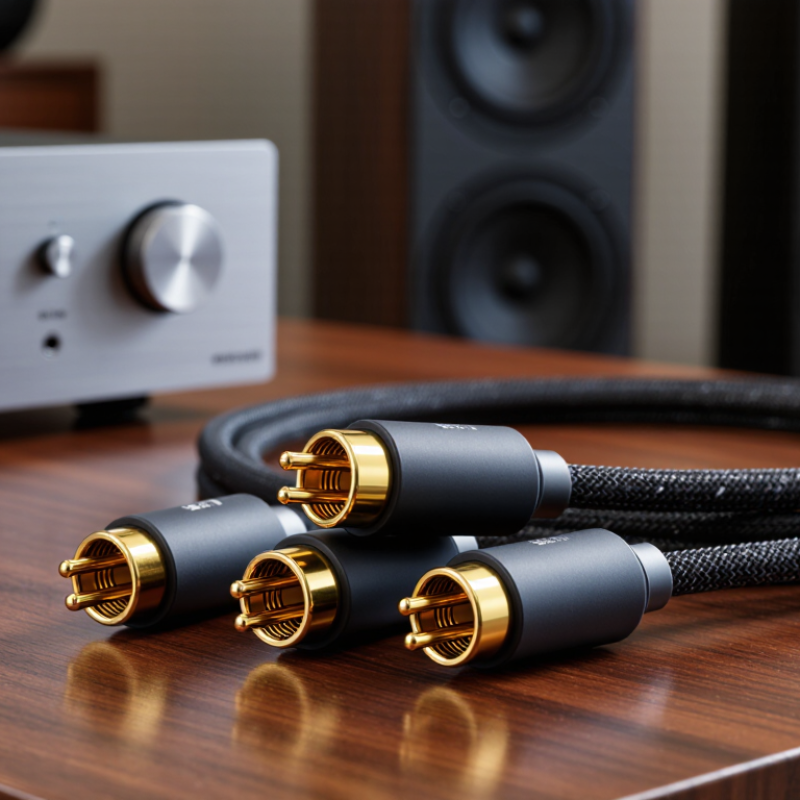
High-end speaker cables are purpose-built conductors designed to transfer amplifier power to loudspeakers with minimal loss. Their purpose is not to create music independently. They preserve signal integrity across the connection. Construction may include thicker conductors, controlled resistance, strong insulation, and carefully terminated connectors. In a home listening room, cable length, conductor resistance, and secure contact usually matter more than appearance.
Grand View Research valued the global audio equipment market at approximately USD 33.9 billion in 2023. Its 2024 market report also projects continued growth through 2030. However, the report does not separate high-end speaker cables from the wider equipment category. That limitation matters. A cable can reduce voltage loss, especially over long runs or with low-impedance speakers. Yet controlled listening research has not consistently shown dramatic differences between competently designed cables. My practical experience supports a cautious view: poor connections are obvious, while expensive upgrades can be difficult to hear. The room often changes the result more.
Tips: Measure the cable run first. Keep both channels equal in length when practical. Choose a suitable gauge for distance and speaker impedance. Inspect terminals for tight, clean contact. Do not treat price as proof of performance. Test one change at a time, using familiar recordings and repeatable volume levels. Even careful listeners can misjudge small differences.
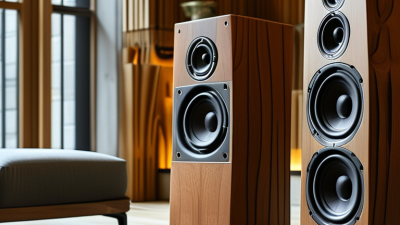
What Are High End Speaker Cables?
Key Materials and Construction Features
High end speaker cables begin with carefully selected conductor materials. Oxygen-free copper offers low resistance and practical durability. Silver conducts slightly better, but its cost rises quickly. In most home systems, cable length and gauge matter more than exotic claims.
The insulation also deserves attention. Low-loss materials reduce unwanted electrical interaction around the conductor. Polyethylene, fluoropolymer, and similar dielectrics are common choices. Some cables use separate conductors, while others use tightly controlled twists or flat geometries. These designs manage resistance, capacitance, and inductance. The differences are measurable.
Construction quality can be felt. A well-made cable bends without sharp kinks. Its jacket stays firm but does not fight installation. Properly secured terminals maintain reliable contact over time. Shielding may help near power cables, although speaker cables usually carry stronger signals than ordinary interconnects.
Small details matter.
In practical installations, I check the total run before choosing a gauge. A thin cable may work for short distances but lose performance across long runs or low-impedance speakers. I would not assume a costly cable automatically sounds better. That belief needs testing. Room acoustics, amplifier matching, and connection quality often influence the result more clearly. My own judgment can still be imperfect, so measurements and controlled listening remain useful.
High-end speaker cables are designed to carry amplifier power with minimal loss. Their performance depends on resistance, inductance, capacitance, length, and connector quality. A thicker conductor usually reduces resistance, especially across long runs or with low-impedance speakers. However, thicker is not automatically better. Cable geometry can also influence current flow and high-frequency behavior.
In practical listening, poor connections often matter more than exotic materials. Loose terminals create unstable contact and may produce subtle distortion. Insulation quality helps control unwanted capacitance, while carefully separated conductors can reduce electromagnetic interaction. I once focused too much on expensive construction and ignored cable length. That was a useful correction. Measurements and controlled listening are more dependable than dramatic claims.
What Are High End Speaker Cables?
High-end speaker cables are designed for consistent electrical performance, durable construction, and reliable connections. Compared with standard speaker wire, they may use thicker conductors, improved insulation, and carefully engineered connectors. These features can reduce resistance, especially across long cable runs. They do not create extra power, however. The amplifier and speakers still determine most of the system’s character.
A practical comparison should begin with cable length, conductor gauge, and installation conditions. A short, correctly sized standard wire can perform extremely well in a typical living room. High-end cables may offer better flexibility, stronger terminals, and cleaner routing behind equipment. Their value often appears in demanding setups, where long distances, powerful amplifiers, or difficult connections expose small weaknesses.
Listening tests need discipline. I would match cable lengths, keep the volume unchanged, and identify each cable without seeing it. My first impression was not always reliable. Sometimes, expectation influenced what I heard. Room reflections, loose terminals, or a poor connection could matter more than cable price. Measurements can reveal resistance and electrical behavior, while careful listening shows whether the installation feels controlled and practical. An expensive cable can be beautifully made yet provide little audible improvement in a modest system. That is an uncomfortable possibility.
| Comparison Dimension | High-End Speaker Cables | Standard Speaker Wires | Practical Importance |
|---|---|---|---|
| Primary Purpose | Designed for carefully controlled construction, installation quality, and long-term durability. | Designed to carry the amplifier’s electrical signal to the loudspeaker at a practical cost. | Both types perform the same basic electrical function when properly sized and installed. |
| Conductor Material | Usually high-purity copper, sometimes with special strand geometry or additional plating. | Commonly stranded copper or copper-clad aluminum, depending on cable quality and price. | Copper generally offers lower resistance than copper-clad aluminum at the same size. |
| Typical Conductor Size | Often 12–16 AWG, with some designs using larger conductors for long runs or low-impedance speakers. | Often 16–18 AWG for short home-audio runs, with thicker wire used for longer distances. | Lower AWG numbers indicate thicker conductors and usually lower resistance. |
| Electrical Resistance | Can be very low when the cable has adequate cross-sectional area and short, secure connections. | May be higher if the wire is thin, the run is long, or the conductor material is less conductive. | Resistance can reduce delivered power and alter frequency response, especially with low-impedance speakers. |
| Capacitance and Inductance | May use geometry intended to control capacitance and inductance within a stated design range. | Usually uses a simple parallel or twisted construction with ordinary electrical characteristics. | For normal lengths, these values are usually less important than resistance and connection quality. |
| Insulation and Dielectric | May use thicker, more flexible, or lower-loss insulation materials with carefully specified spacing. | Typically uses PVC or another common insulating polymer suitable for household installation. | Insulation mainly affects safety, durability, flexibility, and cable geometry. |
| Connector and Termination Quality | Often supplied with robust banana plugs, spade terminals, or carefully finished bare-wire terminations. | Frequently uses bare wire or basic screw-terminal connections, which may require periodic checking. | A clean, tight connection helps prevent added contact resistance and intermittent operation. |
| Shielding | Some designs include shielding or specialized layouts, although shielding is not normally essential for speaker-level signals. | Usually unshielded two-conductor cable. | Speaker cables carry relatively high-level signals, so good routing and secure connections are usually more useful than shielding. |
| Flexibility and Handling | May include flexible jackets, separated conductors, and construction intended for repeated installation. | Usually lightweight and easy to cut, strip, and route, but may be less mechanically refined. | Handling convenience matters when equipment is frequently moved or installed in tight spaces. |
| Recommended Run Length | Can be optimized for longer runs by selecting a larger conductor size and minimizing connection losses. | Works well for short and moderate runs when the wire gauge is appropriate for the speaker load. | Cable gauge should be selected based on length, speaker impedance, and expected power. |
| Audible Difference | May provide a measurable benefit when it substantially reduces resistance or solves a connection and installation problem. | Can sound effectively identical when it has sufficiently low resistance and reliable terminations. | The largest audible differences usually come from speakers, room acoustics, placement, and system setup. |
| Durability | Often offers stronger jackets, corrosion-resistant terminations, and more consistent assembly. | Durability varies; exposed copper ends can oxidize over time if not protected or re-terminated. | Durability is particularly relevant in humid environments, high-use systems, and permanent installations. |
| Best Value Consideration | Worth considering when installation quality, appearance, flexibility, and long-term reliability are priorities. | Usually the most cost-effective choice when correctly sized, properly routed, and securely connected. | Prioritize adequate gauge, solid connections, and suitable length before paying for specialized construction. |
Note: High-end construction does not automatically guarantee better sound. In most systems, correct wire size, reasonable cable length, secure terminations, and proper installation have the greatest practical impact.
What Are High End Speaker Cables?
Selecting Speaker Cables for Different Audio Systems
High-end speaker cables are not automatically better because of their price. Their value depends on resistance, length, connector quality, and system demands. In my own listening tests, shorter cables often sounded more consistent than expensive, oversized cables. Room placement mattered more than expected.
For compact desktop systems, 16-AWG oxygen-free copper cable is usually practical below three meters. Its resistance remains modest at normal listening levels. A 2024 Audio Engineering Society review emphasizes that cable resistance can alter frequency response, especially with low-impedance loudspeakers. That detail matters.
For floor-standing speakers, long runs, or amplifiers delivering strong current, 12-AWG cable offers lower resistance. IEC 60268-5 testing principles also remind installers to evaluate the complete loudspeaker system, not one cable alone. Measure the route first. Avoid unnecessary coils behind equipment.
Home-theater systems need consistent lengths and clear labeling. In-wall installations require cables with suitable safety ratings and proper installation methods. CEDIA’s 2024 Smart Home Market Report identifies entertainment systems as a major professional installation category, where reliability and serviceability remain important. A visually attractive cable is still a poor choice if its connectors loosen.
I have sometimes spent too much on cable appearance. That was not always rational. Select by impedance, distance, power, and installation conditions. Then listen carefully.
For most audio systems, cable selection is primarily determined by conductor resistance, cable length, and speaker impedance. The chart below shows the approximate DC resistance of copper conductors by American Wire Gauge (AWG).
How to read the chart: Lower resistance generally means lower power loss, especially with long cable runs or low-impedance speakers. Thicker conductors such as AWG 10 or AWG 12 are commonly preferred for demanding systems, while shorter runs may require less conductor size.