
Toll Free: 866.905.6744 | Local: 845.652.5250
Vacuum Brazing Process questions usually begin with a practical concern: will the joint hold under real operating conditions? Buyers also need clear answers about alloy compatibility, joint clearance, furnace pressure, and temperature control. A small gap between parts can matter. So can oil left on a machined surface.
Brazing consultant and author Dan Kay is a useful reference point for buyers evaluating brazing fundamentals. A concise paraphrase of the core principle is: “Reliable brazing depends on clean surfaces, suitable joint clearance, and a controlled heating cycle.” This is an editorial paraphrase, not a verified verbatim quotation. That distinction matters. Technical guidance should be traceable, not dressed up as a direct quote.
The questions ahead cover more than furnace specifications. They explore how suppliers manage fixturing, part distortion, inspection, and repeatability across production batches. Ask how the process is qualified, what records are available, and how defects are investigated. Request details for your actual component, not just a generic capability sheet. A polished sample is useful, but it cannot prove consistent performance across a full production run. Even experienced buyers can overlook a small design or cleaning detail. It happens. Use this guide to ask sharper questions, compare supplier answers, and identify what still needs validation before committing to production.
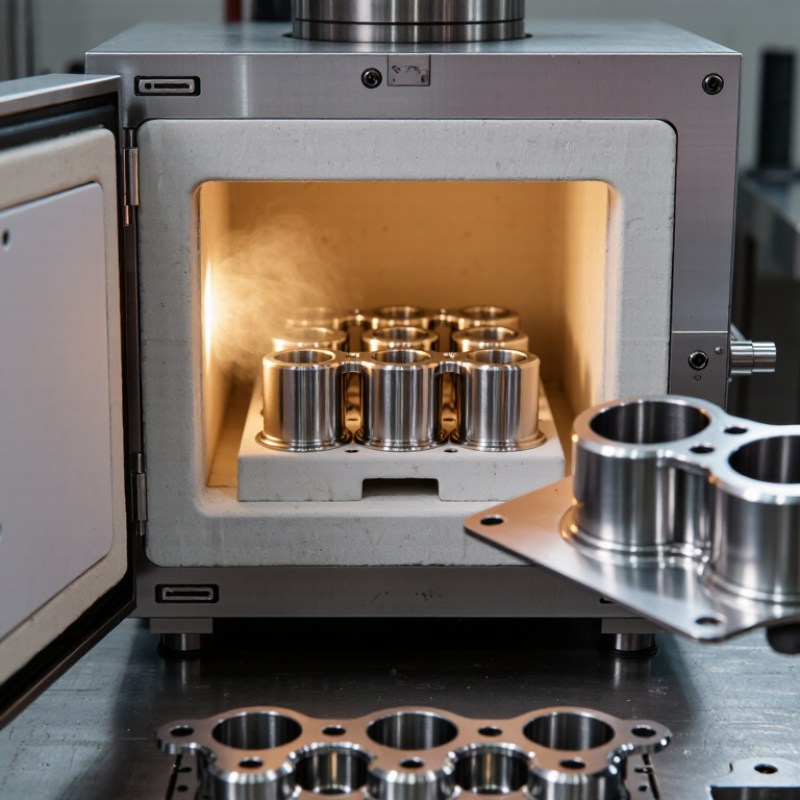
Vacuum brazing joins metal components with a filler alloy that melts below the melting point of the parts. The components stay solid while the filler flows into close-fitting gaps. Unlike welding, the process does not fuse the base metals together. It is useful for assemblies with many joints or complex internal passages.
Preparation matters. Surfaces are cleaned, fitted, and held in place with suitable fixtures. A narrow, consistent gap helps the molten filler spread by capillary action. Too much clearance can leave a weak or incomplete joint. The assembly then enters a sealed chamber, where air is removed and the temperature is raised according to the material and filler requirements. Small details count.
As the filler melts, it wets the joint surfaces and fills the gaps. The base metals remain below their melting point. Controlled cooling helps limit distortion, though part geometry and fixture design still affect the result. In practice, a neat temperature chart does not prove every hidden joint is sound. Technicians may check samples, dimensions, or finished parts for signs of incomplete fill and movement. The process seems straightforward on paper; real assemblies can be less forgiving.
Top 10 Vacuum Brazing Process Questions Buyers Ask?
Which Materials and Joint Designs Are Suitable for Vacuum Brazing
Vacuum brazing suits assemblies made from stainless steels, nickel alloys, copper alloys, and some aluminum alloys. The right filler metal depends on the base materials, service temperature, and operating environment. Aluminum needs a carefully controlled cycle because its oxide film can interfere with bonding. Titanium can also be brazed, but its strong reactivity demands specialized process controls and compatible filler metals. A material name alone is not enough; confirm the full alloy grade and condition.
Joint design matters just as much. Lap joints usually provide more bonding area than simple butt joints. Keep the joint clearance consistent and suited to the selected filler metal; gaps that are too wide or too tight can weaken capillary flow. Sharp corners, uneven gaps, and trapped pockets may cause defects. In practice, a design that looks neat on a drawing can still distort during heating, so review the assembly’s expansion and support points.
Tips: Clean mating surfaces thoroughly, then handle them with gloves. Ask your supplier to verify alloy compatibility, clearance, and furnace-cycle requirements using a representative sample. Include vents for enclosed spaces where trapped gas could disrupt the cycle. Small details matter. And some designs need revision after the first trial.
A vacuum brazing cycle starts before the furnace gets hot. Parts are cleaned, dried, and positioned so the joint gap stays consistent. Filler metal is placed near the seam; capillary action draws it through the joint once it melts. Fixtures matter. A small shift during heating can leave one section underfilled. The AWS Brazing Handbook defines brazing as joining above 450°C, but the actual setpoint depends on the base metal and filler alloy.
After loading, the furnace is evacuated to limit oxidation, then heated at a controlled rate. Operators monitor temperature and vacuum readings, while thermocouples help reveal how quickly the parts themselves heat. AMS 2750 sets furnace temperature-uniformity classes with limits ranging from ±3°C to ±28°C. That range is a reminder: a displayed setpoint alone does not prove every joint reached the same temperature. Not quite.
At the brazing temperature, a timed hold lets the filler melt and flow; excessive heat or hold time can damage parts or encourage unwanted reactions. The furnace then cools the assembly under controlled conditions, often without breaking vacuum until the hot zone is safe. Cooling rate matters, too. It can affect distortion and residual stress, yet it is easy to overlook when reviewing a cycle chart. The cycle record should capture temperature, vacuum, and hold time for each production load.
| Top 10 Vacuum Brazing Process Questions Buyers Ask: What Happens During Each Stage of a Vacuum Brazing Cycle? | |||
|---|---|---|---|
| No. | Buyer Question | Cycle Stage | What Happens and What Is Controlled |
| 1 | What needs to be done before the parts enter the furnace? | Part preparation and loading | Parts are cleaned to remove oils, dirt, and residues, then dried and assembled with the specified filler metal. Joint clearance, fit-up, fixture design, and load spacing are checked. Cleanliness and assembly condition strongly affect filler flow and joint quality. |
| 2 | Why is the furnace evacuated? | Pump-down | Vacuum pumps remove most of the air and other gases from the chamber. Reducing oxygen around the parts helps limit oxidation during heating. The required vacuum level depends on the materials, filler metal, furnace design, and process specification. |
| 3 | What happens to moisture and volatile contamination? | Outgassing and initial heating | The load and furnace materials can release water vapor and other gases as they warm. Pumping continues to remove these gases. A controlled heating rate and adequate evacuation help reduce contamination and avoid excessive gas release near the brazing temperature. |
| 4 | How quickly does the load heat up? | Controlled ramp-up | The furnace raises the temperature according to a programmed profile. The ramp rate is selected to suit the component mass, geometry, materials, and fixture arrangement. Controlled heating helps limit thermal gradients and reduces the risk of distortion or uneven temperature distribution. |
| 5 | Why may the cycle include a temperature hold before brazing? | Temperature equalization | A dwell below the brazing range may be used to allow the load to approach a more uniform temperature and to support continued outgassing. The need, temperature, and duration of this step depend on the part design and the qualified process recipe. |
| 6 | How is the brazing temperature chosen? | Approach to brazing temperature | The setpoint is based on the filler metal’s melting range, the base materials, and the joint design. It must be high enough for the filler to melt and wet the joint surfaces, while remaining within the limits of the components and process specification. |
| 7 | What happens while the parts are held at brazing temperature? | Brazing hold | The filler metal melts, wets compatible clean surfaces, and flows through the joint by capillary action when the joint gap and assembly conditions are suitable. Hold time is controlled to support filling without unnecessary exposure that could cause erosion, excessive filler flow, or undesirable metallurgical changes. |
| 8 | Why is cooling controlled rather than immediate? | Controlled cooling | After the brazing hold, the load is cooled according to the process recipe. Cooling rate can affect thermal stress, distortion, and the resulting microstructure. The appropriate profile depends on the materials, component geometry, and performance requirements. |
| 9 | When is the chamber opened? | Cooling under vacuum and backfill | Parts are generally cooled to a specified safe temperature before the chamber is backfilled with a suitable gas or otherwise returned to atmospheric pressure. The chamber should not be opened until the equipment procedure permits it and the load is safe to handle. |
| 10 | How is a completed brazed assembly evaluated? | Unloading and inspection | After unloading, inspection may include visual checks, dimensional measurement, leak testing, or nondestructive examination, depending on the part and acceptance criteria. Furnace records and process parameters are reviewed where required. Inspection methods should be defined by the drawing, specification, or quality plan. |
| Cycle stages and settings vary with the base materials, filler metal, component geometry, furnace capability, and qualified process requirements. The table describes common process steps and is not a substitute for a validated brazing procedure. | |||
After vacuum brazing, inspectors check whether joints are continuous, clean, and correctly positioned. Visual examination can reveal discoloration, distortion, blocked passages, or obvious gaps. It cannot confirm every hidden defect. Measurements also matter: critical dimensions are compared with the drawing, especially around mating surfaces and thin walls. For a small heat exchanger, even slight distortion may affect assembly.
Inspection methods depend on the part and its service conditions. A pressure or leak test can help verify sealed passages, while radiography or computed tomography may show internal joint coverage. These methods have limits, and not every part needs every test. Some programs use destructive sectioning on sample parts to examine braze flow and joint thickness. Agree on acceptance criteria and sampling plans before production; otherwise, a technically sound result can still invite disagreement.
Top 10 Vacuum Brazing Process Questions Buyers Ask?
What Buyers Should Compare When Choosing a Vacuum Brazing Supplier
Choosing a vacuum brazing supplier means looking beyond quoted price and delivery time. Ask how the supplier controls furnace temperature, vacuum levels, and heating cycles. These details affect joint consistency, especially when parts have thin walls or tight tolerances. Request examples involving similar materials and geometries. A capability sheet helps, but it cannot show every production challenge.
Compare how each supplier handles part cleaning, fixture design, and inspection. Residue or poor component positioning can weaken a braze joint. Ask what inspection methods are used and whether results are recorded for each batch. Check that the supplier can explain its process in clear terms. If answers feel vague, pause. I have seen buyers overlook communication, then struggle to resolve small drawing changes.
Tips: Send a representative drawing and material list before requesting a quote. Ask about sample runs, traceability, and capacity during peak periods. Compare the answers, not just the numbers. No supplier is perfect; clear limits and honest feedback matter.