
Toll Free: 866.905.6744 | Local: 845.652.5250

Top Hex Machine Screw Manufacturers for Global Buyers

Choosing the right Hex Machine Screw manufacturer can shape product quality, assembly speed, and long-term maintenance costs. Global buyers need more than attractive pricing or polished catalogs. They must examine material grades, thread accuracy, head dimensions, drive quality, surface finishes, and production consistency.

This guide introduces leading manufacturers serving international markets and explains how they compare. The evaluation considers factory capability, quality-control procedures, customization options, export experience, and technical support. Reliable suppliers should provide clear specifications, traceable material certificates, inspection records, and samples that match mass-production parts. Details matter. A screw that looks acceptable may still fail during automated installation.

Practical sourcing also requires attention to packaging, minimum order quantities, lead times, and communication across time zones. Experienced manufacturers usually explain tolerances clearly and identify possible issues before production begins. They may support common standards such as DIN, ISO, or ASME, depending on the buyer’s application. However, compliance claims should be verified through current documentation, not assumed from a website statement.

No ranking is perfect. Manufacturer performance can change with new equipment, subcontracting decisions, raw-material conditions, or management practices. Buyers should request recent samples and review inspection methods before placing significant orders. A careful comparison helps engineers, distributors, and purchasing teams choose dependable Hex Machine Screw suppliers with greater confidence. The strongest partnership is not always the cheapest option; sometimes, transparent communication and stable quality prevent much larger costs later.
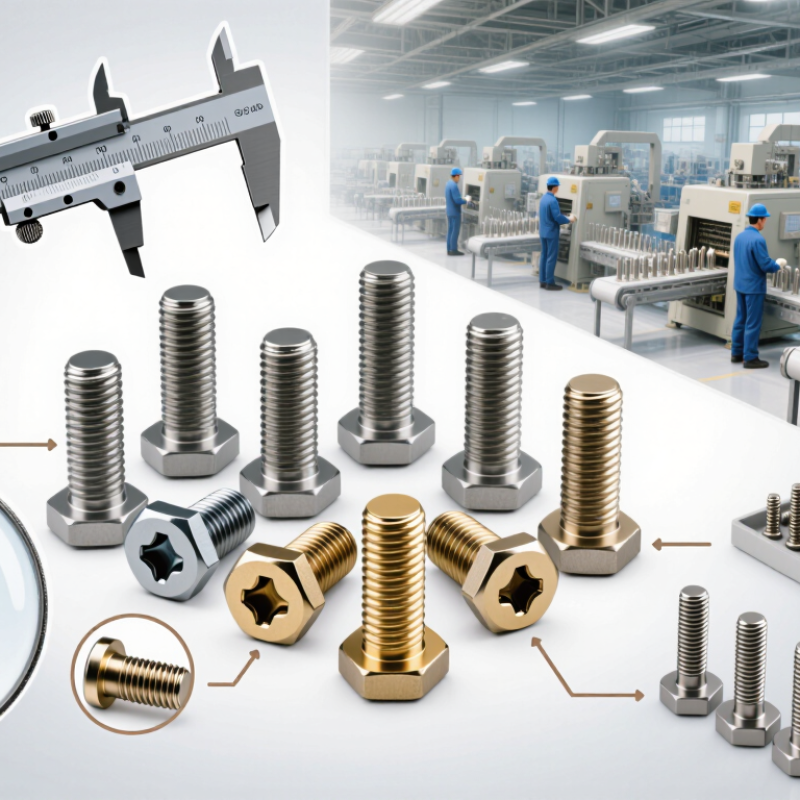
Top Hex Machine Screw Manufacturers for Global Buyers

What Are Hex Machine Screws and Where Are They Used?

Top Hex Machine Screw Manufacturers for Global Buyers

What Are Hex Machine Screws and Where Are They Used?

Hex machine screws are fully threaded fasteners with a six-sided head. A wrench or socket turns the head during installation. Unlike wood screws, they usually work with tapped holes, nuts, or threaded inserts in rigid materials.

Their design supports controlled clamping. It also allows removal during maintenance. Common materials include carbon steel, stainless steel, and alloy steel. Coatings such as zinc can improve corrosion resistance, but coating choice should match the working environment. ISO 4017 covers many fully threaded hexagon-head screw dimensions, while ISO 898-1 defines mechanical property classes for carbon steel fasteners.

They are used in electrical cabinets, HVAC equipment, machinery frames, automotive components, and industrial guards. Picture a steel enclosure: the screw passes through a cover and engages a threaded insert. Correct thread engagement matters more than simply tightening harder. Too little engagement can strip threads. Excessive torque can deform the joint.

The market is substantial. Fortune Business Insights estimated the global fasteners market at about US$94 billion in 2023, with continued growth projected through 2032. This figure includes many fastener types, not only hex machine screws. That distinction is important.

A common sourcing mistake is comparing price alone. Buyers should verify thread standard, diameter, length, strength class, surface treatment, packaging, and inspection records. ASTM F3125 and ISO-based specifications may apply, depending on the assembly. Supplier test certificates help, although paperwork does not replace independent sampling. Human error remains possible.

What Are Hex Machine Screws and Where Are They Used?

Hex machine screws are threaded fasteners with a six-sided head or internal hex drive, designed to join components with a nut or tapped hole. The chart compares common ISO metric coarse-thread sizes by nominal diameter and standard thread pitch. Smaller sizes are often used in electronics and light assemblies, while larger sizes are common in machinery, equipment frames, and structural enclosures.

Reference dimensions follow commonly used ISO metric coarse-thread designations: M3 × 0.5, M4 × 0.7, M5 × 0.8, M6 × 1.0, and M8 × 1.25. Actual selection also depends on load, material, engagement length, clearance, and corrosion requirements.

Key Standards and Specifications Global Buyers Should Review

Top Hex Machine Screw Manufacturers for Global Buyers

Key Standards and Specifications Global Buyers Should Review

A reliable hex machine screw begins with a clearly defined standard. For inch products, buyers often review ASME B18.6.3 and thread classes such as 2A and 2B. Metric products may follow ISO 1580 or ISO 7045. Confirm the standard edition, because requirements can change.

Check diameter, nominal length, thread pitch, head height, and drive size on every drawing. A screw marked M6 × 20 should match a 6 mm diameter, 20 mm length, and declared pitch. Thread fit matters. For many metric applications, 6g external threads and 6H internal threads are common references. Do not accept “standard size” without a tolerance table.

Material documentation should identify the alloy, heat treatment, and mechanical requirements. Carbon steel may reference ISO 898-1, while stainless products may require ASTM F593 or an equivalent specification. Ask for lot-based inspection reports, tensile results, hardness readings, and coating details. Zinc plating, passivation, or other finishes should state thickness and corrosion test conditions. Salt spray hours alone can mislead.

Traceability is practical, not decorative. Each carton should connect to a production lot and inspection record. Packaging also deserves review. Mixed lengths create costly installation errors. I have seen attractive samples fail because the production thread felt rough. A small flaw. Yet it can signal weak process control. Independent dimensional checks and sample testing remain worthwhile, especially for safety-critical assemblies.

How to Evaluate Hex Machine Screw Manufacturers

Top Hex Machine Screw Manufacturers for Global Buyers

How to Evaluate Hex Machine Screw Manufacturers

A capable manufacturer should provide clear specifications before discussing price. Check thread size, pitch, head dimensions, drive depth, and strength grade. Ask for material certificates and inspection records. Reliable suppliers can explain how each batch is tested.

Factory experience becomes visible in small details. Request production samples, not only catalog photos. Measure the hex recess with a calibrated gauge. Inspect thread smoothness, coating coverage, burrs, and head alignment. A useful supplier should accept reasonable sampling plans and explain rejected-part procedures.

Traceability matters during international purchasing. Each carton should identify the batch, material, finish, quantity, and inspection date. Confirm whether the factory controls heat treatment and surface finishing internally. If outside processors are used, ask for their records. Delays often begin with unclear responsibility.

I have found that fast replies do not always mean strong engineering. A detailed answer is better. Discuss tooling life, tolerance control, packaging, and monthly capacity with the production team. Request a written drawing approval before mass production. One overlooked tolerance can create assembly problems across thousands of parts.

Do not rely on one successful sample. Repeat testing is essential. Some suppliers may offer impressive documents but weak process discipline. That gap deserves attention. Evaluate communication, corrective actions, and shipment consistency over several orders. A perfect first impression is not proof of dependable performance.

Leading Manufacturer Profiles and Regional Strengths

Hex machine screw manufacturers differ greatly by region, production scale, and quality-control practice. A coastal East Asian producer may offer high-volume cold heading, automated threading, and competitive pricing. Its strength often lies in repeat orders and flexible material sourcing. Buyers should verify thread gauges, plating thickness, and batch records before approval.

Central European manufacturers commonly emphasize tight tolerances, engineering support, and traceable steel. They may serve machinery, electrical, and automotive applications requiring consistent head dimensions. Their technical teams often review drawings carefully and recommend changes for better assembly. This can reduce installation problems, although lead times may be longer.

North American suppliers frequently provide custom packaging, local inventory, and responsive communication. These advantages matter when maintenance teams need replacement screws quickly. Some manufacturers also support corrosion testing and application-based material selection. Regional strengths are not absolute. A smaller factory may inspect more carefully than a larger one. A low quoted price can hide weak documentation or uneven plating. Experienced buyers compare sample results, audit findings, delivery history, and failure reports rather than relying on location alone. One overlooked detail remains important: the screw must fit the tool, washer, torque setting, and surrounding material in actual service.

Top Hex Machine Screw Manufacturers for Global Buyers - Leading Manufacturer Profiles and Regional Strengths

Manufacturing Region Typical Production Strength Common Thread Systems Common Materials Frequently Requested Standards Typical Surface Finishes Suitable Buyer Requirements Recommended Verification Points
East Asia High-volume cold heading, automated sorting, broad size coverage, and export-oriented production. Metric ISO threads; Unified inch threads are also widely available for export orders. Carbon steel, alloy steel, 304 stainless steel, 316 stainless steel, and brass. ISO 4017, ISO 4762, DIN 933, DIN 7981, ASME B18.6.3, and customer drawings. Zinc electroplating, zinc flake, black oxide, plain finish, nickel plating, and passivation. Large-volume OEM programs, mixed-container orders, private-label packaging, and competitive landed cost. Confirm dimensional inspection reports, plating thickness, salt-spray test method, lot traceability, and packing counts.
Central Europe Precision cold forming, engineered fasteners, automated quality control, and strong documentation practices. Metric ISO and DIN threads, with tight control of pitch diameter and tolerances. Carbon steel, alloy steel, stainless steel, and special corrosion-resistant grades. DIN 933, DIN 7981, ISO 4017, ISO 7045, ISO 4762, and applicable EN requirements. Zinc flake, electro-zinc, geomet-type coatings, black oxide, passivation, and oil finishes. Automotive, industrial machinery, safety-related assemblies, and buyers requiring detailed compliance files. Review material certificates, process capability data, coating compliance, PPAP requirements, and batch identification.
North America Strong distribution networks, engineered components, custom drawings, and inch-size inventory programs. Unified National Coarse and Fine threads, including UNC and UNF; metric sizes are also commonly stocked. Low-carbon steel, alloy steel, 18-8 stainless steel, 316 stainless steel, and silicon bronze. ASME B18.6.3, ASME B18.2.1, SAE J429, ASTM F837, ASTM F593, and customer specifications. Zinc plating, mechanical zinc, black oxide, phosphate, passivation, and dry-film coatings. Short lead times, local stock, maintenance supply, construction equipment, and engineered replacement parts. Check inch thread gauges, grade markings, ASTM/SAE compliance, domestic content requirements, and distribution availability.
South Asia Forged and machined fasteners, stainless-steel production, custom sizes, and flexible batch quantities. Metric ISO threads, British Standard Whitworth in selected markets, and Unified inch threads for export. Carbon steel, alloy steel, 304/316 stainless steel, brass, and non-standard engineering materials by agreement. ISO 4017, DIN 933, ASME B18.6.3, ASTM F593, ASTM F594, and customer drawings. Hot-dip galvanizing, zinc plating, black oxide, passivation, and PTFE-based coatings. Custom dimensions, corrosion-resistant parts, infrastructure projects, and medium-volume sourcing. Verify heat-treatment records, chemical composition, coating uniformity, dimensional consistency, and export packaging.
Southeast Asia Automotive and electronics supply chains, stainless-steel forming, and regional export logistics. Metric ISO threads, Unified inch threads, and application-specific automotive thread formats. Carbon steel, alloy steel, 304 stainless steel, 316 stainless steel, and copper alloys. ISO 4017, DIN 933, JIS B 1180, JIS B 1111, ASME B18.6.3, and OEM specifications. Electro-zinc, zinc-nickel, black oxide, passivation, phosphate, and decorative nickel finishes. Electronics, appliances, motorcycles, automotive components, and regional just-in-time programs. Confirm restricted-substance declarations, torque-tension performance, coating compatibility, and supply continuity.
Buyer Evaluation Criteria: Confirm head dimensions, thread type, nominal diameter, length measurement method, material grade, mechanical property class, coating system, corrosion-resistance requirement, inspection documentation, packaging specification, minimum order quantity, and delivery terms before placing an order.

Ordering, Quality Control, and International Shipping Considerations

Global buyers of hex machine screws should treat ordering as a technical process, not a price comparison. Request drawings, thread specifications, material certificates, coating details, and sampling records before approving production. ISO 9001 certification can support process control, but it does not guarantee perfect screws. The ISO Survey 2023 recorded more than one million ISO 9001 certificates worldwide, making supplier verification still necessary.

Quality checks should match the application. Inspect thread gauges, head dimensions, hardness, surface coating, and corrosion resistance. Ask for an inspection plan with measurable limits. A small sample can hide plating cracks or mixed material lots. That mistake is expensive. A third-party laboratory may verify chemical composition and tensile performance, especially for safety-sensitive assemblies. Keep batch numbers linked to inspection photographs and packing lists.

International shipping needs equal attention. Maritime transport carries over 80% of global trade by volume, according to UNCTAD’s Review of Maritime Transport. Confirm Incoterms, carton strength, moisture protection, and customs documentation before dispatch. The World Bank’s 2023 Logistics Performance Index evaluates customs, infrastructure, and timeliness; delays can begin before cargo reaches the port. Use sealed cartons, clear labels, and spare delivery time. Air freight is faster, but often unsuitable for heavy bulk orders. I still see buyers accept the cheapest quote without checking landed cost. That decision deserves a second look.