Top Ceramic Radiant Tube Heating Wire Suppliers in China?
Choosing a supplier for Ceramic Radiant Tube Heating Wire involves more than comparing prices. Buyers need to assess material quality, temperature performance, manufacturing consistency, and technical support. A product photo cannot show how a wire behaves after repeated heating cycles. Ask for specifications, inspection records, and clear information about compatible tube designs.
China has a broad base of heating-element manufacturers and trading companies, but their capabilities can differ considerably. Some suppliers may offer custom dimensions or production testing; others may focus on standard products. Verify what each company actually makes. Request sample details, production lead times, packaging information, and written answers about operating conditions. Small gaps in a specification can matter.
It takes care.
This guide explains how to research and compare potential suppliers without treating a polished website as proof of quality. It highlights practical checks, including material documentation, quality-control procedures, communication, and after-sales support. Where possible, confirm claims through samples or independent inspections suited to your purchasing needs. No supplier should be judged by a single metric. Price matters, but so do consistency and traceability. Even careful checks have limits, and supplier information may not tell the whole story. That uncertainty is worth acknowledging before placing a large order.
What Ceramic Radiant Tube Heating Wires Are and How They Work
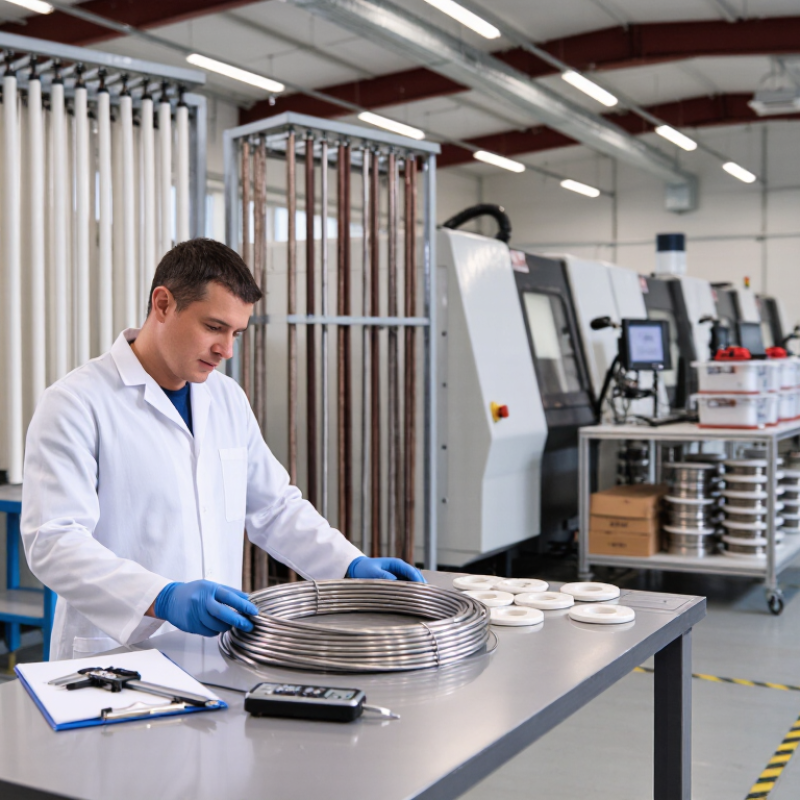
Ceramic radiant tube heating wires are resistance elements housed inside, or supported within, a ceramic tube assembly. When electrical current passes through the alloy wire, it heats up. The tube absorbs heat and radiates it toward nearby parts, often without direct flame contact. That is the key distinction: the workpiece receives radiant energy, not merely hot air. Construction varies; some designs use ceramic supports to keep the wire spaced evenly and reduce contact with the tube. A glowing element is easy to picture. Uniform heating is harder.
The International Energy Agency’s 2023 industry tracking report estimates that industry uses about 37% of global final energy. That figure is not specific to radiant heaters, but it explains why furnace efficiency matters. In practice, tube layout, element spacing, insulation, and temperature control all affect heat distribution. A wire that runs too hot may age faster; uneven airflow can also create cold spots. Operators should check the rated temperature, power density, and thermal-cycle limits against the actual process. Details matter. Ceramic parts can crack after repeated expansion and cooling, so installation and maintenance deserve attention. This is not a plug-in fix for every furnace; matching the heater to the load takes measurement, and sometimes a second look.
Key Applications Across Industrial Heating Systems
Ceramic radiant tube heating wires support controlled, indirect heating in industrial furnaces. Common uses include heat treatment, annealing, metal processing, and drying or curing lines. The tube radiates heat toward the workload, helping reduce direct flame contact and localized hot spots. IEA’s Energy Efficiency 2023 report estimates that industry accounts for about 37% of global final energy consumption. That scale makes furnace efficiency and operating conditions important—not just the wire’s rated temperature.
In heat-treatment furnaces, operators need stable temperatures across batches and reliable performance through repeated heating cycles. On a metal-processing line, a radiant tube can heat moving material while keeping the heating element separated from the process atmosphere. Selection should account for peak temperature, ramp rate, tube dimensions, atmosphere, and thermal cycling. A high temperature rating alone is not enough. Tube life also depends on installation and operating practice, a detail that is easy to underestimate.
Tips: Check element fit, electrical connections, and temperature uniformity during commissioning. Record hot spots and cycle times. Small gaps in those records can complicate troubleshooting later.
How to Evaluate Ceramic Radiant Tube Heating Wire Suppliers in China
Top Ceramic Radiant Tube Heating Wire Suppliers in China?
Evaluating suppliers starts with the heating wire itself, not a polished catalogue. Ask for the alloy grade, wire diameter, resistance tolerance, and recommended operating temperature. Confirm whether the stated limit refers to the wire or the complete ceramic tube assembly. These details affect service life and heat distribution. Request a recent test report and a sample made to your intended dimensions. A neat sample helps, but it does not prove stable production.
Check how the supplier handles quality control. Ask how resistance is measured, how batches are tracked, and what happens when results fall outside specification. If possible, compare sample measurements with the accompanying report. Discuss tube fit, terminal connections, and expected heating cycles before ordering. Clear answers matter. Vague claims about “long life” deserve follow-up questions. One limitation is worth admitting: a sample may not reflect every production batch, so ongoing inspection still matters.
Tips: Send a simple drawing with dimensions and operating conditions. Ask for written specifications, lead times, and packaging details. Keep the first order modest, and record performance during trial runs. Small details can be missed. Don’t rely on price alone.
Supplier Comparison: Materials, Customization, Quality, and Support
Ceramic radiant tube heating wire suppliers differ in alloy selection, wire diameter, and operating-temperature guidance. Ask which heating-wire materials suit your tube dimensions and furnace conditions. A supplier should explain how oxidation resistance and electrical resistance affect service life, rather than offering a generic grade. Request material certificates and a sample coil. Small details matter.
Customization should cover wire length, coil diameter, terminal design, and connection points. Share a clear drawing and operating range, then check whether the supplier can confirm tolerances in writing. Quality checks may include resistance measurement, visual inspection, and batch traceability. Ask how these checks are recorded, not just whether they happen. A polished datasheet is not proof of consistent production.
Support is easier to judge through specific questions: Can the team help troubleshoot uneven heating? How quickly can it replace a damaged batch? Clear answers and practical installation notes are useful signs. Compare lead times and packaging, too; fragile coils can arrive bent. Price still matters, but the lowest quote may omit testing or after-sales help. It is not always obvious which trade-off is worth making.
Top Ceramic Radiant Tube Heating Wire Suppliers in China?
Supplier Comparison Framework: Materials, Customization, Quality, and Support
Suggested procurement evaluation weights, not measured scores for specific suppliers: assess material suitability and quality assurance most heavily, then customization capability and technical support. Confirm material specifications, inspection records, and service terms directly with each supplier.
How to Verify a Supplier Before Placing an Order
A reliable ceramic radiant tube heating wire supplier should be able to explain how its wire suits your operating conditions. Share the target temperature, tube dimensions, voltage, and duty cycle. Ask for a written specification covering wire material, resistance tolerance, rated power, and expected service life. Details matter.
Check that documents match the product being quoted. Request a recent test report, material traceability records, and clear guidance on installation and temperature limits. If a supplier claims a long service life, ask what conditions that estimate assumes. A polished brochure is not proof. Even experienced buyers can overlook differences between laboratory ratings and real furnace conditions.
Before placing an order, request a sample or a small trial batch where practical. Measure resistance, inspect the wire finish, and confirm dimensions against your drawing. Ask how each batch is checked and what happens if it arrives outside specification. Verify lead time, packaging, replacement terms, and the person responsible for technical support. Keep the answers in writing. A quick video call can help you see production and inspection practices, though it cannot replace testing. If explanations remain vague, pause and ask again.