
Toll Free: 866.905.6744 | Local: 845.652.5250

How to Choose a Glass Sorting Machine?

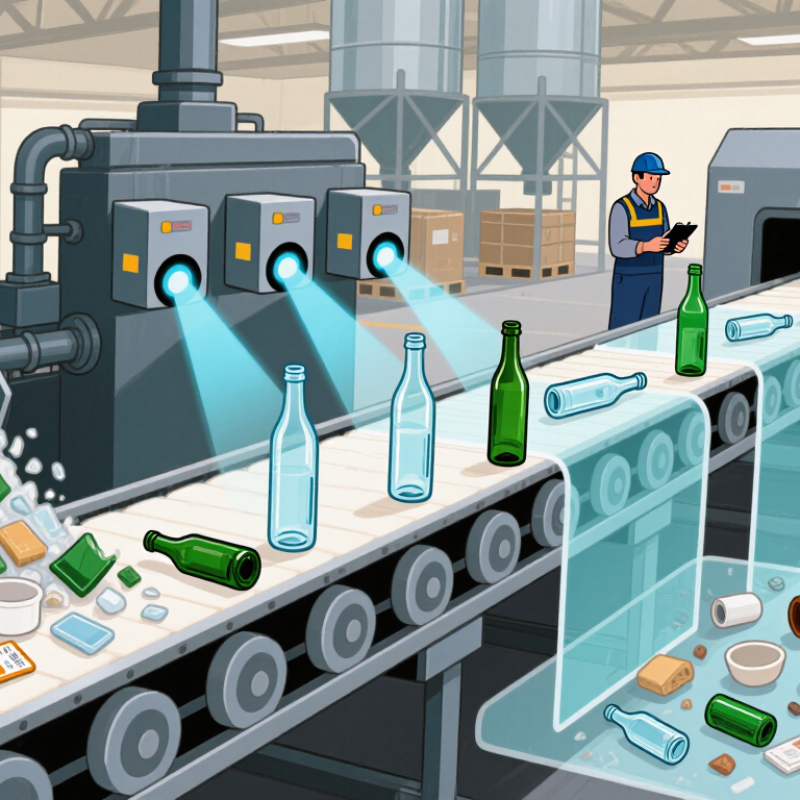
Choosing a Glass Sorting Machine is not a brochure exercise. It is a decision about the material moving across your belt every hour. Clear bottles, green fragments, ceramics, labels, and moisture can all affect the result. A machine that performs well on clean test samples may struggle with a mixed, dusty stream. Small details matter. Watch how glass spreads across the feeder, and note whether shards overlap before they reach the sensors.

Architect and circular-economy advocate William McDonough’s widely cited phrase, “Waste is food,” offers a useful reminder: recovered glass has value when it is sorted for its next use. But that principle does not select the equipment for you. Compare sensor types, throughput, target purity, maintenance access, and the supplier’s ability to test your actual material. Ask for trial results using representative samples, not only ideal ones. Inspect the reject stream, too. A high recovery figure can hide unwanted material in the product.

This guide will help you match machine capabilities to your feed, operating conditions, and quality goals. It will also examine installation needs, service support, and the questions worth asking before purchase. Some uncertainty remains. Feed composition changes, and no specification sheet captures every shift in a real plant. That is precisely why careful testing matters. Look closely. A good choice begins with the glass you actually handle, not the machine that looks most impressive.
How to Choose a Glass Sorting Machine?

Identify the Glass Types and Contaminants to Be Sorted

A glass sorting machine should match the material actually entering your line, not just the label on a supplier’s sample. Start by separating container glass from flat glass, mixed-color cullet, or production rejects. Clear, green, and amber pieces may need different sorting targets. Record typical particle sizes and note whether the feed arrives dry, dusty, or mixed with labels. Small details matter.

List the contaminants you need to remove. Ceramics, stones, and porcelain can resemble glass but may damage downstream processes. Metals, plastics, paper, and food residue create different detection and handling challenges. Ask which contaminants appear often, which are costly, and which can be tolerated. A few handfuls of material can be misleading; collect samples across several shifts and seasons.

Then check how the machine identifies and separates each target. Optical systems may distinguish color or material characteristics, while ejectors remove selected pieces with timed air bursts. Ask for test results using your own representative sample, including its dirtiest fraction. Watch for missed contaminants and good glass rejected by mistake. The numbers may look clean on a report, but real feed is rarely so neat. Recheck the target list when suppliers, packaging, or processing conditions change.

How to Choose a Glass Sorting Machine: Identify Glass Types and Contaminants

Typical material densities show where glass types and common contaminants may overlap. Values are approximate and vary with composition.

How to use this: Density can help flag some materials, but overlapping values mean it cannot identify every glass type or contaminant on its own. Choose sorting equipment based on the materials in your feed and whether it can also detect color, composition, ceramics, metals, and plastics.

Set Required Capacity and Sorting Accuracy

Set Required Capacity and Sorting Accuracy

Start with the amount of glass your site handles on a busy day, not its monthly average. A plant processing 12 tonnes per hour during peak shifts needs a different setup from one averaging 7 tonnes. Include expected downtime for cleaning, maintenance, and material changes. A machine rated for your average flow may struggle when trucks arrive together. That matters.

Check how the incoming glass actually looks. Mixed colors, labels, moisture, and fine fragments can affect sorting performance. Define what accuracy means for your operation: color separation, removal of ceramics, or both. Ask for test results using a representative sample, and confirm how rejects and missed pieces are measured. A clean sample alone proves little. Real feed is rarely so tidy.

Capacity and accuracy depend on a steady, even layer of material. If too much glass reaches the belt at once, pieces may overlap and become harder to identify. If the feed is too slow, useful capacity may fall. Compare operating results at several feed rates, and check the output by hand before committing. Keep notes on the sample mix and settings. Small variations can change the result, and early estimates are often imperfect. Plan a short trial with your own material.

Compare Sorting Technologies and Machine Features

Compare sorting technologies by the material they detect and the problems they solve. Camera-based systems identify visible color and shape differences, making them useful when clear and colored glass arrive together. Near-infrared sensors can help distinguish materials, but labels, dirt, and moisture may affect readings. Some machines combine sensor types. That can improve identification, though it also adds setup and maintenance needs.

Check how each machine handles real feed conditions. Ask about belt speed, glass-size range, detection accuracy, and the volume of material it can process. Air jets must eject target pieces without disturbing nearby fragments. Watch a trial using your own sample: green bottles, clear shards, and dusty containers can behave differently from clean demonstration pieces. Small details matter. Noise, access to filters, and the time needed to clear a jam also affect daily operation. A specification sheet cannot show everything; I may be giving too much weight to sensor accuracy alone.

Tips: Request a test with both typical and difficult material. Confirm how operators adjust settings, inspect sensors, and track sorting errors. Compare recovery and contamination rates, not just advertised throughput. A brief site trial is a useful check.

How to Choose a Glass Sorting Machine? - Compare Sorting Technologies and Machine Features

Compare common sensor technologies and practical machine features for glass recycling.
Technology or Feature What It Detects or Does Key Strengths Limitations and Considerations Best Suited For
RGB color camera sorting Distinguishes visible glass colors, commonly clear, green, and amber, and can identify contrasting objects in the feed. Directly addresses color separation; works at high throughput when material is spread into a consistent, visible layer. Performance can be reduced by overlapping pieces, dirt, labels, variable lighting, and glass colors that are difficult to distinguish visually. Color recovery from prepared, relatively clean mixed-color container glass.
Laser or fluorescence-based detection Uses an optical response, such as reflected laser light or fluorescence, to distinguish certain non-glass contaminants from glass. Can help identify contaminants such as ceramics, stones, and porcelain (CSP) that may look similar to glass in ordinary camera images. Detection capability depends on the sensor design, contaminant type, surface condition, and how material is presented to the sensors. Removing CSP from cullet when the selected system is specifically designed and tested for the target contaminants.
Near-infrared (NIR) spectroscopy Identifies materials using their near-infrared spectral response; it is commonly used to distinguish many polymers and other material classes. Useful as part of a broader recycling line for separating non-glass materials, depending on the materials and sensor configuration. NIR is not a substitute for a glass-color camera and is not universally effective on dark, wet, dirty, or optically obscured items. Confirm performance for the intended target. Applications where the line also needs material identification beyond glass color sorting.
Metal detection or electromagnetic separation Detects or separates metal contaminants. Magnetic separators target ferrous metals; eddy-current separators are used for non-ferrous metals such as aluminum. Provides a complementary way to remove metal pieces that can contaminate cullet or damage downstream equipment. It does not sort glass by color or remove non-metal contaminants. Selection depends on the metal types, particle size, and feed arrangement. Removing ferrous or non-ferrous metal before or alongside optical glass sorting.
X-ray transmission (XRT) Measures how X-rays pass through objects, providing information related to their density and thickness. Can distinguish some dense or compositionally different objects that are difficult to separate by visible color alone. Results depend on the contrast between the target and surrounding glass. It should be validated for the specific contaminant and particle-size range. Specialized applications where trials show useful X-ray contrast for the contaminants of concern.
Feed presentation and singulation Controls how evenly material is spread and whether pieces are separated as they pass the sensors. Consistent presentation helps sensors see individual pieces and supports more reliable sorting. Overloaded belts, overlapping shards, excessive fines, and irregular feed can reduce detection and ejection performance. Any optical or sensor-based sorter, especially where the feed varies in size or shape.
Air-ejection system Uses timed air jets to divert detected target pieces into a reject or product stream. Enables rapid, contact-free separation of pieces identified by the sensors. Requires suitable compressed air, correct timing, and maintenance of valves and nozzles. Small or closely spaced pieces can be harder to eject individually. High-speed sorting where detected pieces must be removed from a moving stream.
Throughput and particle-size range Describes the amount of material processed and the size range the machine is designed to sort. Matching capacity and size range to the plant can help avoid bottlenecks and improve feed consistency. Rated throughput is not a guaranteed result for every feed; contamination, moisture, particle shape, and presentation can affect actual performance. Comparing machines against measured plant flow and the real cullet size distribution.
Calibration, recipes, and data monitoring Allows operators to adjust sorting settings and monitor operating conditions or sorting results. Can simplify changeovers between feed types and help identify performance changes over time. Controls cannot compensate for unsuitable sensor selection, poor feed preparation, or inadequate maintenance. Facilities that process different glass streams or need routine performance checks.

Check Site, Integration, and Maintenance Requirements

A glass sorting machine should fit the site, not just the production target. Measure the available floor space, ceiling height, and access routes before reviewing equipment dimensions. A machine may fit on a drawing but fail to pass through a narrow doorway. Check the power supply, ventilation, and floor loading too. Record typical feed volume and variations in glass color, size, and contamination. One busy shift may not represent an ordinary day.

Integration deserves equal attention. Confirm how the sorter connects with existing conveyors, screens, and collection bins. Ask what happens when a bin is full or the feed pauses. These small details can affect the whole line. Request a trial using representative material, not only clean sample glass. Discuss sensor settings, commissioning time, operator training, and who handles adjustments after installation. Site estimates can be imperfect, so verify them with measurements and a walk-through.

Tips: Leave clear space around inspection panels and service doors. Ask how often lenses, belts, and air nozzles need cleaning. Check which spare parts should be kept nearby and how quickly support is available. Compare maintenance steps with the skills and staffing on each shift. A simple daily checklist helps, but it will not catch every fault. Review the plan after the first month of operation.

Evaluate Total Cost and Supplier Support

A glass sorting machine’s purchase price is only one part of its cost. Compare the full operating picture: installation, power use, routine maintenance, replacement parts, and expected downtime. Ask suppliers to estimate costs for your actual glass mix, including labels, ceramics, and varying particle sizes. A polished demonstration may not reflect a dusty, busy plant.

Get support details in writing. Check response times, technician availability, training, warranty coverage, and how quickly common wear parts can be shipped. Ask who handles commissioning and whether operators receive hands-on instruction. A clear service plan matters when a conveyor stops and material begins backing up. Small delays add up.

Request references from facilities with similar throughput and feed quality, then ask what support was like after installation. Compare quoted throughput with a realistic sample test, not just ideal conditions. I would also leave room in the budget for surprises; estimates can be optimistic. That part is easy to overlook. A cheaper machine may cost more if service is distant or settings require frequent adjustment. Conversely, a higher quote is not proof of better support. Check the evidence, and note where your own assumptions may be weak.