Why Choose Cat 5e Cables for Your Networking Needs?
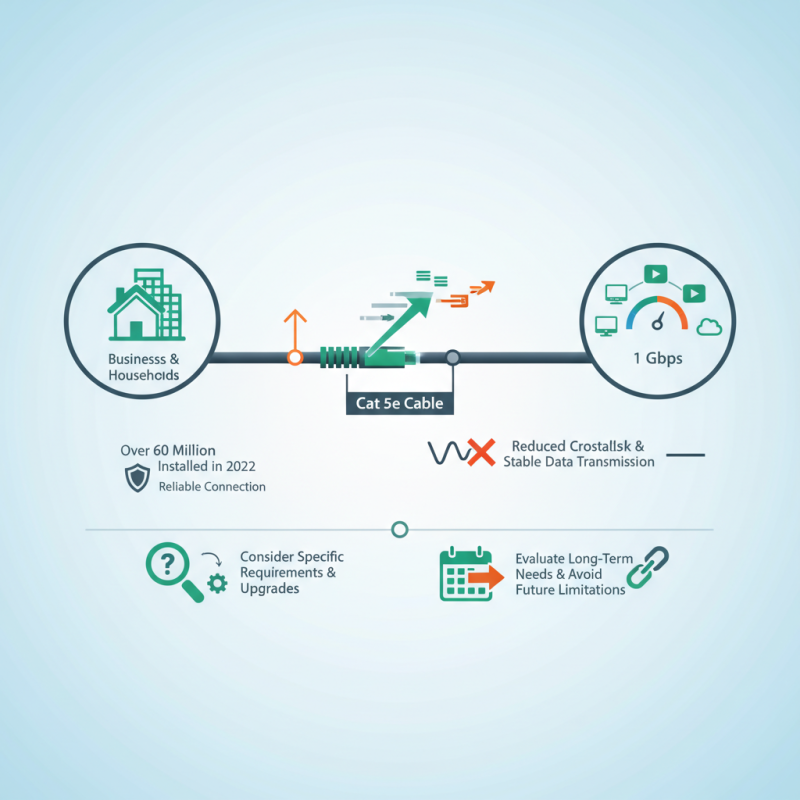
In today’s fast-paced digital environment, choosing the right networking cables is crucial for efficiency. Cat 5e cables have become a popular choice among businesses and households alike. According to a recent report by the Telecommunications Industry Association, over 60 million miles of Cat 5e cables were installed in 2022. Industry expert Mark Johnson states, "Cat 5e cables provide a reliable connection for high-speed internet and are ideal for most networking needs."
These cables support speeds up to 1 Gbps, making them suitable for various applications. They also reduce crosstalk, ensuring stable data transmission. However, it’s essential to consider the specific requirements of your network. Some users may overlook potential upgrades or changing technological demands. Failing to reassess your cable choices could hinder connectivity in the future. While Cat 5e cables are versatile and cost-effective, evaluating your long-term needs is important to avoid future limitations.
Understanding Cat 5e Cables: An Overview of Their Specifications
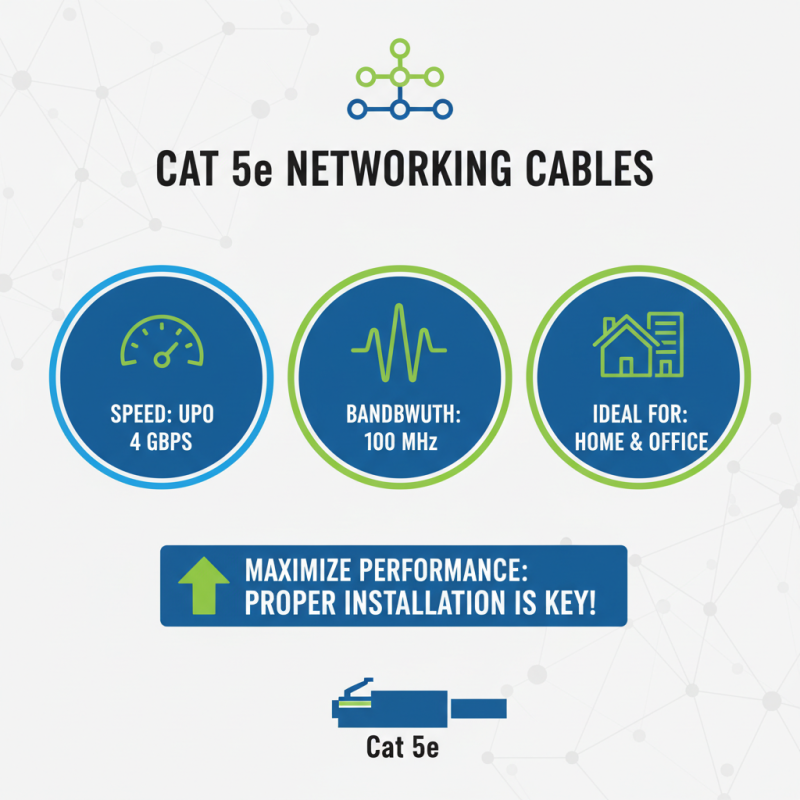
Cat 5e cables have become a staple in networking due to their reliable performance. They support data rates up to 1 Gbps over distances of 100 meters. This makes them ideal for homes and small offices. Cat 5e cables can handle frequencies up to 100 MHz. This contributes to their ability to reduce crosstalk. However, users must note that while they are efficient, their capacity may be limited in high-demand environments.
One key aspect is installation. Proper cable management is crucial. Poorly organized cables can lead to signal interference. This can negate the performance benefits of using Cat 5e. Regular inspections and maintenance are essential. They help ensure cables function optimally over time. Dust and bends could impact performance. Staying vigilant can save costly troubleshooting later.
Tips: Always check the connector integrity. A damaged connector can lead to connection issues. Label your cables for easy identification. This saves time during any future upgrades or maintenance. If your network demands increase, consider your options for future-proofing. Cat 5e may be sufficient now, but technology advances quickly. Reflect on potential needs as you build your network.
Why Choose Cat 5e Cables for Your Networking Needs?
| Specification |
Details |
| Maximum Data Rate |
1 Gbps |
| Maximum Bandwidth |
100 MHz |
| Transmission Distance |
Up to 100 meters |
| Cable Construction |
Twisted pair, 4 pairs |
| Shielding Type |
Unshielded (UTP) or Shielded (STP) |
| Connector Type |
RJ45 |
| Typical Use Cases |
Home networks, small businesses, VoIP |
| Cost-Effectiveness |
Affordable option for high-speed networks |
Benefits of Using Cat 5e Cables for Home and Office Networks
When setting up a network at home or in the office, Cat 5e cables offer distinct advantages. These cables support speeds up to 1 Gbps and can handle a bandwidth of 100 MHz. This makes them suitable for streaming, gaming, and video conferencing. Many users find that they can achieve reliable connections without needing the latest technology. The flexibility of Cat 5e cables is appealing for both small and larger setups.
Installation is relatively simple, which is a plus for those who are not tech-savvy. They are lightweight and can easily be routed through walls and floors. However, some might struggle with proper termination, leading to connectivity issues. Furthermore, Cat 5e cables are more cost-effective than higher-rated options. This affordability often makes them the go-to choice for many. Yet, some users may overlook the importance of cable quality, leading to unexpected performance gaps.
While Cat 5e cables provide great benefits, it’s essential to consider your specific needs. The environment where the cables will be used can affect their performance. If you have heavy interference or need to cover long distances, you might face some challenges. Many users often underestimate these factors. Reflecting on your actual requirements can help you make a wise choice.
Comparing Cat 5e to Other Ethernet Cable Types: What to Consider
When selecting an Ethernet cable, the choice often narrows down to Cat 5e and other cable types. Cat 5e cables support speeds up to 1 Gbps over 100 meters. This is suitable for most home and small office networks. However, their bandwidth capability reaches only 100 MHz. This lower bandwidth may restrict future upgrades.
In contrast, Cat 6 and Cat 6a cables provide higher bandwidth options and better performance over longer distances. They can handle speeds beyond 1 Gbps, but they might be more expensive. For a user with basic internet needs, Cat 5e remains a solid choice. It is widely available and usually more cost-effective. Yet, for those planning to stream 4K content or run multiple devices simultaneously, exploring higher categories is advisable.
Choosing between these cables often comes down to future needs. You might find Cat 5e sufficient now, but will it meet your demands later? It’s essential to think about your long-term networking plans. While a lower-cost option is alluring, investing in a higher-rated cable could save hassle down the road. Balancing budget and performance is key.
Comparison of Ethernet Cable Types
The chart above compares different Ethernet cable types based on their maximum bandwidth. Cat 5e can support up to 1 Gbps, while newer standards like Cat 6 and above can handle significantly higher speeds, making them suitable for more demanding networking needs.
Installation Tips for Maximizing Cat 5e Cable Performance
When it comes to networking, Cat 5e cables are a popular choice. They can support speeds up to 1 Gbps and a bandwidth of 100 MHz. This makes them suitable for most home and office setups. However, to truly maximize their performance, proper installation is key.
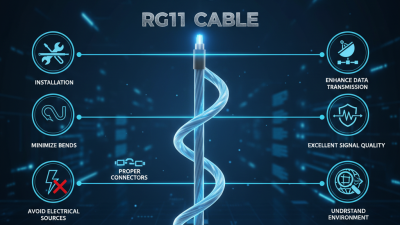
One important tip is to avoid sharp bends in the cable. Sharp bends can affect data transmission. According to a recent industry report, improper cabling techniques can lead to a 30% reduction in network performance. Another common mistake is over-tightening cable ties. This can not only damage the cable but also introduce interference.
Positioning is also crucial. Keep Cat 5e cables away from electrical wiring and devices that emit electromagnetic interference. Aim for a distance of at least 12 inches. Ensuring that the cables are neatly run can prevent tangling and future installation issues. Ensuring solid connections at both ends is critical. An ineffective connection can lead to slow speeds and dropped signals, which is frustrating for any user.
Common Applications and Scenarios for Cat 5e Cable Usage
Cat 5e cables have diverse applications that suit many networking needs. They are frequently used in homes, offices, and schools. In residences, these cables support internet connections for computers, smart TVs, and gaming consoles. They provide reliable speeds for streaming and gaming experiences.
In office environments, Cat 5e cables connect devices like printers and VoIP phones. They create a robust network for data sharing and communication. Many businesses leverage this cable as an economical option for their networking needs. However, some users report occasional signal degradation in larger setups.
Educational institutions often use Cat 5e cables for classroom connectivity. They enable seamless internet access for students and staff. Despite their benefits, they may not always support higher bandwidth demands as technology evolves. This limitation prompts reconsideration of wiring solutions for future growth.