China Best LED Tri Proof Light for Global Buyers?
Choosing the China best LED tri-proof light for global buyers is not simply a matter of comparing prices. A fixture may look robust in a product photo, yet its seals, housing, and driver determine how it performs in a damp workshop or a dusty warehouse. Details matter. This guide introduces the Tri Proof Light Led and the practical checks buyers can make before requesting a quotation. We consider protection ratings, light output, color temperature, power consumption, and installation options, while noting that specifications should be confirmed for each model.
A reliable supplier should provide clear datasheets, consistent product details, and test documentation that buyers can review. Ask about operating temperature, warranty terms, material choices, and available lengths. For example, a 1.2-meter fitting may suit a long production aisle, while a shorter model can work better above a service bench. Not every model fits. A high IP rating alone does not establish overall quality, and claimed efficiency should be checked against stated test conditions. Sample evaluation can reveal details a catalogue misses, such as connector access or diffuser finish. Even experienced buyers can focus too heavily on unit price; I have seen that comparison leave important questions unanswered. The sections ahead explain how to assess Chinese manufacturers, compare specifications, and identify a product suited to the actual site. The aim is a careful decision, not a perfect-sounding promise.
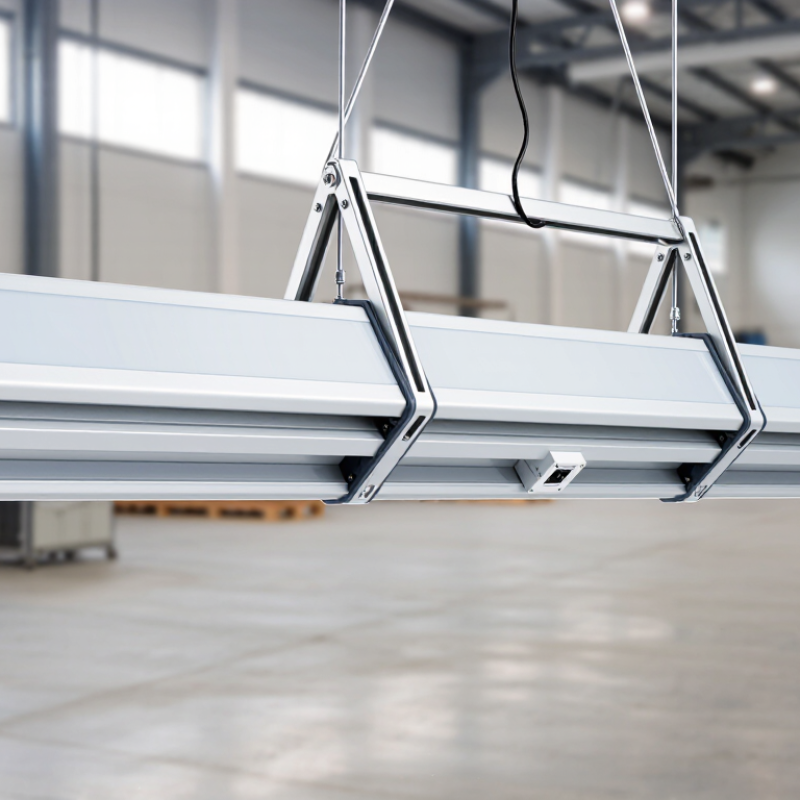
What Defines an LED Tri-Proof Light and Its Core Components?
An LED tri-proof light is designed to resist dust, moisture, and corrosion in demanding spaces such as workshops, parking areas, and food-processing rooms. “Tri-proof” describes a design goal, not a guarantee of equal protection across every product. Check the stated ingress and impact ratings, operating temperature, and installation instructions before choosing a fixture. A damp ceiling is not the same as a washdown zone.
The main components work together. LEDs produce the light, while a driver regulates electrical power and helps prevent flicker. A sealed housing protects these parts; common materials include polycarbonate or aluminum. The lens spreads light across floors and work surfaces, and end caps, gaskets, and cable entries help limit water and dust ingress. Small details matter. A gasket pinched during installation can weaken the seal, even when the fixture looks sturdy. Heat also needs a path out, so housing design affects LED performance and service life. In practice, compare light output, color quality, warranty terms, and replacement options—not just wattage. Some specifications remain unclear on product sheets, so ask for test documentation when conditions are demanding.
China Best LED Tri-Proof Light for Global Buyers?
What Defines an LED Tri-Proof Light and Its Core Components?
The chart compares the digit ratings in three common IP codes: the first digit, 6, indicates dust-tight protection; the second digit indicates the tested level of water protection, ranging here from water jets (5 and 6) to temporary immersion (7). An LED tri-proof fixture typically brings together a sealed housing, gaskets, end caps, an LED board, a driver and a lens. The IP rating applies to the complete assembled enclosure, not to any single component.
How Do Protection Ratings Affect Performance in Different Environments?
China Best LED Tri Proof Light for Global Buyers?
Protection ratings are useful, but they describe specific test conditions, not every hazard a fixture may face. IP65 units are dust-tight and resist water jets, making them suitable for many covered work areas and washdown zones. Where stronger jets are expected, IP66 offers a higher water-ingress rating. The difference matters near cleaning stations. It does not mean the light can withstand every pressure washer or chemical cleaner.
IP67 indicates protection during temporary immersion under defined laboratory conditions, commonly up to one metre for 30 minutes. That can help in areas prone to brief flooding, but it is not a promise of permanent underwater operation. Check the product’s installation instructions and cable-entry details. A well-rated housing can still fail if a gland is loose or a seal is damaged. Small details matter.
Ratings also say little about heat, corrosion, vibration, or light output over time. A cold storage room, a humid food-processing space, and a dusty workshop create different demands. Match the rating to the actual exposure, then review operating temperature, materials, mounting, and maintenance access. I may be giving the label too much attention; the installation can matter just as much. A careful site assessment is more reliable than choosing the highest number by default.
Which Features Distinguish Reliable Chinese LED Tri-Proof Lights?
A dependable LED tri-proof light should withstand dust, moisture, and routine cleaning without relying on vague claims. Check that its ingress-protection rating applies to the complete assembled fixture, not just a component. Look closely at end caps, cable entries, and lens joints; these are common points for water to enter. The gasket should sit evenly, with no visible gaps or pinched sections. No fixture is maintenance-free.
Thermal management matters as much as sealing. A well-designed housing should move heat away from the LED board and driver, helping reduce premature failures. Ask for test reports covering electrical safety, photometric performance, and operating temperature. Compare lumen output and wattage, but also check the beam pattern; a bright, narrow beam may leave dark patches across a warehouse aisle. In cold storage, confirm the stated starting temperature suits the actual site.
Consistency is another useful sign. Request samples from the same production model and inspect their finish, wiring, and light output side by side. A clear datasheet should state dimensions, mounting options, warranty terms, and test conditions. I would treat unusually high efficiency claims cautiously unless supporting measurements are available. Even a strong specification can disappoint if installation instructions are unclear or replacement parts are difficult to obtain. A few minutes spent checking those details can prevent avoidable downtime later.
How Can Global Buyers Evaluate Manufacturers, Certifications, and Quality?
A dependable LED tri-proof light starts with a manufacturer that can explain how it controls production, not just display a polished catalogue. Ask who handles assembly, component inspection, and final testing. A factory visit or live video walkthrough can reveal practical details: organized workstations, calibrated instruments, and records tied to product batches. Details matter. One visit, however, cannot prove that every shipment will match the sample.
Treat certifications as documents to verify, not badges to admire. Check that the certificate covers the exact model, electrical configuration, and destination market. Confirm its validity with the issuing organization, and compare it with the product label and test report. Requirements differ by country, so buyers should confirm applicable standards with local compliance specialists. A familiar logo alone is not enough.
Quality evaluation should include more than switching on a sample. Inspect seals, cable entries, end caps, and the evenness of the light output. Ask for test data on ingress protection, impact resistance, temperature performance, and electrical safety, where relevant to the project. Request samples from a normal production run, then compare them with the approved specification. Not every variation is a defect, but unexplained changes deserve questions. Clear answers, traceable records, and consistent follow-up are useful signs of a reliable supplier.
What Should Buyers Consider When Choosing Models for Specific Applications?
Choosing a tri-proof light starts with the task, not the catalog’s highest lumen figure. A cold warehouse aisle, a washdown room, and a parking garage place different demands on one fitting. Fit matters. Measure ceiling height, spacing, and the work surface before comparing wattage. A narrow beam may leave dark patches between shelving, while excessive brightness can create glare on wet floors.
Check the operating environment closely. Confirm the required ingress protection rating against actual exposure to water and dust, and review temperature limits for cold rooms or hot production areas. Where cleaning chemicals are used, ask for material compatibility details rather than assuming a sealed housing will resist them. Look at impact resistance, mounting hardware, and access for future maintenance. Small installation details matter.
Light quality deserves equal attention. Compare color temperature, color rendering, and beam distribution with the work being done; accurate color recognition may matter on an inspection line. Check driver compatibility if dimming or sensors are planned, and request test reports for key performance claims. In practice, buyers sometimes focus too heavily on protection ratings and overlook glare or uneven spacing. A sample installation can reveal those issues, though it adds time and cost. Temperature, mounting height, and room surfaces can still change the final result.