Toll Free: 866.905.6744 | Local: 845.652.5250
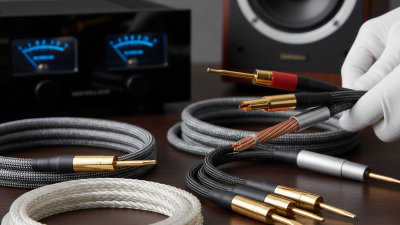
Choosing the right high end speaker wire can feel surprisingly complicated for global buyers. Premium brands often promote purity, geometry, shielding, and advanced connectors. Yet impressive terminology does not always guarantee audible improvement in every listening room.
This guide examines respected high end speaker wire brands through practical, evidence-based criteria. We consider conductor materials, insulation quality, connector construction, durability, warranty support, and regional availability. We also examine how each cable performs with home cinema systems, stereo amplifiers, floorstanding speakers, and long cable runs. A thick cable may suit a powerful amplifier, while a flexible design may work better behind a crowded equipment rack. Small details matter, such as secure banana plugs, clear polarity markings, and strain relief near the connector.
Listening experience matters too. However, personal impressions can be influenced by expectation, room acoustics, and unfamiliar equipment. No ranking is universally right. Even experienced reviewers can overstate differences without controlled comparisons. That is worth remembering. Reliable brands usually provide measurable specifications, consistent manufacturing, transparent support policies, and realistic performance claims. Buyers should also verify voltage compatibility where powered accessories are included, import requirements, dealer authenticity, and return conditions in their region. A cable should remain dependable after repeated installation, not merely look impressive in a product photograph. The following overview helps international purchasers compare leading options with greater confidence, while recognizing that system matching and careful listening remain essential.
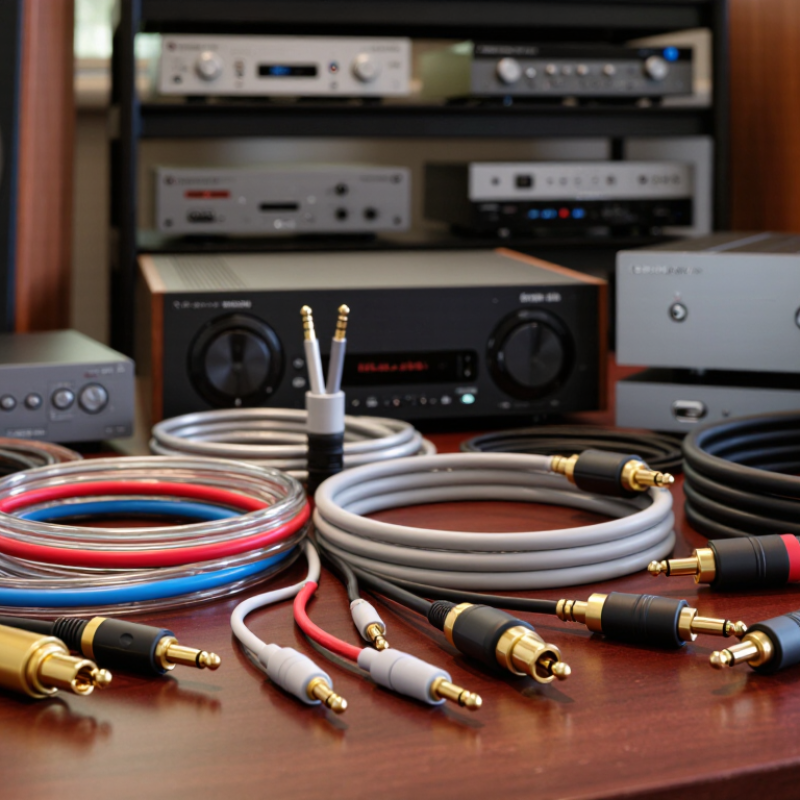
A high-end speaker wire brand is defined by more than a polished package. It begins with controlled materials, accurate manufacturing, and honest performance claims. High-purity copper, stable insulation, and carefully designed conductor geometry can reduce resistance and signal loss. However, expensive materials alone do not guarantee better sound. That assumption deserves questioning.
Reliable brands publish measurable specifications, including resistance, capacitance, inductance, conductor size, and temperature ratings. They explain testing methods instead of hiding behind dramatic language. Consistent production also matters. A cable should perform similarly across different lengths and batches. For global buyers, clear labeling, secure packaging, traceable documentation, and international safety compliance show professional responsibility. Experienced installers also check connector quality, bending limits, and the distance between amplifier and speakers. Small details can become expensive problems.
Tips: Compare specifications before listening impressions. Request test data when available. Match the wire length and gauge to your system. Keep connections tight and clean. In a real room, placement may change the result more than the cable. I have seen premium-looking wires fail because their terminals loosened after repeated handling. Even careful evaluations can be imperfect. Personal hearing, equipment matching, and room acoustics still influence every judgment.
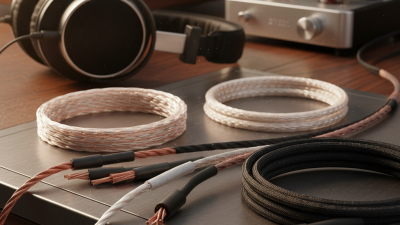
High-end speaker wire performance depends less on appearance and more on controlled electrical behavior. In my installation experience, oxygen-free copper offers a practical balance between conductivity, flexibility, and cost. Silver conducts better, but its price may not produce an audible improvement in every system. Copper-clad aluminum is lighter, yet its higher resistance can weaken long cable runs.
Construction matters just as much. A larger conductor reduces resistance, especially over 10 meters. However, thicker wire can become difficult to route and terminate. Many fine strands bend easily around furniture and amplifier terminals. Tight stranding can also reduce unwanted movement and improve handling. Insulation should remain stable under heat, moisture, and repeated bending. Poor jackets crack first.
Capacitance and inductance should match the amplifier and cable length. Excessive capacitance may challenge some amplifiers, while high inductance can affect high-frequency response. Shielding is useful near strong electrical interference, but it is not automatically necessary in every room. I recommend measuring resistance with a reliable multimeter and checking connector tightness after installation. Marketing claims often sound precise, yet independent test data is more dependable. I have also seen expensive cables underperform because of loose terminations or unsuitable gauge selection. Material quality helps, but system matching remains imperfect and deserves honest review.
Leading high-end speaker wire brands for global buyers are judged by engineering, not packaging. Grand View Research valued the global audio equipment market at approximately USD 36.8 billion in 2023. It also projects continued growth through 2030. That expansion increases demand for dependable installation materials. Yet, market size does not prove better sound.
Experienced buyers should examine conductor purity, cross-sectional area, insulation stability, and connector fit. The International Electrotechnical Commission’s IEC 60268 series provides relevant guidance for audio equipment performance. Resistance matters most across long runs. For example, a 2.5 mm² copper cable generally offers lower resistance than a 1.5 mm² cable. This difference can reduce voltage loss in demanding systems. Shorter rooms may not need extreme thickness.
Measure the route first.
Professional purchasing reports often separate consumer audio, commercial systems, and installation products. MarketsandMarkets identifies professional audio as a growing equipment segment, supported by venues, studios, and integrated buildings. Global buyers should therefore request test documentation, conductor dimensions, flame ratings, and country-specific compliance information. Packaging claims can be vague. I still question expensive cables that provide no resistance figures or laboratory results. A carefully terminated, correctly sized cable may outperform a costly cable installed carelessly. Price alone remains a weak technical measure.
When comparing high-end speaker wire for global buyers, start with compatibility, not appearance. Check amplifier terminals, speaker impedance, connector type, and cable length. NIST lists copper resistivity at about 1.68 × 10⁻⁸ Ω·m at 20°C. That figure makes conductor size practical, not decorative. A long, thin cable can add measurable resistance. With an 8-ohm speaker, a 0.2-ohm loop resistance wastes nearly 5% of available power.
Quality depends on materials, insulation, and manufacturing control. Oxygen-free copper offers predictable conductivity, while copper-clad aluminum may require a larger gauge for similar performance. IEC 60228 provides useful conductor-resistance guidance, but it does not certify every finished speaker cable. Look for clear gauge markings, temperature ratings, polarity labels, and independently verifiable safety testing. Grand View Research’s 2024 loudspeaker market report estimates continued global market growth, yet market expansion does not prove premium cables sound better. That distinction matters. My own comparison work often finds installation quality matters more than luxury packaging. Still, that rule is imperfect.
Tips: Match gauge to distance and impedance. Keep both channels equal in length. Use locking connectors for heavy cables. For international purchases, confirm plug compatibility, warranty coverage, and replacement availability. Request test data, not vague claims. A modest cable with honest specifications may deliver stronger long-term value than an expensive design with poor documentation.
| Wire Profile | Conductor Material | Common Gauge Options | Approx. DC Resistance at 20°C | Compatibility | Quality and Installation Considerations | Long-Term Value |
|---|---|---|---|---|---|---|
| Premium Oxygen-Free Copper (OFC) | High-purity copper with an oxygen-reduced manufacturing process | 12 AWG, 14 AWG, 16 AWG | 12 AWG: 0.53 Ω/100 m 14 AWG: 0.84 Ω/100 m 16 AWG: 1.33 Ω/100 m |
Suitable for most passive speakers, stereo amplifiers, AV receivers, and banana-plug or spade-terminated systems | Low resistance, good flexibility, and reliable termination when the conductor and connector are properly sized | ★★★★★ Strong balance of performance, availability, and service life |
| High-Purity Bare Copper | Solid or stranded copper without additional plating | 12 AWG, 14 AWG, 16 AWG, 18 AWG | 12 AWG: 0.53 Ω/100 m 14 AWG: 0.84 Ω/100 m 16 AWG: 1.33 Ω/100 m 18 AWG: 2.11 Ω/100 m |
Compatible with standard low-voltage speaker terminals and most home audio installations | Electrically effective and easy to terminate; exposed copper can oxidize over time, especially in humid environments | ★★★★☆ Excellent value when ends are protected and connections are inspected periodically |
| Silver-Plated Copper | Copper conductor with a thin silver coating | 12 AWG, 14 AWG, 16 AWG | Depends on the copper core and construction; typically comparable to the same copper gauge | Compatible with conventional passive speakers and amplifiers; verify connector acceptance for larger cable diameters | Silver plating can improve surface corrosion resistance; audible results depend primarily on resistance, geometry, and system design rather than plating alone | ★★★★☆ Useful for specialized installations where corrosion resistance and construction details justify the added cost |
| Tinned Copper | Copper strands coated with tin | 14 AWG, 16 AWG, 18 AWG | Usually slightly higher than equivalent bare copper because of the coating and strand design | Well suited to humid rooms, marine-adjacent environments, and installations requiring improved oxidation resistance | Good corrosion protection and stable termination; select a sufficiently large gauge for long runs or low-impedance speakers | ★★★★☆ High practical value in demanding environmental conditions |
| Flat or Low-Profile Cable | Usually stranded copper or OFC arranged in a slim parallel geometry | 14 AWG, 16 AWG, 18 AWG | Varies by conductor size; check the manufacturer’s resistance specification before long runs | Suitable for under-carpet, wall-adjacent, and visually discreet installations when the cable is rated for the intended placement | Easy to conceal but may have less mechanical protection; avoid sharp bends, compression, and unapproved in-wall use | ★★★★☆ Best value when installation appearance and routing flexibility are priorities |
| Bi-Wire Cable Assembly | Two separate conductor pairs designed for speakers with independent high- and low-frequency terminals | 12 AWG, 14 AWG, 16 AWG | Depends on the gauge and length of each conductor pair | Compatible only when the loudspeaker provides separate terminals and the manufacturer permits bi-wiring; otherwise use the supplied terminal links | Requires correct polarity, matching lengths, and secure termination; bi-wiring does not replace proper amplifier-to-speaker compatibility | ★★★☆☆ Value depends on the speaker design and installation requirement |
| CCA Economical Cable | Aluminum core with a copper outer layer | Commonly marketed in 12 AWG to 18 AWG sizes | Higher than copper of the same labeled gauge; verify actual conductor area rather than relying only on the printed gauge | Usable for short, low-power runs when the real conductor size and system load are confirmed | Lower cost and lighter weight, but higher resistance and greater sensitivity to termination quality make it less suitable for demanding installations | ★★☆☆☆ Cost-effective for limited applications, but often weaker long-term value for high-current or long-distance runs |
Top High End Speaker Wire Brands for Global Buyers
International buyers should examine standards before comparing sound claims. Ask suppliers for conductor specifications, gauge tolerance, insulation ratings, and material declarations. Compliance requirements differ by destination. Documents may include RoHS or REACH evidence, but these do not replace local verification. Check labeling, packaging, and test reports with an experienced importer or electrical consultant. Small details matter.
Shipping can change the real purchase price. Request a clear quotation with Incoterms, carton dimensions, gross weight, and the correct customs classification. Confirm whether the wire is cut to length or shipped on full reels. Moisture barriers help protect polished jackets during sea transport. Air freight is faster, but heavy reels can make it uneconomical. I have seen attractive quotations become expensive after duties, storage, and repacking. That mistake is easy to repeat.
Reliable support should exist before payment. Ask for samples, production drawings, batch traceability, and a written warranty process. A responsive technical contact can resolve connector, gauge, or installation questions quickly. Response time matters across time zones. Keep communication in writing. Do not rely on impressive claims alone. I still think listening tests have value, but they should follow verified construction and system compatibility. Some buyers overlook this balance. A supplier willing to discuss limitations may deserve more trust than one promising perfection.