2026 Best Insulated Terminal Lugs for Global Buyers
Global buyers need more than a low unit price when selecting Insulated Terminal Lugs for demanding electrical assemblies. They need stable crimp performance, clear specifications, dependable insulation, and suppliers who can document quality. A lug may look simple. Its failure can be expensive.
Electrical interconnection engineer Laura Chen offers a practical reminder: “A reliable crimp begins with the correct lug, conductor, tool, and inspection.” That principle guides this 2026 comparison. The featured products are assessed through conductor compatibility, insulation material, barrel design, temperature resistance, and crimp consistency. We also consider packaging details, including moisture protection and readable batch markings. These small details matter during warehouse storage and field installation.
Copper and aluminum conductors require different considerations. Tinned copper lugs can resist oxidation in humid environments, while vinyl or nylon insulation affects flexibility and heat performance. Buyers should verify wire ranges rather than trust appearance. That mistake remains common.
No shortlist is perfect.
Manufacturing tolerances vary between suppliers, and product claims still require verification. Test certificates, sample inspections, and documented quality systems strengthen purchasing decisions. Regional standards also differ, so buyers should confirm applicable requirements before placing large orders. This guide therefore avoids treating one product as universally superior. Instead, it highlights practical trade-offs for distributors, panel builders, renewable-energy contractors, and industrial maintenance teams. The goal is simple: help global buyers choose Insulated Terminal Lugs that perform reliably beyond the catalog photograph.
What Insulated Terminal Lugs Are and How They Work
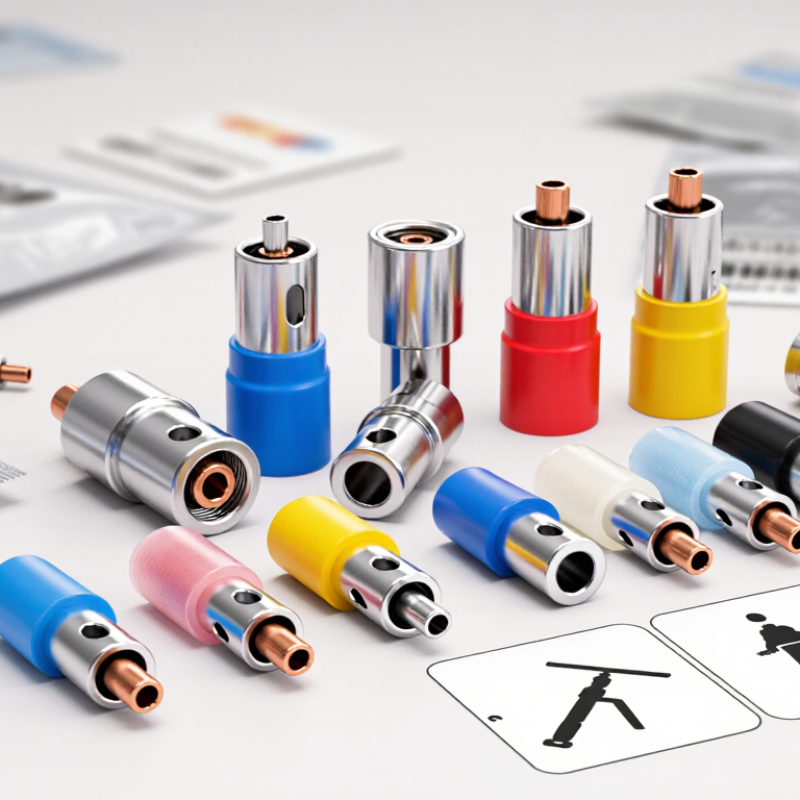
Insulated terminal lugs are small electrical connectors designed to join a wire with a terminal point. Each lug has a conductive metal barrel and an insulating sleeve. The barrel receives the stripped conductor. The sleeve helps prevent accidental contact and supports basic strain relief.
The connection works through controlled crimping. A technician inserts the wire fully into the barrel, then compresses it with a matching crimp tool and die. Proper pressure deforms the barrel around the strands, creating a stable electrical and mechanical connection. The wire size must match the lug rating. Too little compression can cause heating, movement, or voltage loss. Too much pressure may damage the strands.
Details matter. Strip only the required insulation length. No copper strands should remain outside the barrel. After crimping, a gentle pull test can reveal a loose connection. I have found that visual checks alone often miss weak crimps. The sleeve should remain firmly attached, without cuts, twisting, or melted areas. Terminal material, conductor size, current load, vibration, and temperature also affect performance. A lug suitable for a control cabinet may not suit a high-vibration machine. That distinction is easy to overlook. Qualified installers should follow applicable technical standards and the terminal maker’s verified crimping data. Mistakes still happen, especially when tools and terminals are mixed across different size systems.
How to Match Terminal Lugs with Wires and Electrical Systems
2026 Best Insulated Terminal Lugs for Global Buyers
Choosing an insulated terminal lug starts with the wire, not the product photo. Check the conductor size in AWG or square millimeters. The lug barrel must fit the stripped conductor tightly. A loose barrel can create heat, voltage loss, and early failure.
Match the lug material with the wire and electrical environment. Copper lugs suit copper conductors and many indoor control panels. Aluminum conductors need compatible lugs and careful oxide removal. Check the insulation diameter, stud hole size, and available panel space. The system’s current, voltage, temperature, vibration, and moisture levels also matter. For example, a 10 mm² cable may need a different lug for a 6 mm stud than for an 8 mm stud. Review the technical datasheet and applicable testing standards before ordering. I have seen installations fail because the wire size was correct, but the stud hole was wrong.
Tips: Use a calibrated crimping tool and the correct die. Strip the insulation without cutting wire strands. Insert the conductor fully, then inspect the crimp mark. A gentle pull test can reveal weak compression. Follow the specified torque for the terminal screw. Do not rely on hand pressure alone. Recheck the connection after installation, especially in vibrating equipment. Small details often decide long-term reliability.
2026 Best Insulated Terminal Lugs for Global Buyers
How to Match Terminal Lugs with Wires and Electrical Systems
Selection guidance: Choose an insulated terminal lug marked for the exact conductor size, conductor material, stud or bolt diameter, voltage rating, and temperature rating of the electrical system. The chart shows copper conductor ampacity from NEC Table 310.16 under 75°C insulation, not more than three current-carrying conductors in a raceway or cable, and an ambient temperature of 30°C. Actual allowable current may be lower after adjustment, correction, or equipment limitations.
Safety Standards and Quality Checks for Global Buyers in 2026
For global buyers in 2026, insulated terminal lugs should be checked against recognized safety standards, not appearance alone. IEC 61238-1 addresses compression and mechanical connectors, while UL 486A-486B covers wire connectors and terminals. Requirements may differ by market, so suppliers should provide current test reports, material declarations, and traceable batch numbers. A clear certificate is useful. It is not proof of every production batch.
The NFPA report Home Fires Involving Electrical Distribution and Lighting Equipment estimated about 32,000 U.S. home fires annually during 2015–2019. These fires caused approximately 470 deaths, 1,100 injuries, and 1.3 billion dollars in property damage. Poor connections can create heat at small contact points.
Quality checks should include crimp-height measurement, conductor compatibility, pull-out testing, insulation inspection, and thermal cycling. Inspect the barrel closely. No cracks, burrs, or loose insulation should appear.
Copper purity and plating thickness also deserve documented verification. Salt-spray testing can reveal weak corrosion protection, especially for coastal installations. Packaging matters too; moisture can damage insulation before installation. A buyer should compare samples from different production lots, not only approve one sample. This step is often skipped. It should not be. Even a strong audit can miss operator variation, so periodic retesting and independent laboratory verification remain sensible. The goal is repeatable contact pressure, stable conductivity, and safe performance under vibration, heat, and humidity.
Comparing Suppliers, Costs, and Applications Across International Markets
For global buyers, insulated terminal lugs are not interchangeable parts. A lug for a 6 mm² copper cable may fail when insulation, barrel size, or crimp profile is mismatched. In field purchasing, I compare copper purity, plating, insulation material, and pull-out test results. PVC suits many indoor assemblies, while nylon often handles higher heat and mechanical stress. Supplier evidence matters more than polished catalogs. Ask for batch traceability, dimensional drawings, and current test reports.
Costs change sharply by region and order volume. Costs vary. A low unit price can hide tooling fees, high minimum quantities, or expensive air freight. Compare delivered cost, not only the factory quotation. Request samples before approving thousands of pieces. Check packaging strength too; crushed sleeves create waste during humid sea transport. Suppliers near major ports may reduce lead time, while local distributors can simplify urgent replacement orders. Both options deserve a real cost model.
Applications also shape the best choice. Automotive harnesses need vibration resistance and consistent crimping. Solar cabinets require durable insulation and stable performance under heat. Industrial control panels may prioritize clear color coding and fast installation. Verify the cable range, stud diameter, operating temperature, and applicable regional standards. No supplier comparison is perfect. I still allow for overlooked variables, especially exchange rates and changing freight charges. A practical shortlist should balance test data, communication speed, warranty terms, and actual installation conditions.